
Thu, 28 Oct, 2021
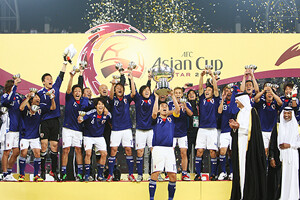
Bookended by stunning fireworks displays, the 15th edition of the AFC Asian Cup™ started and finished in fittingly spectacular fashion as Japan were crowned kings of the continent on a record-breaking fourth occasion.
Played in the finest facilities and in front of the passionate support of fans from all over the continent, the AFC Asian Cup Qatar 2011™ served up a remarkable 22 days of top class sport that brought with it high-quality football, spectacular goals and surprise results.
Japan’s win – the country’s fourth after victories in 1992, 2000 and 2004 - was historic as, too, was Australia’s run to their first-ever AFC Asian Cup final.
But Qatar’s hosting of the event so soon after being awarded the rights for the 2022 FIFA World Cup finals also saw the eyes of the world shift onto the Khalifa Stadium and the four other venues to gauge the nation’s suitability for such a significant event.
Qatar did not disappoint with all 32 games played in the most immaculate surroundings and in an atmosphere conducive to putting on one of the finest displays seen within the Asian game.
While all was well in terms of organisation, on the pitch the host team struggled initially under the intense global gaze.
Bruno Metsu’s side choked in the face of an Uzbekistan that kicked off the tournament with a fine 2-0 win which signalled the emergence of Odil Akhmedov, scorer of the tournament’s first goal and a player who would go on to shine throughout the competition.
China, too, were making a promising start with a 2-0 victory over Gulf Cup winners Kuwait, but eventually the fortunes of both nations would end in disappointment as Uzbekistan and Qatar progressed to the quarterfinals.
Surprise results were soon the order of the day - Maya Yoshida scored in injury time to salvage a point for Japan against a resilient Jordan side while also in Group B Saudi Arabia fell victim to Syria, a result that cost Jose Peseiro his job at the helm of the three-time champions.
The arrival of Nasser Al Johar, though, did little to lift the Saudis and defeat at the hands of Jordan was followed by a 5-0 hammering against Japan, sending the Green Falcons home in ignominious fashion while the Japanese and Jordanians took the spoils from the group.
India, meanwhile, returned to the AFC Asian Cup for the first time since 1984 but Bob Houghton’s team left learning the lesson that the nation has much work to do to close the gap between themselves and the elite of Asian football.
Australia and Korea Republic ended up fighting it out for first place in Group B ahead of Bahrain, with the Australians prevailing by virtue of goal-difference in front of a slick Korean side in which youngsters Koo Cha-jeol and Ji Dong-won were quickly making names for themselves.
Iran and Iraq went head-to-head in Group D’s opening contest, with the defending champions losing out thanks to a late, late goal from Iman Mobali that set Team Melli up for a run of three victories in the group stages – the only perfect record among any of the 16 teams in the competition.
The Iraqis would follow them out of Group D, but only after seeing off FIFA World Cup qualifiers DPR Korea and a promising, potential-laden United Arab Emirates, whose only failing was an inability to find the back of the opposition’s net.
With the group stages completed, the nail-biting tension of the knockout rounds kicked off in typically dramatic fashion.
Qatar’s run came to an end in front of a packed Al Gharafa Stadium as Japan’s resilience and quality came to the fore.
Despite taking the lead twice and seeing the Japanese reduced to 10 men following Yoshida’s sending off, Metsu and his team were eliminated thanks in part to the contribution of Shinji Kagawa.
The Borussia Dortmund star scored twice and set up the third for Masahiko Inoha in the dying seconds to take Japan into a fifth AFC Asian Cup semi-final in six tournaments, where they were to meet Korea Republic.
Cho Kwang-rae’s side ended Iran’s perfect run, but had to wait until extra-time to do so when young substitute Yoon Bitgaram stepped off the bench to fire home a fine winner.
Uzbekistan made hard work of seeing off Adnan Hamed’s resilient Jordan to progress beyond the quarterfinals for the first time, setting up a meeting with the Australians who brought Iraq’s run as champions to an end as Harry Kewell claimed the winner in a hard-fought game that went into extra-time.
There were few such troubles for the Australians against Uzbekistan, however, as Holger Osieck’s side qualified for their first-ever AFC Asian Cup final with a 6-0 victory, the biggest-ever win by any nation in the semi-finals of the competition.
Japan’s meeting with the Koreans was an altogether more competitive affair, serving up what was arguably the clash of the tournament. Ki Sung-yeung gave the Koreans the lead from the penalty spot only for Ryoichi Maeda to level.
Hajime Hosogai looked to have put Japan into the final with a goal in extra-time only for Hwang Jae-won to score with barely seconds remaining to take the game to penalties.
But it was there that Korea’s hopes of ending the 51 years of pain since their last title win at the AFC Asian Cup as Eiji Kawashima’s prowess between the posts took Japan into the final.
There was to be some consolation for the Koreans as they picked up third place – and an automatic berth at the AFC Asian Cup Australia 2015™ - in a highly entertaining 3-2 win over the Uzbeks.
That just left the final to bring down the curtain on over three weeks of the finest football seen in the history of the continental championship and it was fitting that the tournament should be decided in such a spectacular manner.
Tadanari Lee’s left-foot volley in the 109th minute was good enough to win any game, and it was appropriate that such a high-quality strike should decide a top class final in favour of a team that grew and improved throughout the tournament.
Japan have been crowned champions of Asia once again and Qatar 2011 will live long in the memories of all who experienced such a wonderful event.
- Michael Church