
Thu, 28 Oct, 2021
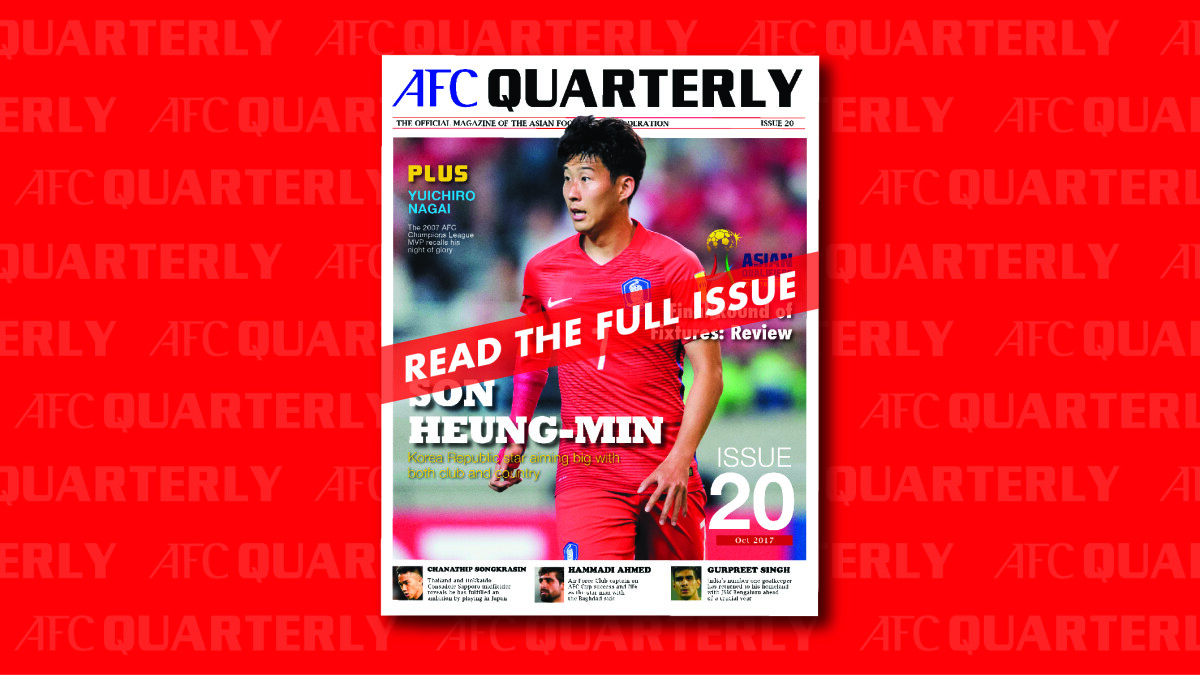
Issue 20
“The AFC Quarterly is the confederation's latest effort to reach out to the millions of passionate fans of Asian football and put on splendid display the game’s glorious achievements,” said AFC Acting President Zhang Jilong. “The biggest endeavour of this magazine is to make household names of our players and put the spotlight on our many competitions, which produce countless moments of top-notch football entertainment.”AFC Player of the Year Lee Keun-ho from Korea Republic is the cover star of the inaugural edition, which also features interviews with 2007 AFC Asian Cup winning striker Younus Mahmood, Olympic bronze medal-winning coach Hong Myung-bo, and Uzbek legend Mirdjalal Kasimov.
Thu, 28 Oct, 2021
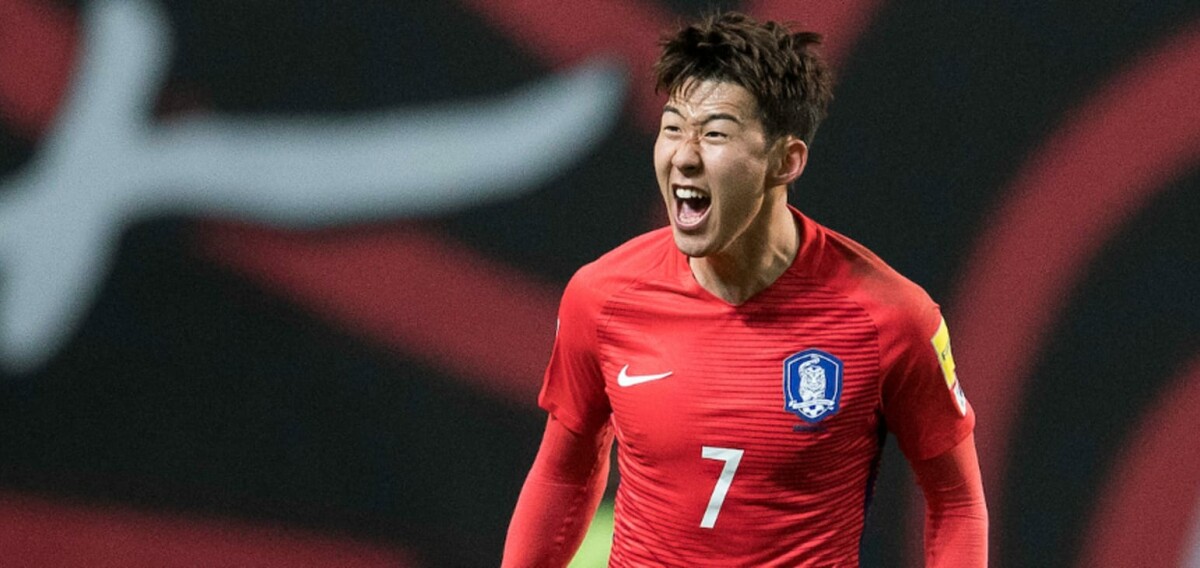
After a record-breaking 2016-17 in England’s Premier League, Asia’s most expensive player Son Heung-min helped Korea Republic qualify for their ninth successive FIFA World Cup. He now has set his sights on becoming a hero for the East Asian nation.
Around 40 minutes’ drive from the hustle and bustle of downtown Seoul lies Paju National Football Center, a modest training complex situated amid tranquil, leafy surroundings where Korea Republic undergo their preparations for home games.
Adjacent to the main pitch, the players congregate inside a building which, at first glance, doesn’t appear particularly striking. However, its most significant feature – a wall decked out with team photos of theTaeguk Warriors sides that have qualified for the FIFA World Cup over the years – offers a strong reminder to the current generation of what is expected of them.
Korea Republic have appeared at nine tournaments in total, the first being in 1954, and have advanced to every one since 1986. It is an impressive record that is unrivalled in Asia.
Cha Bum-kun, Hong Myung-bo and Park Ji-sung are just three of the legends that appear in the various team lineups, the latter two being part of the most successful Korea Republic side ever after reaching the World Cup semi-finals on home soil in 2002. It is they who the current team would so dearly like to emulate.
The most recent picture, from 2014, features the nation’s biggest hope, Son Heung-min, who, at 21, was the youngest player in the Korea Republic squad in Brazil. Then at Germany’s Bayer Leverkusen, the forward played in all three of his country’s games, scoring against Algeria, but the East Asians were eliminated after picking up just a solitary point.
In truth it was a disappointing World Cup given that four years earlier, in South Africa, the national side had reached the knockout stage for the first time outside their own country.
But for Son, who had left his homeland to join Hamburg’s youth academy at just 16 years of age in 2008, it was another huge step in his development after having already appeared in the UEFA Champions League earlier in the season.
“I think [the benefits of moving abroad at a young age] is a very important issue,” said Son, sat in front of the ‘Wall of Fame’ following a training session ahead of August’s FIFA World Cup qualifier with the Islamic Republic of Iran.
“In 2014, I was the youngest player and I already had experience before the World Cup by playing in the [UEFA] Champions League. So I think it was very important for me to play in Europe and learn before the big competitions.
“Playing in leagues such as the English Premier League, the German Bundesliga or Ligue 1 in France can give you good experience for these tournaments.”
Experience is something Son already has in abundance, after leaving all he knew behind and heading to Europe in his teenage years. At 19, he was named in Korea Republic’s squad for the 2011 AFC Asian Cup in Qatar, where he scored his first goal for the East Asians in a 4-1 group stage win over India.
The Taeguk Warriors would ultimately lose on penalties to eventual winners Japan in the semi-finals, but for Son it was the start of an international career that has already yielded nearly 60 caps and 17 goals.
Impressive performances after breaking into the Hamburg first team as a teenager, meanwhile, convinced Bayer Leverkusen to break their transfer record in 2013 by luring the forward to western Germany.
Son helped his new side reach the UEFA Champions League knockout phase in consecutive seasons, scoring in wins over Benfica and Zenit Saint Petersburg in 2014, as the Chuncheon native fitted seamlessly into the Leverkusen lineup.
Heartbreak for the national team followed at the beginning of 2015 when, after the forward scored an injury-time equaliser against hosts Australia in the AFC Asian Cup final, the Socceroos ran out 2-1 winners in extra time to mean Korea Republic’s long wait for the continental title – which stretches back to 1960 – continued.
But Son’s growing reputation had attracted the attention of Tottenham Hotspur who, already boasting a side brimming with young talent, parted with 30 million euros to bring him to north London.
Now 23, Son became the second Korean to represent Spurs – after Lee Young-pyo – but, more significantly, had just been made the most expensive Asian player in history. With the global spotlight now on the forward more than ever, would the pressure of the price tag affect him like it had so many that had gone before?
“No, no, [the pressure] is something I enjoy,” insisted Son.
“You maybe change [teams] two or three times in your career so it’s good to have a record like this. I can tell people in 20 or 30 years’ time that I moved from Bayer Leverkusen to Tottenham for 30 million euros – I can say this once I’ve finished my career.
“I played in Germany for a long time, five years professionally, so I think the timing of the move to Tottenham was fantastic and I think I have made big steps forward.”
The faster pace of life in the English Premier League offered Son new challenges, while the Korean international also had injuries to contend with during a first season in which, although was far from disappointing, he was unable to produce his best form.
“There are many differences,” he admitted. “In England it’s more physical and the teams play much more attacking football.
“It’s quicker, whereas in Germany it’s more tactical and it’s not like every attack has to end in a goal, sometimes you can wait and just keep possession.
“In the first year I didn’t show my best performances because of the injury, but in the second year I showed how good I am and how much I enjoy the Premier League.”
That is no understatement. Often deployed in an exciting attacking quartet that included Harry Kane, Dele Alli and Christian Eriksen, Son excelled in a team that finished as runners-up in the league. On a personal level, records continued to tumble.
In September 2016, the forward became the first Asian to win the Premier League’s Player of the Month award, before claiming it again in April to become the only player to take the prize more than once in the season.
Perhaps more significantly, though, was the fact that Son managed to break Cha Bum-kun’s 31-year record of the most goals scored by a Korean player in a European top-flight league.
Arguably Korea Republic’s greatest-ever player, Cha netted 19 times for Bayer Leverkusen in the 1985-86 season, but Son was to exceed that total by finishing on 21 goals in all competitions.
“I was a bit nervous when I was on 19 goals, the same number as Cha Bum-kun, because I wanted to break the record,” admitted Son.
“Then as soon as I scored the two goals against Leicester it was a big relief and I was really, really happy because this was more than 30 years ago.
“I can admit that I was proud of myself because to make history is not an easy thing to do. It was always my dream to get more goals [than Cha] and every season I want to have a better season than my last one.”
It took just a few weeks of the current campaign for Son to get off the mark once more, when he scored the opener in Tottenham’s 3-1 UEFA Champions League victory over German giants Borussia Dortmund – a side he regularly found the back of the net against during his time in Germany.
Lavish off-season spending by other teams in the English league is expected to see the country’s richest clubs put in a strong challenge for the title this year, while Spurs also must contend with adapting to a temporary new home, Wembley, while work on their new stadium is being completed.
But, although the current campaign promises to be even tougher than Son’s first two in London, the forward remains upbeat about the team’s prospects
“It’s a great team, we’re young and everyone is hungry,” said the forward.
“Everyone has good quality and I enjoy going to training with them every day. I learn things from them and they learn things from me.
“Last season the team was really great. We came so close to winning the title. I enjoyed it as well, every game we went on the pitch to show how good we are and how good I am. I enjoyed last season really much.
“This makes me really happy and this is what I wanted when I moved to Tottenham. I wanted to make one or two more big steps and I’m on the way to making it.”
Back on the international scene, there is only one man the Korea Republic fans will look towards to fire them beyond the group stage for a third time come the end of the season, after, with some difficulty, the Taeguk Warriors did secure a ninth successive appearance at the tournament.
After enduring an inconsistent qualifying campaign, German coach Uli Stielike was relieved of his duties and replaced by former Korean international Shin Tae-yong for their final two matches.
The East Asians would draw their penultimate game with Iran to leave their qualification hopes hanging in the balance ahead of their final-day meeting with Uzbekistan in Tashkent, where only a win would guarantee progression.
Son struck the post in the first half of a game that saw the Koreans hit the woodwork three times before it ultimately also finished goalless. However, with Syria playing out a 2-2 draw with Iran, the point was enough to see Korea join the Iranians, Japan and Saudi Arabia as the four confirmed Asian teams for Russia next year.
“Qualifying nine times in a row can give us confidence because that is not an easy thing to do,” reflected Son after the game in Tashkent.
“We are happy because we have qualified but now we must look forward. Next year is very important, it is the World Cup so we have to work really hard with the new manager to see what happens.”
Despite playing his entire senior career outside his native Korea Republic, it is clear home is where the heart is for Son, and the ambition to drive the team forward over the coming months is evident.
It was more relief than joy etched on his face following the point in Uzbekistan and there is little doubt there is plenty work to be done ahead of the FIFA World Cup.
Not least will be rectifying a poor away record that saw three defeats and two draws from five games over a campaign in which progression was almost entirely down to a near perfect home record.
“I think we maybe feel the pressure more when we go away from home and we don’t play with the same confidence,” explained Son, who missed the away defeat to China and the scoreless stalemate with Syria in Malaysia.
“Maybe we’re a bit scared, we try but we’re not at 100 percent.”
Unfazed by being the most expensive Asian player in history and with a record-breaking season already behind him, fear is not a word that can be used to describe Son.
Indeed, having achieved so much by such a young age, it is hardly surprising that he sets the bar high when it comes to his personal aims with the national team.
“I want to be a hero in South Korea, of course this is my dream,” admitted Son.
“I want to be known as someone who helps his teammates, the game-changer. I hope I can make big steps and I’m looking forward to a positive future.
“It’s not easy leaving South Korea at 16 to go to Germany. Of course, I’m still young and I want to learn more – every game, every day. This is my goal and I want to see where I can get to when I’m 27, 30, 35.”
Having successfully navigated the Road to Russia, Shin will surely use the months ahead to work on improving a side that laboured to qualification yet still boasts plenty of talent within its ranks.
Son may be the biggest star, but Germany-based Koo Ja-cheol and captain Ki Sung-yueng, who plies his trade with Swansea City in the English Premier League, offer experience and quality in the centre of the park.
Young attacking players such as Hwang Hee-chan and Kwon Chang-hoon – based in Austria and France respectively – provide enthusiasm and dynamism up front, and will aim to develop further over the course of the season.
The squad, rightly, cannot yet be compared to the ‘Class of 2002’, but, due to the globalisation of the game, already has far more international experience than the team that started the World Cup 15 years ago.
Should they find the right balance in time for the next summer’s competition, then Son may well hear his name mentioned in the same breath as the legends that evoke so many fond memories in Korean football – and realise his dream of being a hero in his homeland.
Thu, 28 Oct, 2021
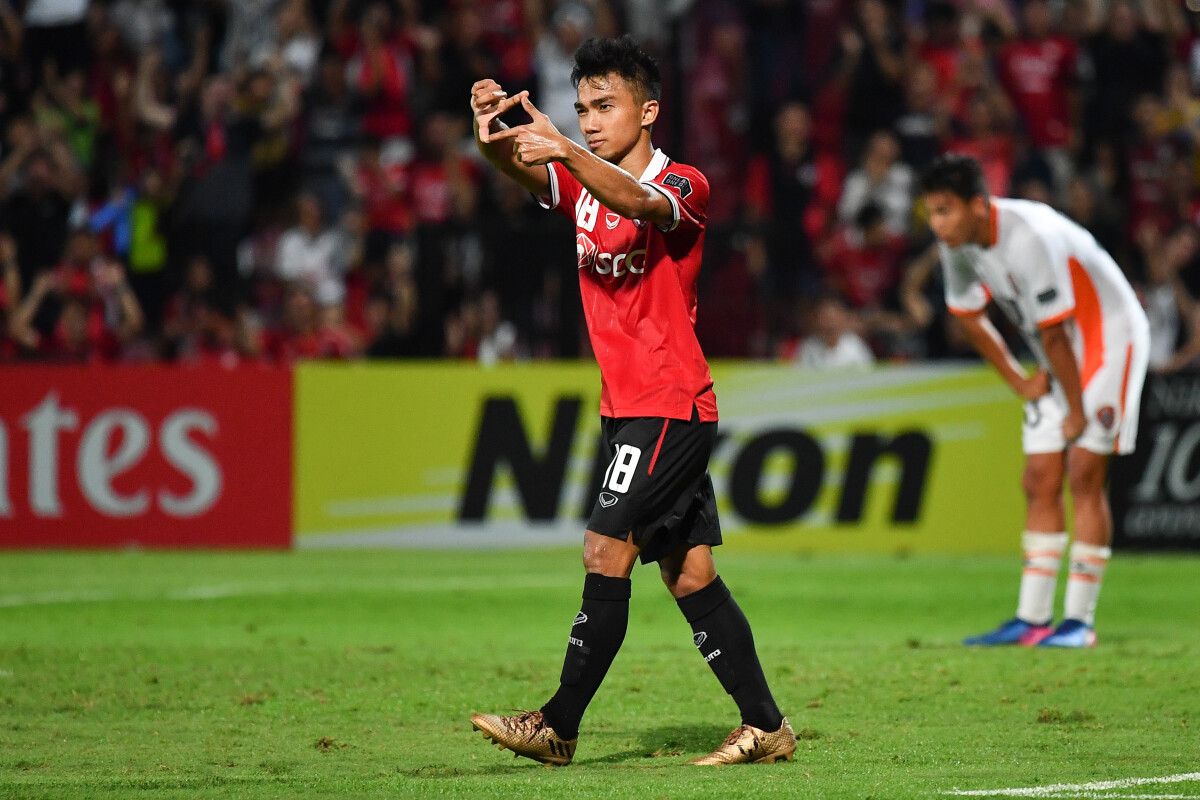
Chanathip Songkrasin has led the way for Thai football this year. The midfield maestro dazzled Asia in the 2018 FIFA World Cup qualifiers and in the 2017 AFC Champions League with Muangthong United. And a new adventure in Japan is the latest chapter in this rising star’s story.
It’s fair to say that with just three months of the year remaining Chanathip Songkrasin has already had a 2017 to remember.
The midfielder, who turned 24 on October 5, began the New Year eager to participate in his maiden AFC Champions League Group Stage and will conclude it having played in his first J. League season following a loan from club Muangthong United.
“This year has been a dream for me,” says Chanathip, whose diminutive stature is dwarfed by the leather couch he is engulfed by at the Kawasaki City-based hotel ahead of Hokkaido Consadole Sapporo’s match with Kawasaki Frontale.
“I always had a dream that one day I would be able to play in the J.League, and it is also the dream of many players, including myself, to get to play in the AFC Champions League against the top teams in Asia.
“So, I guess we can say that – sitting here today – I have achieved those dreams.”
Chanathip’s star had already begun to rise five years earlier in 2012 when he debuted in the Thai Premier League for BEC Tero Sasana. Such was his impact that by the 2013 season, Japanese clubs including Gamba Osaka and Shimizu S-Pulse were already courting the youngster.
Indeed, Chanathip had a 10-day trial with the Shimizu but nothing came of it.
“I don’t know what happened. I wasn’t given a chance to train with the first team; maybe I just need to improve more,” he says. “I wanted to sign with them but the offer didn’t come.”
Nevertheless, his 2013 concluded with a happy ending after he was named Thai Premier League Young Player of the Year.
Two more seasons honing his craft with BEC Tero Sasana occurred before a move to Thai giants Muangthong United and a first chance to enters Asia’s premium club tournament, the AFC Champions League.
Unfortunately for Chanathip and Muangthong, the Thai club faced Chinese heavyweights Shanghai SIPG at the final hurdle in the play-offs and the likes of Elkeson, Dario Conca and Wu Lei proved too difficult an obstacle in a 3-0 elimination.
“Last year the team was completely new,” recalls Chanathip.
“The coach was new; the players were new and the tactics were new. We weren’t yet able to adapt to the new tactics and didn’t play well in the early stages.
“We might not have performed as we wanted against Shanghai SIPG, but that was the just the beginning for this team.”
A year later and a year stronger, Muangthong returned to the continental club competition, this time qualifying directly for the 2017 Group Stage.
Drawn alongside Japanese champions Kashima Antlers, who were coming off a 2016 FIFA World Club runners-up finish to Real Madrid, 2012 winners Ulsan Hyundai and Australia’s Brisbane Roar, it looked a tough test for a side that had picked up just a single point in their only previous AFC Champions League outing in 2013.
“Ahead of the AFC Champions League, I was very excited. I believed it was a good opportunity to face Asia’s best,” says Chanathip.
“My first personal target was simply to improve myself to reach the next level as a player and my second one was to put on good performances. With Muangthong, we were aiming to reach at least the knockout stages.”
A prediction that proved to be correct as the Thai side picked up 11 points from their six Group E games to reach the Round of 16. A run of results that was based on impressive home form as Muangthong enjoyed a perfect record in front of their own fans.
A 2-1 win over Kashima Antlers was particularly memorable after striker Xisco scored an injury-time winner but the 3-0 victory over Brisbane Roar on Matchday Five was especially sweet for Chanathip after he scored a spectacular goal.
Collecting the ball midway through the Brisbane half, the midfielder showed superb acceleration to motor past one opponent before stepping inside a sliding challenge from another.
One on one with goalkeeper Tomislav Bilic, Chanathip shuffled and shimmied before rounding the custodian to tap into an empty net to the acclaim of the Muangthong fans.
“For this goal, I wasn’t so confident with my shooting at the time,” he admits.
“I thought to myself if I were to take the ball with me, I would have a better chance of scoring a goal.”
While the fans celebrated, up went Chanathip’s fingers on both hands to form a rectangle. Telling people to take a picture of the moment? Not quite.
“Actually, the idea for this celebration came from my comic book ‘Fantasista’, it’s just a reference to that,” explains Chanathip.
“I am actually crazy about comics and it’s not every day I can do a celebration like this, as I don’t score that many goals!”
Fantasista is a sports manga series by Michiteru Kusaba whose protagonist, a countryside boy called Teppei Sakamoto, aims to become a successful football player in Japan and compete in the World Cup. It is a comic that also includes Samurai Blue icon Keisuke Honda amongst its fans.
And so for Chanathip, who was born in the Thai country district of Sam Phran, his belated move to Japan this summer and club Consadole Sapporo could have been seen as life imitating art, or at least a comic book fan following a strand of his favourite character’s journey.
“I had been playing in Thailand for quite a while by this point and I had already achieved what I’d set out to do there, having already won the Thai Premier League (in 2016),” he says.
“I wanted to show the whole of Asia that Thai players can play in the very best Asian leagues. There were other teams interested but Consadole made it clear they were the most serious in bringing me over.
“I also liked that they had the initials ‘CS’ [Consadole Sapporo] the same as my name!”
Since his summer move, Chanathip has impressed in the Consadole shirt although the team’s results have been mixed so far with the club hovering just above the relegation places.
And the experience of a new challenge and a new footballing adventure – both on and off the field – has been one that the Thai has fully embraced.
“Of course, the level of competition here is much tougher than Thailand,” he says. “As well as adapting to the new team and establishing my style of play here. But I’m very happy getting a chance to play.
“I didn’t find adapting to Japan that difficult, maybe because both Thailand and Japan are not far apart. Initially, I thought it would be tough as I’ve never play abroad, so I was afraid of people looking down on me and not accepting me as a player.
“However, since I have settled down the coaches, staff and teammates have all treated me like a family member which helped me greatly. I really enjoy living in Sapporo. It is such a peaceful town with fresh air and friendly people.
“In my spare time after training, I have my camera snapping photos, reading my comic books and watching movies – these things make me happy. Apart from that I spend my time having coffee in cafes and learning Japanese.”
For Chanathip, the time in Japan is important not just for his own sake but also as a representative of his nation. A positive impression left upon the J.League and the fans by the young star could open the doorway to more of his countrymen getting a similar opportunity.
He is not the first Southeast Asian player to attempt this. Vietnam’s Le Cong Vinh, Indonesia’s Irfan Bachdim and Cambodia’s Chan Vathanaka are among the names who have endured mixed spells in Japan.
“Actually, I have no concern about those who have come before me,” insists Chanathip.
“I’m very happy getting the chance to play in the J.League and did not pay much attention to the history of other ASEAN players in the past. I’m here to achieve my dream, because I want to be here and to make the Thai people proud.
“Of course the main goal is to help the club realise their objectives – such as avoiding relegation – but another target here is to be successful so that other Thai players will have the chance to prove themselves here in the J.League, which will in turn improve our abilities,” he says.
“If I can show the fans and clubs here how well Thai players can do then hopefully that will pave the way for more footballers from Thailand to come over here.
“In a way, I’m here representing the Thai people as well as my country, in the same way as I do when playing for the national team.”
When it comes to the Thailand side, Chanathip has often stood out in the War Elephants’ FIFA World Cup qualifying campaign and forced many previously uninformed football pundits to sit up and take notice of the silky skills of the petite playmaker.
Just two points from their 10 games in Group B by no means tells the full tale with Chanathip and his compatriots enduring a large helping of misfortune in several games, and only losing by a single goal in several of the encounters with Asia’s best sides.
“It’s been a long time since the Thailand team has played in the final stage of the World Cup qualifiers and it’s not easy for us but in all the matches we had a chance to win – which is a positive sign,” says Chanathip, a two-time AFF Championship winner (2014, 2016) with the national team.
“Of course, the results haven’t been great, but it’s been a good experience for the team to take the next step and play against the best sides in Asia.
“I have had the opportunity to play against some of the best players I’ve ever faced in my career so far including stars like Takuma Asano, Omar Abdulrahman and Shinji Kagawa.”
Although he won’t be appearing at the 2018 FIFA World Cup in Russia, Chanathip still hopes to bring the dreams of his favourite footballing cartoon to reality. But it is another of the game’s superheroes he is most commonly associated with in his homeland, Argentina’s Lionel Messi, given the nickname “Messi Jay”.
“There are many players I try to look up to: Maradona, Zidane, Berbatov, former Brazil strikers Ronaldo and Ronaldinho,” he adds.
“And of course, I am proud that people call me ‘Messi’, but obviously I’m not Messi.
“I am not anyone else. Chanathip is Chanathip. I’m a representative of my country and I play to make the Thai people proud.”
Thu, 28 Oct, 2021
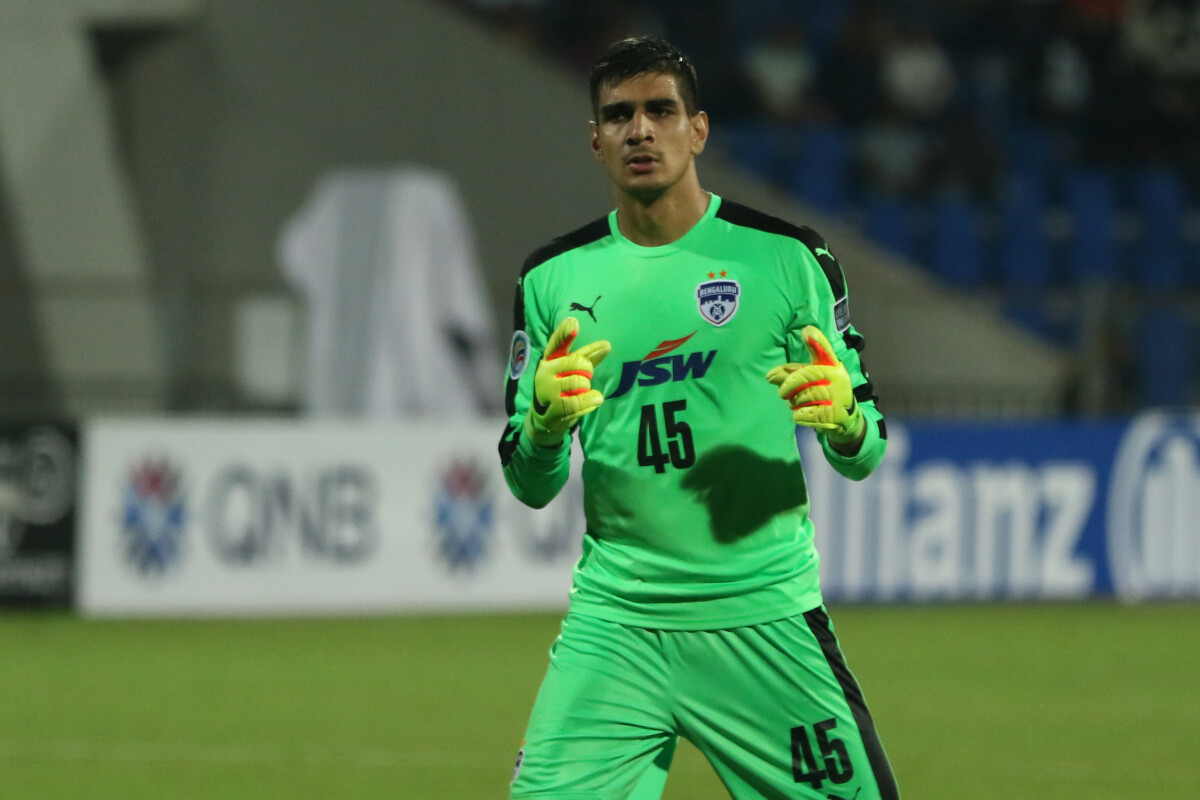
India’s number one Gurpreet Singh has returned to his homeland after three years in Norway. A busy few months await, as the Punjab native aims for AFC Cup glory with new side JSW Bengaluru and AFC Asian Cup qualification with the national team.
Two-time I-League and Federation Cup champions and AFC Cup runners-up in 2016, JSW Bengaluru’s rapid rise in just over four years of existence has been remarkable.
Yet, after advancing to the AFC Cup knockout rounds for the third successive year in May, the side from Karnataka were dealt arguably their biggest challenge to date when many of the team that had been involved in their success departed for pastures new.
In came a host of foreign players ahead of the start of the Indian Super League, while captain and Indian icon Sunil Chhetri remained.
But, amid a chaotic period of comings and goings, one signing in particular grabbed the attention: the arrival of India’s number one goalkeeper Gurpreet Singh, who was acquired from Norwegian side Stabaek following a meeting in Abu Dhabi just hours before the transfer deadline.
It was a major coup, the homecoming of a man who had broken new ground outside the South Asian country. Singh is only the fifth Indian to play professionally in Europe and the first to play a top-flight competitive match, while he is also the sole person from his country to appear in the UEFA Europa League.
Ironically, however, it was Asia’s equivalent of the Europa League – the AFC Cup – that was among the main reasons for the custodian to return to India after his three-year stint in Scandinavia.
The tournament, coupled with India’s increasing chances of progressing to the AFC Asian Cup UAE 2019, convinced the big shot-stopper that the time was right to make the move.
“I saw a very good opportunity with Bengaluru as it’s one of the very best and most professional clubs in India,” said 25-year-old Singh ahead of his competitive debut against DPR Korea’s 4.25 SC.
“The way they approached me was very professional and they were the only Indian club who wanted to play a transfer fee for me, so that shows the commitment of the club.
“Most importantly, they are playing in the AFC Cup and the level in these games is different from what you play in India. I wanted to be part of it because it’s challenging.”
Singh would go on to keep a clean sheet against 4.25 as the AFC Cup Central Asia Zonal champions claimed a 3-0 victory in the first leg of the Inter-Zone semi-finals.
The game was far from straightforward, though, as torrential rain made for tricky conditions but Bengaluru’s new goalkeeper performed admirably, collecting two deep crosses late on in a valuable home shutout.
Three weeks later in Pyongyang, Singh dived to his right to save a second-half penalty as Bengaluru held the hosts to a scoreless draw to advance to an AFC Cup Inter-Zone final with Tajikistan’s FC Istiklol and leave the side just two games away from a return to the final.
“I think [last year] Bengaluru set an example to other Indian clubs by reaching the final, so I have no doubt that we can go all the way,” added Singh.
“I hope we keep working hard, keep our heads down and try to achieve what hasn’t been achieved yet.”
After starting his career with Kolkata-based East Bengal, Singh was selected for India’s 2011 AFC Asian Cup squad in Qatar at the age of just 18.
Although he didn’t appear at the continental competition, the custodian made his India debut against Turkmenistan later that year, before signing for Stabaek in August 2014.
Undoubtedly a huge step out of his comfort zone, Singh would go on to adapt well to life in chillier climes.
A Norwegian league debut eventually arrived in May 2016 before a month later he again made history by playing in the UEFA Europa League against Welsh side Connah’s Quay Nomads, when, unfortunately, he was forced off with a hand injury.
“Luckily it was summer when I first went to Norway, so I initially adjusted [to the weather] in stages,” admitted Singh.
“But I had never experienced snowfall before so training in it was a completely different experience. Your fingers and toes go numb and if you ever get hit in the face with the ball it’s painful.
“It’s something I can always say to people that I’ve experienced; I don’t think any other player in India has done that. But the Norwegian summer is better.
“It was a very nice experience and made me learn a lot about life, made me more independent and responsible, so I have no regrets.”
With the national team, meanwhile, Singh has appeared in all three games of the Blue Tigers’ perfect start to their AFC Asian Cup UAE 2019 qualifying campaign, keeping clean sheets in wins over Myanmar, the Kyrgyz Republic and Macau.
Four more points will guarantee progression to Asia’s premier competition for the fourth time, after also appearing in 1964, 1984 and 2011.
Defeat to Guam in June 2015 – ironically, the game before Singh was installed as his country’s number one – marked the low point for the Indian team in the early stages of the 2018 FIFA World Cup qualifying stages.
But since then the side has recovered to perform admirably in the ensuing AFC Asian Cup qualifiers and now seem set to take their place among the continent’s elite in early 2019.
“India has seen hard times and that is something that we learn from because when you lose games you know the value of winning,” explained Singh.
“The boys we have now are a new and hungry bunch who want to learn, believe in the system we have and will give it some time.
Thu, 28 Oct, 2021
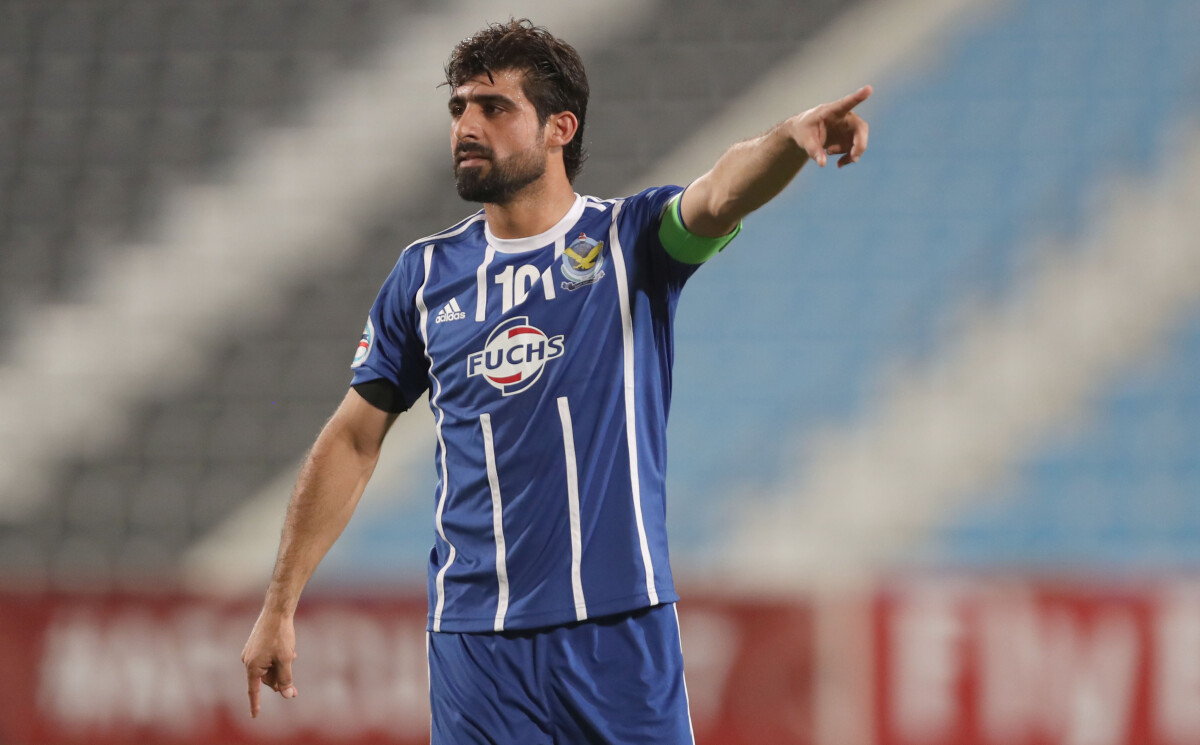
After a stunning 2016 AFC Cup campaign saw Hammadi Ahmed finish as MVP and Top Scorer, the Air Force Club forward is aiming for continental glory once again as the defending champions prepare to take to the final for the second successive year.
After a stunning 2016 AFC Cup campaign saw Hammadi Ahmed finish as MVP and Top Scorer, the Air Force Club forward is aiming for continental glory once again as the defending champions prepare to take to the final for the second successive year.
It is not easy being your team's goalscoring talisman. But for Hammadi Ahmed, it is a challenge to relish. The 28-year-old Iraqi striker has spent seven years at defending AFC Cup champions. When Ahmed arrived at the club in 2010 as a young talent, Air Force had not won any silverware for five years. Seven years on, Ahmed can look back to almost 100 goals and a period of significant success for him and the team.
Ahmed's most memorable campaign came in 2016-17, when he showed his knack for scoring crucial goals in big matches. His tally of 16 in Air Force Club's triumphant run to the AFC Cup title included the lone goal in the final against JSW Bengaluru. Ahmed then went on to score both goals in the 2-1 win over Al Hedood, which saw them crowned as Iraqi champions for the first time since 2005. It was this form which earned him a nomination for the AFC Player of the Year award.
Air Force Club are now back in the AFC Cup final this year after seeing off Syria's Al Wahda in the West Asia Zonal final and although he hasn't scored as much as he would like during this campaign, Ahmed remains confident in his abilities.
"My fans expect me to score every game. I am to blame for that; I got them used to that,” said Ahmed after his side’s dramatic 1-0 victory over Syria’s Al Wahda in the second leg of the AFC Cup West Asia Zonal final saw them advance to a second successive final as a 2-2 aggregate score saw them through on away goals.
“But what's important today is someone scores. What matters is that we have reached the final. Now that we have done that, hopefully I can score the winner in the final."
The last six months have been a time of ups and downs for Ahmed, with an injury in April threatening to curtail his season. However, he recovered in time to lead Air Force Club to the Iraqi league title. On the continental front, the forward was not able to repeat the kind of goalscoring form that he displayed in 2016, coming up with only two goals so far. Nonetheless, the timing of those goals showed why Ahmed is so important to this Air Force Club side.
"I know I haven't been the same this season,” admitted Ahmed. “The injury affected me and yet I was able to score two crucial goals - against Al Hidd in the group stage and then against Al Wahda in the first leg of the Zonal final."
For all of his success at the Baghdad club, Ahmed has his time at local club Samarra to thank for bringing him into nationwide prominence. Starting off as a teenager, he scored 15 goals in two seasons before the giants came calling. It was an offer he couldn't refuse.
Ahmed's move to Air Force Club raised his profile and, seven years later, he is a club legend at one of Iraqi football's most historic institutions. The love story between club and player has also survived a number of offers from abroad.
"To be honest, I get offers from abroad every year. In the second year with Air Force Club, I got an offer from the Ukrainian club Metalist Kharkiv," said Ahmed.
"I rejected it as I preferred to stay here. I got offers from all over the Gulf region, Jordan and also Japan. Every single occasion, I decided to stay here. I was happy here and I had a good contract. I am the main man here and the fans here love me. Everyone here respects me."
Such loyalty to the club has made Ahmed a beloved icon for the fans of Air Force Club, who call him the 'Villa of the Falcons' due to his resemblance to the World Cup winning Spanish striker. However, unlike the former Valencia and Barcelona frontman, Ahmed has not enjoyed similar success with his national team. Unfortunately for him, his international career coincided with a lean phase for the Iraq, which has been unable to match the heights of the mid-2000s when the Lions of Mesopotamia finished fourth at the 2004 Olympics and went on to win the 2007 AFC Asian Cup.
Yet, Ahmed does have some great memories to look back at when he recalls his stint with the national team, during which he scored six goals.
"After moving to Air Force Club, I earned my first national team call-up," he reflected. "My first goal for Iraq is one of the most memorable goals of my career."
The goal in question was an 86th-minute winner against Jordan that saved the Iraqis from elimination in the 2014 FIFA World Cup qualifiers. Ahmed's fierce left-footed strike from the edge of the box flew past Jordan keeper Amer Shafi and nestled in the top corner, sparking a shirt-ripping celebration from the overjoyed striker.
Ahmed was also involved in Iraq's 2013 Gulf Cup campaign, where he scored twice to help the side to a runners-up finish behind the United Arab Emirates. This was followed by the disappointment of missing out on Iraq's 2015 Asian Cup squad. Despite making a return to the national team for the 2018 FIFA World Cup qualifiers, Ahmed subsequently announced his retirement from international football in June of this year after Iraq failed to qualify for the finals.
Although he wasn't able to repeat his club heroics at international level, Hammadi remains hopeful when asked about the future of Iraqi football.
"Iraq is filled with lots of talent. We have had huge stars who wrote their names into history, who starred not just in Iraq but also earned a name abroad. We have a population that loves football. It's the major sport in the country. We have done great work, especially with our youth teams who have achieved great results recently.
“Similarly, I have great hope for our senior national team, who have started to regain form and have begun winning games again. I expect them to excel in the future as new blood comes in and every player looks to show his worth at the international level."
For now, Ahmed's focus shifts to Air Force Club and the task at hand - retaining the AFC Cup title. It has not been as easy this year to reach the final, compared to the dominant form the Falcons showed in 2016.
"Last year, we became the first Iraqi side to win this tournament. I am proud of this achievement, as a player and especially as the captain of the team," said Ahmad.
"We were a good side last year, stable and harmonious. We didn't make any wholesale changes. Every player gelled well and we were prepared to go all the way."
"This season, we haven't had much time to prepare before the Zonal final. We just had a ten-day camp prior to the Al Wahda match. After we lost the first leg, I promised that we would go through. Thank God, we have delivered on that promise."
Before signing off, Ahmed made a final remark on the individual records that was a highlight of his 2016 season.
"Even though the team achievements are our topmost priority, I think the individual records also help motivate us. I was able to become the AFC Cup top scorer, break various records and be named as the tournament MVP. I think this is a good thing; these things really push us and give us confidence and hopefully, we can retain the title. This is our objective."