
Tue, 30 Nov, -0001
Issue 21
Thu, 28 Oct, 2021
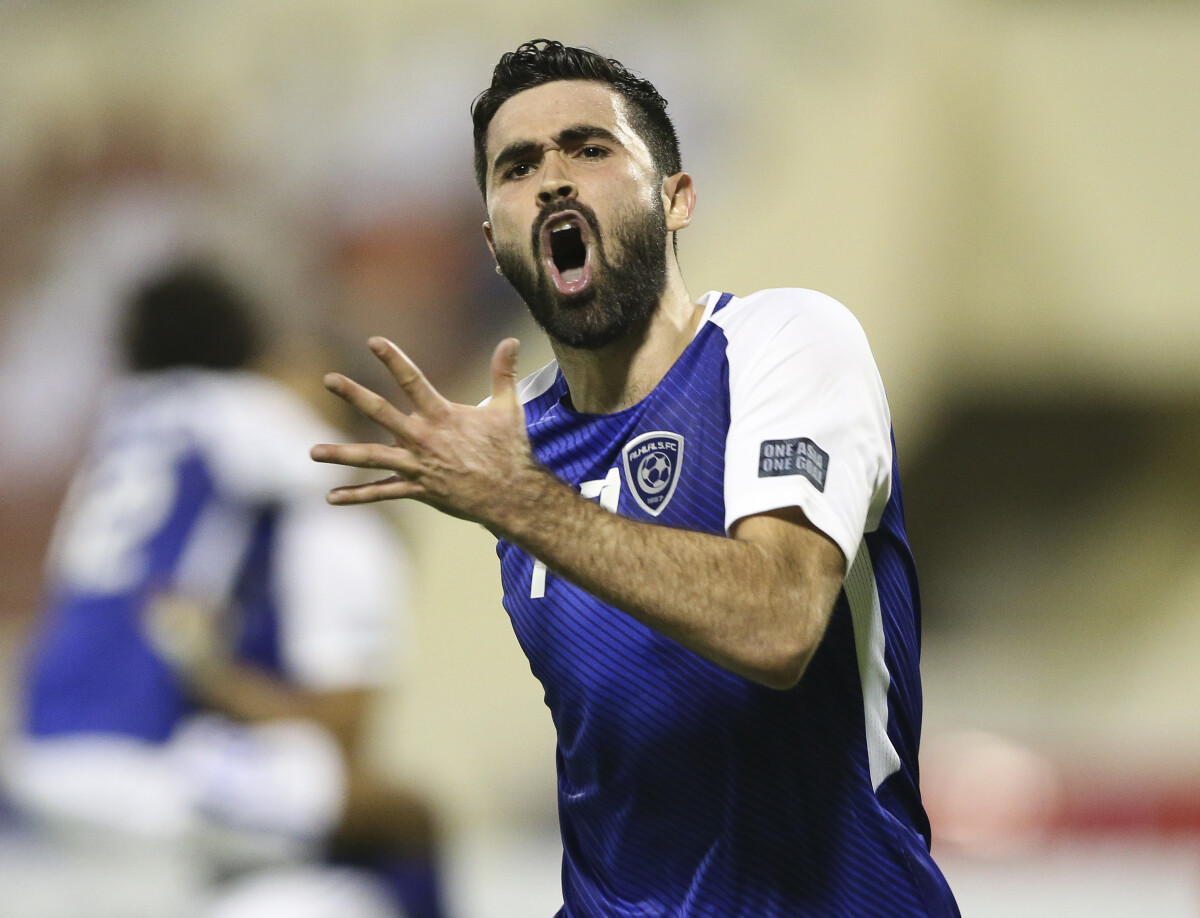
Omar Khribin began 2017 on loan at Al Hilal but after posting a season to remember for both club and country which culminated in the AFC Player of the Year and the AFC Champions League top scorer awards, the Syrian striker begins 2018 as one of the most talked about players on the continent.
A loan move to Saudi Arabian giants Al Hilal at the start of the year offered Omar Khribin the perfect platform to raise his game to a new level, but the ensuing 12 months saw him go above and beyond expectations.
Syria defied all odds to progress to the latter stages of FIFA World Cup qualifying, while Al Hilal would remain unbeaten on route to the AFC Champions League final. Khribin was instrumental for both.
“The most outstanding quality about Omar is his ambition,” commented Persepolis midfielder Bashar Resan, a close friend and former teammate of Khribin.
“He is always thinking about the future and working towards his dreams. His commitment and determination are impressive,” added Resan, who played alongside Khribin at Iraq’s Air Force Club.
Ambition and hard work were engrained in Khribin’s character since the early days of his childhood in Damascus. Watching his older brother Mohammed and the neighbourhood kids kick a ball about, he thought: “I will be good at this”. The past 12 months were indeed proof that young Omar grew up to be good at playing football.
Khribin came through the youth ranks at Damascus-based Al Wahda, where he started his journey at the age of nine. At 15, he made his first-team debut, becoming the youngest player in the club’s history. Such was his talent, being the youngest became a constant feature in his career.
Before his 19th birthday, Khribin was a member of the Syrian national team that won the 2012 WAFF (West Asian Football Federation) Championship in Kuwait, again the youngest player in Syria’s history.
As the security situation in Syria worsened, the striker joined many other Syrian players in seeking contracts abroad. His destination was Baghdad side Air Force Club, where he teamed up with would-be 2016 AFC Cup top scorer Hammadi Ahmed to form a terrifying attacking duo.
The Syrian finished his 20-game loan spell at Air Force Club with eight goals to his name, prompting fellow Iraqi side Al Minaa to sign him on another loan deal the following season. But Khribin’s final campaign in Iraq was cut short and he returned to Al Wahda.
Syrian coach Mohamed Quaid, who led Al Karama to the 2006 AFC Champions League final, would later spend time coaching in the Iraqi league, where he was impressed with his countryman Khribin.
UAE side Al Dhafra appointed Quaid for a third stint at the club in 2015 and one of his first requests was to acquire the services of Khribin.
“It is a stepping stone to bigger things,” said Khribin upon his unveiling at the Hamdan bin Zayed Stadium in early 2016. It would not be long before the prophecy was fulfilled.
One of the smallest teams in the UAE Pro League, Al Dhafra’s 5,000 capacity stadium is located in the small town of Madinat Zayed, a desert oil town with a population of under 30,000 people.
Not a place where many young footballers dream of plying their trade. Add an annual battle against relegation and the experience could prove a mountain too high for any young player, but Syria’s first million-dollar footballer faced the challenge head on.
The Al Dhafra board had splashed a club record US$1 million to make Khribin the most expensive Syrian player of all time. It would prove to be one of the best signings in the club’s history as he formed one of the UAE Pro League’s most lethal attack lines with Senegalese striker Makhete Diop.
“It is one of the strongest leagues in Asia, I will get more exposure here where I can play against top players like Omar Abdulrahman and Ali Mabkhout,” remarked Khribin after joining Al Dhafra in January 2016. Nearly two years later, he would pip Abdulrahman to the top individual prize in Asian football.
For now, Khribin set his eyes on the challenge of lifting the club from the danger zone and showcasing his talents for bigger sides who could be keeping an eye on the UAE league.
One year, 22 goals and a Fans’ Player of the Year award later, Khribin had not only helped Al Dhafra escape relegation, but also contributed to their highest ever league finish, ending the 2016/17 season in seventh place.
His task at Al Dhafra had been accomplished, and it was time to take the next step. One of many clubs impressed by the Syrian’s talents were Saudi giants Al Hilal.
The thought of playing at one of Asia’s most popular clubs appealed to Khribin. So, when the club from Riyadh called, he was ready to answer. A loan deal was in place and the King Fahd International Stadium became his new home for the next six months.
‘Impress to Stay’ was Khribin’s mission and motto for his loan stint in Riyadh, and impress he did. Two weeks after his arrival at the Saudi capital, the number 77 broke his Al Hilal duck and from there on there was no stopping him. Against arch-rivals Al Ittihad in March, he endeared himself to the fans by scoring the second goal in a 3-1 win.
A return to the UAE was on the agenda for Khribin as Al Hilal travelled to Abu Dhabi to face Al Wahda on Matchday Three of the 2017 AFC Champions League. The Emiratis had a 2-1 lead and a one-man advantage going into the final half an hour, when Khribin got on the end of a squared pass, rounded the goalkeeper and claimed his first of many AFC Champions League goals.
Syria had already surprised many by reaching the decisive third round of the 2018 FIFA World Cup qualifiers. The ‘Qasioun Eagles’ grabbed the headlines early on by winning in China before drawing with Korea Republic in the Syrians’ adopted home of Malaysia, where they were to face Uzbekistan in March.
The match had looked destined for a draw but Khribin stepped up to confidently convert an added-time penalty to put Syria back in contention for qualification spots.
Khribin then went into his first Riyadh derby in the final week of the season. Al Hilal had already wrapped up the league title as they welcomed Al Nassr with one thing on their mind: to show their city rivals who the boss is. A defeat here would blemish an otherwise perfect league campaign.
Always one to relish a challenge, Khribin was at his lethal best as Al Hilal turned the style on, putting five past their visitors. The Syrian made his mark on the derby records with a memorable hat-trick. A diving header in the first half was followed by a threeminute double salvo after the break to sign off his first league season in style.
Just a few days after that impressive derby performance, Al Hilal were back in AFC Champions League. Having already secured their passage to the knockout stage, Khribin netted a brace, including the winning goal, in their final group game against Qatar’s Al Rayyan as the Saudi side secured an entertaining 4-3 victory to top the standings.
Al Hilal took a 2-1 away lead into the second leg of the last 16 against the Islamic Republic of Iran’s Esteghlal Khouzestan, but within the first ten minutes their advantage had been cancelled out.
Five minutes later Khribin levelled the score on the night with a diving header and his fourth of the tournament as Al Hilal eventually advanced to the last eight following a 4-2 aggregate win, before the Riyadh club saw off the United Arab Emirates’ Al Ain in the quarter-finals.
Back on international duty, the striker ran the show against Qatar in the penultimate game of the third round of qualifiers as a goal either side of half time propelled his national team to a 3-1 victory, confirming their status as genuine contenders for the top positions in the group.
Syria then booked their place in the twolegged play-off against Australia with a lastminute draw against Iran.
A 1-1 draw in the first leg in Melaka set up a thrilling tie in the return leg in Sydney, but Khribin would miss out on the clash having picked up a yellow card.
There was heartbreak for Syria, though, as an extra-time Tim Cahill goal settled the affair for the Socceroos, but Khribin ended the qualifying campaign on ten goals. Only four players scored more.
Khribin’s performances over the year convinced Al Hilal to splash out US$5 million to make his loan deal permanent. And the Syrian would raise the level of his performances to even greater heights in the weeks to come in the AFC Champions League semi-final against Iran’s Persepolis.
The thermometer was finally dipping below 40 degrees in Abu Dhabi, a sign that the long, hot summer was finally giving way to a marginally cooler autumn.
Tension was in the air at Mohamed bin Zayed Stadium in the late September evening as Al Hilal players sat in the dugout preparing for their final training session ahead of the big game in the first leg against the Tehran side.
Players chatted away by the touchline, tying their laces or taking sips of water. A few seconds later, he emerged from the tunnel nonchalantly juggling a ball as he walked onto the pitch, unbothered by the weight of expectation.
The two semi-final clashes against Persepolis would see the Syrian produce some of the finest individual performances witnessed in the 2017 campaign.
In the first leg, Khribin started with a well-placed header, then added two more goals in the second half to complete a ‘perfect hat-trick’: a header and a goal with each foot to hand Al Hilal a 4-0 winning margin that all but sealed their place in the continental final.
The two sides faced off again three weeks later in Muscat. Persepolis scored early, but Khribin calmed the Al Hilal faithful’s nerves with a coolly taken ‘Panenka’ penalty kick.
Persepolis took the lead again, before the number 77 added a fifth goal against the Iranians over the two legs to end the semifinal stage on nine goals, level with Shanghai SIPG’s Hulk at the top of the competition’s scoring charts.
The Saudis set up an AFC Champions League final showdown with Japan’s Urawa Red Diamonds as they looked to erase the ghosts of their 2014 final defeat to Western Sydney Wanderers.
Al Hilal fell behind to an early goal in the first leg at King Fahd International Stadium but Khribin clawed his team back into the game by restoring parity with a goal that would ultimately see him pick up the AFC Champions League top scorer award.
Unfortunately for Khribin, his high-scoring campaign ended on a negative note as a 1-1 home draw set up a difficult task in the second leg in Japan. With the match still goalless at the hour-mark, Khribin was stretchered off with an injury and Rafael Silva compounded Al Hilal’s misery with a late strike as The Blues suffered a second defeat in the final in four years.
Had you asked any Al Hilal fan what they made of Khribin’s transfer fee after his derby exploits back in May, you would have got the same answer every single time: “Worth every penny”.
Seven months on from that night in Riyadh, ask any ‘Hilali’ the same question and the answer would be: “It was undoubtedly a bargain”.
“It is a stepping stone to bigger things,” Khribin’s statement from 20 months ago rings loud and clear as he embraced Omar Abdulrahman, who he succeeded as the AFC Player of the Year, at the AFC Annual Awards gala in Bangkok in November.
“I apologise to the fans I could not make happy, we will do better in the future,” said Khribin upon picking up his award. The striker, having checked the most prestigious individual award off the list, remains determined to achieve collective glory.
“With the club and the national team, we did our best, but it was not meant for us to win the Champions League title and qualify for the World Cup finals. We hope that next year we can do better.”
One of Khribin’s next aims will be to help Syria do well in the UAE as they play in their sixth AFC Asian Cup in early 2019.
“We will try to do our best for the Syrian national team. We play and fight to bring happiness to our people. That is our main target.
“We have determination in matches, but the determination is stronger when you have people who are hungry for the happiness and joy. Our people deserve to be happy.”
Thu, 28 Oct, 2021
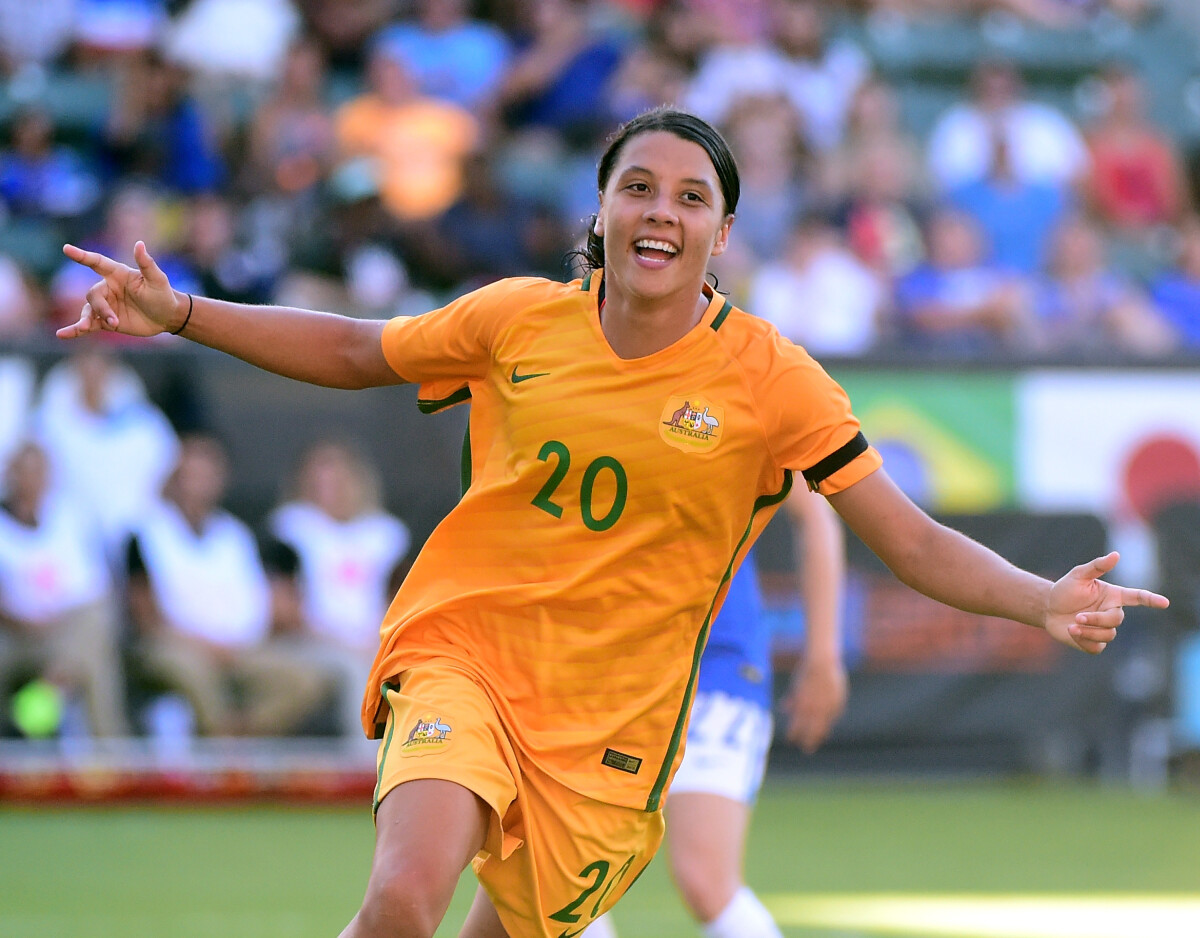
Australia striker Samantha Kerr has enjoyed a record- breaking 2017 and the recently crowned AFC Women’s Player of the Year now has her sights firmly fixed on this year’s AFC Women’s Asian Cup in Jordan and the 2019 FIFA Women’s World Cup.
Samantha Kerr has come a long way in the nine years since she made her W-League debut at the age of 15. But the Australian has arguably come an even longer way since suffering a serious foot injury in 2015 that led her to consider quitting the game.
Now 24, Kerr came back stronger than ever, and recognition for a sensational 2017 came in the form of the AFC Women’s Player of the Year award.
It was a year that began well as she received the Julie Dolan award for the W-League’s outstanding performer in the 2016-17 season with her club Perth Glory. And it ended with Kerr breaking an Australian scoring record as she became the first player to find the back of the net in six consecutive Matildas’ matches.
In between, Kerr became the United States’ National Women’s Soccer League’s (NWSL) all-time leading scorer at Sky Blue FC, and was top scorer in Australia’s triumph at the inaugural Tournament of Nations, where they saw off heavyweight opponents in the USA, Japan and Brazil.
“At a team level, winning the Tournament of Nations,” said Kerr, when asked to identify the highlights of an incredible year. “Beating the USA was huge but then we backed it up by beating Japan, who are still one of the best teams in the world, and then beating Brazil 6-1.
“That whole tournament was just huge, and, as a team, we finished this year with seven straight wins and we lost just one game in 2017, so it has been a great year for the Matildas and we still think we can get better.
“On a personal level, beating the record in the USA (all-time top scorer in NWSL). At the time, I didn’t really think about the record and it didn’t really sink in, but now looking back it’s something that I’m really proud of and being the all-time leading goalscorer in the NWSL seems a bit surreal being so young and really only playing 3-4 years in the league after being injured the other two.”
Kerr completed her record of netting in six straight games as the Matildas saw off China 3-0 and 5-1 in two matches in Australia in November as the Matildas impressively dismantled the eight-time AFC Women’s Asian Cup winners.
“I wouldn’t say I was surprised,” Kerr said. “We expect to win against most teams now. There would probably be only one or two teams in the world that we don’t think we’re favourites against. I might be biased being on the team, but I honestly think we’re one of the best teams in the world.
“We have everything now. We have speed, we have skill, we are technically very good. We hadn’t seen China in a while, but going by other results that they have had, we thought we would go in with a strong chance.”
In addition to winning the AFC gong, Kerr also made the initial 10-strong shortlist for the FIFA Women’s World Player of the Year award, but missed out on being one of the three finalists, who were the USA’s Carli Lloyd, Venezuelan Deyna Castellanos and Holland’s Lieke Martens.
“Honestly, it’s just an honour to win it [the AFC award],” Kerr said. “When I found out I wasn’t nominated in the final three [for the FIFA award], it just motivated me more. But it was a huge honour to be nominated in the top 10.”
It would be an exaggeration to say that Kerr’s career has been a slow-burner given that she is still only 24. She scored in the 2010 AFC Women’s Asian Cup final at the age of 16 and has twice won the FFA Under-20 Player of the Year award.
Kerr may have been around for nine years, but she has had to overcome serious injuries to stay on track. Most recently, ruptured foot ligaments kept her out of action from November 2015 to mid-2016, while she had to have a knee reconstruction in 2011 and another knee operation in 2014.
“I can’t put my finger on it,” Kerr said, when quizzed on her upturn in fortunes this year. “The reason I started playing football is because I love it and I’ve just tried with every game to go out there and play with a smile on my face.
“I will say that I’ve tried to be more of a professional. I’ve battled some injuries over the years so taking care of my body and all those kinds of things – the one percenters that have really added up and made a difference to my game.
“Honestly, I’ve just grown up and I think I’m at that age now where I realise that this is my life, this is my job, and I’ve taken that completely seriously.”
Although she has elevated her game to new levels, there is no danger of Kerr becoming complacent and she has just set her sights even higher.
“I guess up until this year I never really thought of winning World Player of the Year but I guess now that I’ve been nominated and been so close, I want to win that one day,” Kerr admitted.
“But, like I said, team things are more important than individual awards, so my main goal is to win a World Cup with the Matildas and get a medal at the Olympics.”
With an amazing 2017 now in the past, there are new priorities for the Australian national side in 2018, beginning with the AFC Women’s Asian Cup in Jordan in April ahead of the 2019 FIFA Women’s World Cup in France.
Kerr is incredibly the third Australian in four years to lift the AFC Women’s Player of the Year award. Katrina Gorry (2014) and Caitlin Foord (2016) are international teammates who form part of a golden generation that should be reaching its peak years in 2019.
“The most important thing (in 2018) is the Asian Cup in Jordan,” said Kerr. “We want to win that and bring the trophy back home to Australia.
“And then, just to keep winning games, to get more games and experience under our belts and more time together before 2019, hopefully when we qualify.
“The Asian Cup is the most important thing at the moment, but it’s [the World Cup] in the back of my mind. Everything we do is for 2019.”
Kerr continues to play the W-League season for Perth Glory between October and February before switching to the NWSL from April to October.
She is keen to continue to play in both leagues but admits that time will tell if she can continue to perform in two countries.
“I see the time in the W-League as, not a break, but I’m home so it’s a mental break,” Kerr said. “I’m lucky enough that I get to play in my home city and have time to rejuvenate my mind and my body.
"The USA league is quite taxing, so I’m not sure with age if I’ll be able to do two forever, but I want to go to Europe at some point, too.”
While many budding young Australian footballers may be looking to Samantha Kerr as an inspiration, it was an American that had the biggest impact on Kerr as a player and a person.
“I think I’ve said it before, but Abby Wambach, which is weird because she’s a US player,” Kerr said when asked to identify the key inspiration in her career. “But I played with her in my first pro-league team in Western New York, and she made more of an impact on me personally rather than as a footballer.
“She was a great teammate, and I don’t have one bad word to say about her. When I leave football, that’s what I want people to say about me. She just really motivated me to be a better player and also a better teammate.”
Wambach’s influence could certainly be seen in 2017, as Kerr undoubtedly became a much better player.
There is surely more to come as Kerr and the Matildas aim for their second AFC Asian Cup title. At the age of just 16, Kerr netted Australia’s only goal in the 2010 final against DPR Korea, with the Matildas eventually winning on penalties. In Jordan, she will be eight years older and wiser.
On the evidence of the last 12 months, she will also be significantly better than the precocious talent of 2010.
Thu, 28 Oct, 2021
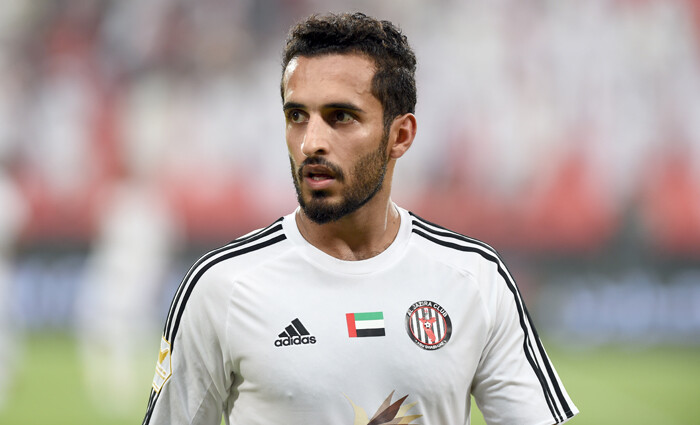
Ali Mabkhout has been likened to one of his country’s greatest ever players and, having already broken records for club side Al Jazira, the UAE forward heads into the coming 12 months and the 2019 AFC Asian Cup on home soil with further records in his sights.
A collective cheer could be heard everywhere around Abu Dhabi as the final whistle sounded at Singapore’s Jurong Stadium. It was Saturday afternoon on the 28th of October, 1989, and many Emiratis had opted to stay at home.
Adnan Al Talyani rose highest to head in the equaliser against Korea Republic to take the Whites to their first ever FIFA World Cup. ‘The Prince’ remains arguably the United Arab Emirates’ best footballer of all time.
Twelve months later, there were reminiscent celebrations at one Abu Dhabi household as Ahmed Mabkhout and his family welcomed baby Ali to life. Little did they know, that their new-born would grow to become ‘Little Al Talyani’.
Hundreds of camera flashes went off as the two number 7s made their way side by side onto the pitch at Zayed Sport City Stadium, not far from Ali’s birthplace.
For the recently crowned Ballon d’Or winner, Cristiano Ronaldo, this was the start of the road towards adding one more medal to his ever-growing cabinet. But it was the home side’s number 7 who is reaching the zenith of his own successful, albeit very different, footballing career.
Ali Mabkhout had scored the only goal of the match against AFC Champions League winners Urawa Red Diamonds to put his boyhood club Al Jazira face-to-face with European giants Real Madrid in the semi-final of the FIFA Club World Cup. It was a fairytale moment for Mabkhout.
Al Jazira led the European champions for an hour before eventually falling to goals from Ronaldo and Gareth Bale.
Mabkhout was a constant menace for Real Madrid defenders and, despite not scoring on the night, he earned special praise from opponents’ manager Zinedine Zidane after the game. “They have two quality players, Mabkhout and Romarinho, who gave our defence a tough test,” said the former World Cup winner.
The Little Prince could well follow in the footsteps of Al Talyani, who spent his entire career at one club. “Al Jazira is where I feel most comfortable, it is my home and I am not thinking about leaving,” says Mabkhout, who came through the youth ranks at Mohamed bin Zayed Stadium and has been playing for the first team since 2008.
“I received the ball and immediately hit it into the bottom left corner. I don’t remember which season it was, but I do remember it was against Al Dhafra,” says Mabkhout, trying to recall his first goal in Al Jazira colours.
“I don’t have a great memory. I started documenting my goals, but then I got busy and stopped,” he adds. The goal was in the 2008/09 season.
It is not difficult to see how Mabkhout could forget the details of his goals. Since that strike against Al Dhafra, the 27-year-old has broken all sorts of records as he became his club’s all-time top goal scorer and the UAE Pro League’s record scorer with an impressive 107 goals in 161 games.
Eight years on from his first goal, Mabkhout had another date with history against Al Dhafra. Going into the final match of the 2016/17 league season with 31 goals, the striker was looking to surpass Ghana’s Asamoah Gyan’s all-time record of the same number in a single season.
Within 21 minutes, he had achieved his objective, before adding a confirmation goal in the second half to end the season on 33 goals.
He may not remember his first Al Jazira goal well, and he has no idea how many international goals he has scored either: “I don’t know exactly, but it must be above 30”, but Mabkhout has a vivid memory of the night he opened his account for his country.
Mabkhout broke his international duck in style with four goals in a 6-2 friendly win against Bahrain in 2012. The first of his goals was a well-taken header from an Omar Abdulrahman cross, almost identical to Al Talyani’s goal that took the UAE to Italia 90.
Mabkhout and Abdulrahman played side-by-side across the different age groups for the UAE. Together with 2015 AFC Player of the Year Ahmed Khalil, the trio formed the core of the ‘Mahdi boys’, the second Emirati golden generation brought up by coach Mahdi Ali from the U-19s through the first team.
In 2009, Mabkhout was the youngest member of the squad that reached the quarter-finals of the FIFA U-20 World Cup in Egypt, before travelling to London for the 2012 Olympic Games with the same group of players.
“My wish is to see my teammates and coaching staff become the first team,” said Mabkhout ahead of London 2012. His wish would come true after Ali was appointed to head the senior national team, and he immediately called up the core of that U-23 side.
By then, Mabkhout had established himself as a first-team player at his club. His appearances in Al Jazira colours went up from four in his debut season to 24 matches in the 2012/13 season, when he hit double digits for the first time, ending the season on 11 league goals.
With his reputation growing inside the UAE, 2015 was the year the rest of Asia learned about the Emirati forward when the Whites travelled to Australia for the AFC Asian Cup.
Mabkhout netted a second-half brace in a 4-1 win over Qatar in their opening game, before he scored after just 14 seconds in the 2-1 victory over Bahrain in what remains the fastest goal in AFC Asian Cup history.
Then, seven minutes into the quarter-final match with defending champions Japan, Mabkhout received Amer Abdulrahman’s long pass and fired on the half-volley from a tight angle with a strike he fondly remembers.
“My goal against Japan remains the most valuable for me. It is my favourite moment with the national team,” notes Mabkhout, who also scored from the spot as his side progressed to the last four on penalties.
The UAE lost to hosts Australia in the semifinal, before snatching third place from Iraq. The Al Jazira man scored in the third-place decider to take his tally to five goals, which earned him the top scorer award.
Al Talyani remains the UAE’s all-time top goal scorer with 52 goals, but Mabkhout is third on that list with 39 strikes from 62 caps and, at just 27, he has plenty of time to add to his tally.
When he became his club side’s all-time top goal scorer last season, he broke a record that was held by former Brazil international Ricardo Oliveira, who Mabkhout would eventually replace as the club’s main man up front.
The one Al Jazira player that made the biggest influence on Mabkhout, though, was Montenegrin Mirko Vucinic, who arrived from Juventus in the summer of 2014 and, despite several injuries, averaged nearly a goal every game.
“Of all the forwards I saw at the club, Vucinic was the best. He was a true poacher in front of goal. I had a good relationship with him and he always gave me advice,” continues Mabkhout. “I learned a lot about how to move from him. Vucinic made scoring goals look so easy.”
In his eight years as a professional footballer, Mabkhout has conquered all domestic titles, established himself as one of the best strikers in the continent and led Al Jazira to the FIFA Club World Cup semi-final as the first Emirati team to achieve that feat.
But the 27-year-old’s ambition knows no limit. Going far in the AFC Champions League and winning a first AFC Asian Cup trophy for his country in a year’s time are next on his checklist.
Thu, 28 Oct, 2021
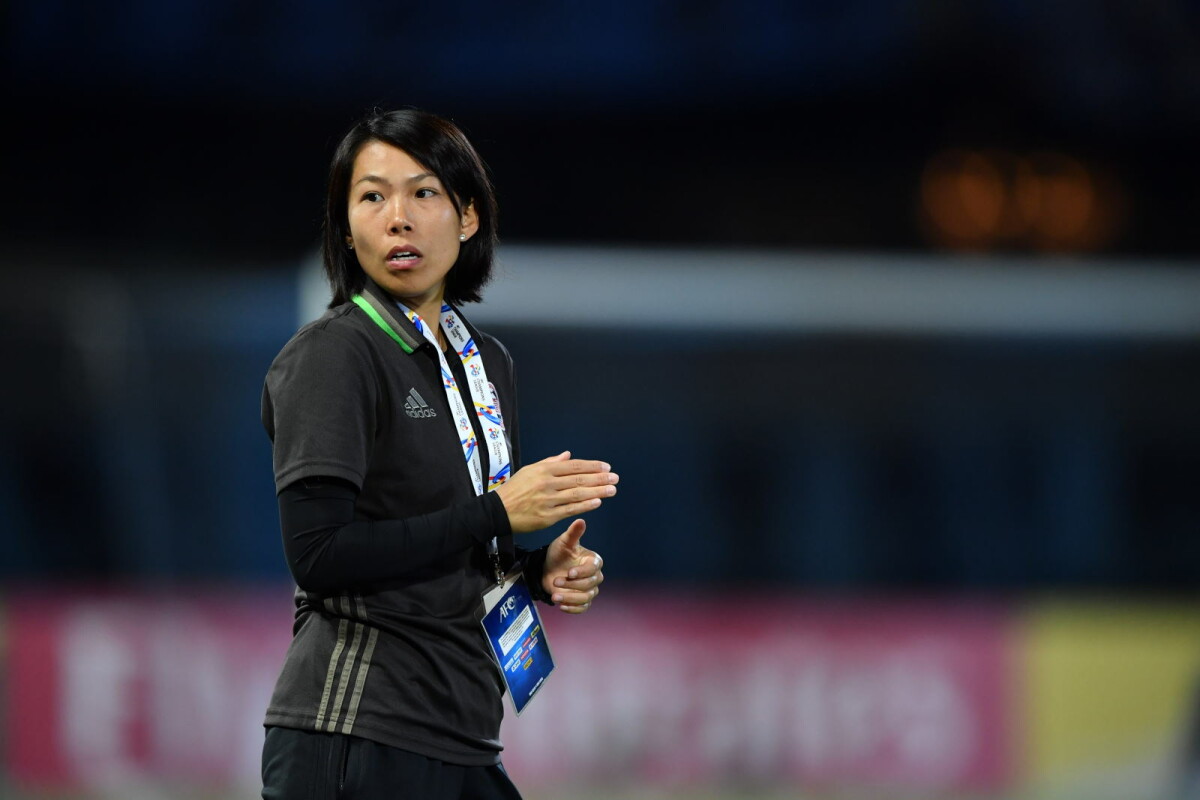
With a top-flight league title and AFC Champions League experience to her name, 2016 AFC Women’s Coach of the Year Chan Yuen-ting has enjoyed a remarkable career to date. Still only 29, the record-breaking coach offers her view on the women’s game and reveals her plans for the future.
When Chan Yuen-ting became the first women to lead a men’s team to a league title in April 2016, the Hong Kong native attracted global headlines in a year that culminated in her being named the AFC Women’s Coach of the Year.
The timing was perfect because, not only had Chan guided Hong Kong Premier League side Eastern SC to their first top flight championship since the mid-90s, the then 28-year-old had done so at a time when Hong Kong’s coefficient ranking guaranteed a berth in the AFC Champions League for the first time. The fledgling coach would now be handed the chance to test her wits against some of the best coaches in Asia.
Eastern were drawn in the 2017 group stage alongside a pair of two-time continental champions in China’s Guangzhou Evergrande and Korea Republic’s Suwon Samsung Bluewings, as well as Japan’s Kawasaki Frontale, who would go on to reach the quarter-finals and win the 2017 J.League title.
As fate would have it, Eastern’s competition debut saw them take the short journey into mainland China to face 2013 and 2015 winners Guangzhou at Tianhe Stadium, meaning Chan would walk her team out side-by-side with FIFA World Cupwinning coach Luiz Felipe Scolari, whose charges included Brazilian international and now Barcelona midfielder Paulinho.
“I spoke with Scolari a few times in Guangzhou and in Hong Kong, before and after the press conferences,” recalled Chan.
“I was impressed because he had done a lot of research on Eastern and knew everything, which surprised me as we’re just a small club. But it taught me that attention to detail makes perfect.”
Chan’s game plan was significantly hindered by two early red cards as the minnows’ task was made all the more difficult and the clash eventually ended 7-0 to the hosts.
But Eastern returned to Hong Kong to claim a highly commendable 1-1 draw with Kawasaki in the second round of fixtures, before four more defeats followed as the Hong Kong debutants exited at the first hurdle.
“The ACL gave me a very significant experience in my coaching life as it’s a much higher level,” admitted Chan.
“To see players like Paulinho, who you normally just see on TV, standing in front of you is quite strange. He can control games. He gave his best in China and changed some perceptions about the league.
“Over the six games, even though we lost, I could see all the players gave it everything. We prepared a lot – with different tactics and formations – but the level was so different.”
On the back of the AFC Champions League exit, Eastern lost their grip on the Hong Kong Premier League title after being beaten in the final match of the season by rivals Kitchee.
The defeat was a bitter pill to swallow for Chan, who had almost followed up her historic maiden league success by going a whole season unbeaten, only to lose the last match and, with it, concede the title.
It had been a whirlwind 18 months since being appointed as head coach of Eastern and Chan decided the time was now right to step down from her role, while remaining part of the coaching staff at the club.
“I wanted to sit back and focus on learning,” the now 29-year-old said. “After the ACL I could really see my weaknesses, so I thought by taking a step back I could see things from a different angle and learn from the other coaches.
“The attention [from being a women coach] was sometimes tiring, but I always tried to just focus on myself and do the best for my team. It’s not important what people on the outside say, it’s just important that you do your job, improve your team and improve your players.”
Chan has continued to play a day-to-day role with Eastern when in her home city, but has also travelled as she continues to train for her Pro Licence. She recently spent time at Lilleshall Hall – one of England’s renowned National Sports Centres.
As an established coach on the continent, Chan was invited to work as an analyst at the AFC U-16 Women’s Championship in Chonburi, Thailand, in September, allowing her to see the game from yet another angle.
In particular, the experience offered an opportunity of a greater insight into the women’s game, while also highlighting the style of football played by different nations across Asia.
“It was my first time being an analyst at a competition, and it was really different from being a coach in Hong Kong because you’re focusing on a whole tournament and you see the different cultures of the teams.
“I really like Japan’s style of play. In Chonburi, I could see the balance of their team – in defence and in attack. It’s amazing, whether it’s men’s football, women’s football or youth football, they always keep the same style, short passing with good combination play.
“You can see that physically teams are getting stronger, the transition of play is quicker and the technique is getting much better.
“Even though they are just 15 or 16, they play the country’s style. China always want possession, Japan use combination play, DPR Korea are more direct.”
That tournament was won by DPR Korea, but the East Asians will not be present at the next big competition on the women’s football calendar, the AFC Women’s Asian Cup in Jordan in April.
Chan admits she would like to attend the continental tournament but remains unsure if her schedule will allow her the time, while she remains upbeat about the future of women’s football across Asia.
“[At the 2016 AFC Annual Awards ceremony], I spoke with [AFC Technical Director] Andy Roxburgh about the improvements in the women’s game, particularly since Bai Lili became head of the department,” she revealed.
“There have been a lot of projects and instructor courses for women in many countries and you can see that physically teams are getting stronger, the technique is better and the transition of play is quicker.
“I think China can maybe challenge again because they have improved a lot lately. Ten or 20 years ago they were really good, then they dropped quite a lot. But there is now a professional women’s league in China and the level of the game is higher again.
“Southeast Asian teams are also getting stronger too and, in West Asian countries, although football is not as developed, hosting tournaments will see more media focus on them, so the Asian Cup should raise the profile of the game there.”
When it comes to her own future, Chan remains focused on achieving her coaching badges in the immediate future before deciding the next route to take.
Having won a league title and coached in the AFC Champions League before the age of 30, she already boasts a hugely impressive resume.
Young, ambitious and always looking to better herself, there seems little doubt that wherever Chan winds up, she will have plenty to offer any future employees.
“After I finish my Pro Licence I’ll try to look for opportunities in other countries, where I can learn at a higher level and bring my experience back to Hong Kong.”
“I’ve already had offers to coach women’s teams in China, Iran and the UAE, but it wasn’t the best option just now.
“For me, it’s not important if I work in men or women’s football, but I’d like to work in Japan or, if I go outside Asia, maybe in England or Spain.”