
Thu, 28 Oct, 2021
Melbourne: Park Ji-sung’s career was, by any measure, one of the finest of any Asian footballer, but there is one glaring omission on the former PSV Eindhoven, Manchester United and Korea Republic midfielder’s resume that distresses him.
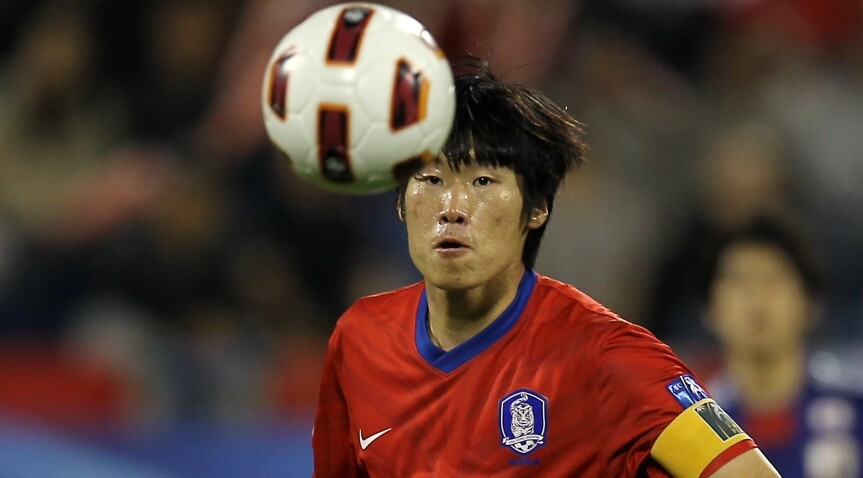
The 2011 AFC Asian Cup was to be Park’s final tournament appearance in the red shirt of the Taeguk Warriors and it was in Qatar that he aimed to finally end Korea’s continental title drought and take the famous old trophy back to Seoul for the first time since 1960.
After continental club success with Manchester United and having helped his country to the semi-finals of the FIFA World Cup in 2002, claiming the AFC Asian Cup would be a fitting end to a stellar career.
But, on the billiard table-smooth pitch of the Al Gharafah Stadium in Doha, the dreams of Park and his team mates were shattered when, by virtue of a penalty shootout, the Koreans were eliminated at the semi-final stage by Japan in one of the finest games ever played at the AFC Asian Cup.
It was a bitter pill for Park, made even worse by the fact the former Kyoto Purple Sanga man was celebrating a century of appearances for Korea. What should have been a landmark, will forever be a sullied memory.
“I don’t want to remember that game because we lost it and I really, really wanted to win the tournament because I knew it was my last tournament,” says Park four years on.
“I really tried my best to win that game, but in the semi-final against Japan we lost by penalties. We didn’t have enough luck to get through the semi-finals, and it was very disappointing for me and for the country as well.
“It was a great honour to get 100 caps for our country but the Asian Cup, for me, is quite a disappointing tournament and I have bad memories, because I really wanted to win that tournament.
“So, hopefully, at this tournament South Korea can win. These days, they've changed manager and I’m not sure they can do it. But the quality that they have got, they can try.”
Korea’s 2011 vintage looked more likely than any before them to end the country’s run of disappointment at the AFC Asian Cup, which now extends to a remarkable 55 years.
The country has gone close on a number of occasions, reaching the final in 1972, 1980 and 1988 only to lose to Iran, Kuwait and Saudi Arabia respectively but throughout the 1980's and 1990's, qualifying for the finals of the FIFA World Cup appeared to take preference.
“I can’t believe it either, but it has happened,” says Park about Korea’s inability to win another AFC Asian Cup. “Before we thought this is not as important as the World Cup and this is why, maybe, we were not ready to play in this tournament.
“We started to recognise that this is not an easy tournament and this tournament is not a lower level than the World Cup. It’s really important and we should give 100 percent on the pitch, otherwise we can’t win this tournament. And then we started to push ourselves, but we need time to get to the right level.
“But hopefully the last few tournaments we have tried really hard, but we couldn't get it. We have needed some luck, because every team needs luck to win the tournament. It’s so long but I believe we can win the tournament soon because the last few tournaments we have recognised that we need to prepare well.”
The turning point in Korea’s attitude towards the AFC Asian Cup came, believes Park, in the aftermath of the run to the 2002 FIFA World Cup semi-finals, when more players from the country pursued their club careers in Europe.
“After the 2002 World Cup many players went to Europe and played and they saw how important the European tournament is there,” he says. “We realised, a few players, how the Asian Cup is important for Asian teams.
“After that, more players were talking about how this was an important tournament, and also in the press they said we haven’t won in so many years and how can we say we are one of the best teams in Asia?
“That’s why we changed our mind and we have focused on the Asian Cup. It’s not easy to win this tournament; many Asian teams are good: Japan, Saudi Arabia, Australia, Iran.
“Now they know and they push hard, but we still need luck and we need to prepare well. But there’s a different mentality and attitude and we can really fight to win the tournament.”
It was for that reason that the 2011 loss to the Japanese in the semi-finals hurt so much.
With a team boasting the bulk of the squad that reached the Round of 16 at the FIFA World Cup finals in South Africa seven months earlier, the Koreans fancied their chances of winning the title.
“It was a very good team, and we really enjoyed to play together and our performance was good,” says Park. “It was good to watch that team play. I really enjoyed playing with the young players as well, and it’s been good to watch them grow up during the tournament.
“But if you want to win the tournament you need luck, a little bit. Even if you have a good quality team, you can’t reach the title. But hopefully South Korea will have the luck this time.”
While Park retired from the international game four years ago, he knows many players within the current squad having played alongside them in both South Africa and Qatar. And he believes the Koreans have the talent to once again seriously challenge for the title.
“The only doubt I have is because they have changed the manager recently and he hasn't had time to fix the team, but I think they can win the title here,” he says of Uli Stielike’s side.
“They have good players and they have the motivation because they know the last World Cup was bad, and they have to recover from that and they have to show the fans. That’s why the motivation is very high and they can show the different performance than at the World Cup.
“Also, the young players have the experience because they've been through the World Cup, the biggest tournament in the world. They need the experience of that and that can help the team. The only thing, from my point of view, is that they changed the manager. Otherwise, they have a chance.”
Photo: AFP