
Thu, 28 Oct, 2021
After an epic encounter in the 2011 AFC Asian Cup final and a number of World Cup qualifiers under their belts, Australia and Japan are writing a new chapter in Asian football lore, as two of the continent’s footballing giants collide on an increasingly regular basis.
As one of the 12 founding fathers of the Asian Football Confederation Japan, has had a long and illustrious history while Australia are the new kids on the block having been adopted into the Asian football family in 2006 following the Socceroos switch from an Oceania confederation that provided little substantial competition.
The competitive edge that enables teams to evolve and develop has been found in Asia, and Australia’s entry into the AFC set up the first match in what was to become a regular fixture at the highest level of the Asian game.
The truth of the matter is that Australia and Japan were no strangers to each other. FIFA statistics show that the two had met officially on 13 occasions prior to the Aussies move to the AFC in 2006, with first a 2-2 draw in Sydney in 1968 and the last being a 3-0 win for the Japanese in Shizuoka back in August 2001.
But it was on the biggest stage of all that the competitive narrative between the two took on an entirely different dynamic, as FFA (Football Federation Australia) President Frank Lowy explained to www.the-afc.com.
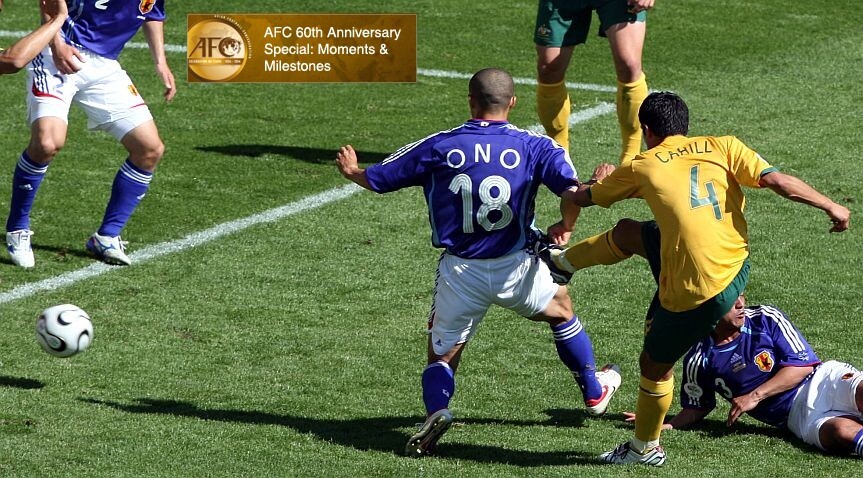
“Australia’s acceptance into the Asian Football Confederation in January 2006 set up an all-Asian match at the 2006 FIFA World Cup after Australia and Japan were drawn together in the group stage due to our qualification through Oceania,” Lowy recalled.
“The match started what is now one of the biggest rivalries in Asian Football with three late goals to Australia handing the Socceroos its first ever win at the World Cup finals.”
A double from Socceroos’ stalwart Tim Cahill in the final ten minutes of the Group F fixture in Kaiserslautern turned the tie in favour of Australia after Shunsuke Nakamura had given Japan a 26th minute lead.
Substitute John Aloisi struck in second-half stoppage time sealing not only Australia’s maiden World Cup win but the foundations on which enabled them to progress to the Round of 16 as group runners-up behind the mighty Brazil.
The Socceroos may have carried the day at Germany 2006 but it is the Samurai Blue that can boost the better record, with the Japanese having won three of the subsequent seven matches (prior to the November 18 friendly in Osaka) compared to Australia’s solitary victory.
Japan, then the defending champions, eliminated tournament debutants Australia from the 2007 AFC Asian Cup at the quarter-final stage following a penalty shootout victory in Hanoi in their first meeting since the World Cup and more significantly, Tadanari Lee’s extra-time winner in Doha saw Japan edge the Socceroos to win the Asian Cup for a record fourth time.
Despite the defeat, current Australia coach Ange Postecoglou believes that by reaching the continental final so soon after joining the AFC was already a major milestone in the short history of the Socceroos.
“The 2011 AFC Asian Cup Final between Australia and Japan is the most memorable Asian football match for me as it was the first time the Socceroos had played in a major continental final,” the former Brisbane Roar boss told www.the-afc.com.
“Two proud football nations were fighting it out for the right to be crowned Asian Cup champions in a memorable occasion.
The Socceroos might have fallen desperately short of victory and football will always be about winning matches and titles but this was Australia’s first appearance in the Asian Cup final, at only their second attempt.”
“Football Federation Australia’s move into the Asian Football Confederation in 2006 allowed Australia, and Australian football players, the opportunity to play a significantly increased number of meaningful matches at all levels,” added Socceroos skipper Mile Jedinak.
“Players are exposed to the challenges of playing qualifiers in the varying situations and climates of Asia, which will only help improve the level of Australian football.”
As no doubt, Japan will be fully aware as this great Asian football rivalry continues to evolve over the coming years.