
Thu, 28 Oct, 2021
The AFC-UN Food and Agriculture Organization’s (FAO) joint project to fight hunger in Asia has taken a foothold with the recent Asian Football against Hunger Campaign in Vietnam.
The campaign was carried out before the kick-off of the final match of the AFC U-19 Women’s Championship in Ho Chi Minh City on 16 October 2011 between eventual champions Japan and hosts Vietnam.
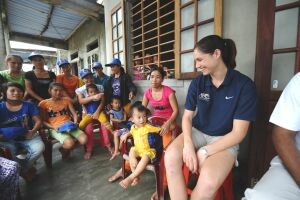
Two days before that, the campaign’s Goodwill Ambassador and reigning AFC Women’s Player of the Year Kathryn Gill visited the AFC and FAO-assisted Hai Tien fishery village in the Vietnamese province of Hue to ‘share experience and strengths’ with the village’s women who are striving to improve their families’ livelihood through aquacultural activities funded by the AFC.
A sum of US$413,000 being proceeds from the 2011 Asian Cup final match ticket sales revenue has been donated by the AFC to this noble cause.
And the first FAO TeleFood site to receive aid form this donation is a rural village in the Thai province of Mae Hong Son, which was visited by AFC Social Responsibility Committee Chairman Dr. Kwak Chung-hwan and AFC Social Responsibility Department Director Ingill Ra in September.
Heartened by these encouraging steps to eradicate hunger, FAO Assistant Director-General for Asia and the Pacific Hiroyuki Konuma has shared his views with The-AFC.com about the hunger problem and joint-effort with the AFC to solve it:
The-AFC.com: Your TeleFood project in Mae Hong Son province, Thailand, is the first recipient of aid from the AFC. How do you feel about this progress?
I am very pleased that we “kicked off” the first TeleFood project supported by the AFC fund. The project has started its activities in two schools in Mae Hong Son. I have visited the project site with two colleagues from the AFC at the end of September and was happy to able to share the tangible impacts of our partnership.
Mae Hong Son is one of the poorest provinces in the country facing serious difficulties such as geographical divide, and hard living conditions of ethnic minorities and refugees and beneficiary schools are located in a remote area, 68 km away from the city centre. Under this TeleFood project, a water supply system, vegetable and local chickens, fish and fish pond were recently provided.
I foresee two major positive changes in this project. First, the nutrition status of the school children will improve. They will have more protein and vitamin-enriched school lunch and the children can concentrate on studying. Second, the children will have precious opportunities to learn how to produce food in school gardens for their future.
I fully appreciate the support of the AFC. We will further expand these projects throughout the region utilising this valuable fund.
The-AFC.com: Nineteen countries have been slated to receive aid from the AFC-FAO cooperation. Which countries are these? How many people altogether in these countries will benefit from the aid programme? What criteria are used to select these countries?
The 19 countries are Afghanistan, Bangladesh, Bhutan, Cambodia, China, India, Indonesia, Democratic People's Republic of Korea, Laos, Maldives, Mongolia, Myanmar, Nepal, Pakistan, Philippines, Sri Lanka, Timor-Leste, Thailand, and Vietnam.
These countries have been selected because some of their populations are facing chronic hunger which includes both the lack of energy intake and malnutrition. We are currently calling proposals from all FAO country representations in these countries. The proposals will be assessed and selected putting special emphasis on promoting school gardening/feeding activities, which provide a healthy diet, a base for children to enjoy football.
A TeleFood project assists around 350 persons in average. Since we are expecting about 40 projects supported through this initiative, approximately 14,000 food insecure people will directly benefit from this aid programme. The TeleFood scheme introduces a revolving fund mechanism to ensure sustainable food security for the community groups through independence.
The-AFC.com: Compared to other type of sport, how effective is football as a player in the fight against hunger and effort towards food security?
Football has the power to inspire people to team up and help those in need. I believe teamwork is the fundamental base for various scenes of food production, for instance, sharing limited water and equipment, working together on labour-intensive tasks like weeding and harvesting, making rotations for taking care of livestock, transferring agriculture/aquaculture techniques to each other and more. I can therefore see a firm link between football and the fight against hunger.
The-AFC.com: Where do you see the direction of a ‘sports organisation-FAO type’ of cooperation will go in the future? Will it go beyond providing funds and advice/expertise to help aid recipients achieve food independence?
The fight against hunger is becoming more and more important to everybody in the world these days. Last year, FAO launched the “1 billion hungry campaign” to raise awareness and more than three million signatures in the world were collected to send the strong message on this important global agenda.
The AFC is cooperating in this initiative, hand in hand with FAO which proves the effectiveness of our joint efforts. Football is loved throughout the world. Football can cross any kind of borders such as nationalities, races and even languages. The prominent power of football leading people toward solidarity is, and will maintain to be, indeed a strong engine to move our endeavour forward.
I hope people can see they can change the world. I wish that people who contribute to this aid programme will be aware of the positive changes through helping out the rural poor away from hunger and malnutrition. Through this practical initiative, I believe more and more people will join our efforts in the future.
The-AFC.com: Anything else you would like to add?
Globally, one out of six people lives in chronic hunger. Our journey toward eradicating hunger on this planet has a long way to go. I, however, believe we can overcome it if each of us acts together for this goal.
FAO is fully committed to taking the leadership in this endeavour together with the AFC as a reliable partner. Thank you all for your valuable contributions.
By: Zam Yusa