


AFC Asian Cup
Hosted in five stadiums, two of which are set to host games in the upcoming FIFA World Cup Qatar 2022, the-AFC.com takes a stroll down memory lane for one of the most exciting editions in AFC Asian Cup history.
Four years after the unique experience of hosting the 2007 AFC Asian Cup in four countries for the first time in the competition’s history, eyes turned to the west of the continent with Qatar playing hosts to Asia’s top national teams’ competition for the second time in their history after 1988.
Four years after the unique experience of hosting the 2007 AFC Asian Cup in four countries for the first time in the competition’s history, eyes turned to the west of the continent with Qatar playing hosts to Asia’s top national teams’ competition for the second time in their history after 1988.
Iraq arrived in Doha as reigning champions, while Saudi Arabia and Japan were eager to establish advantage in the race to dominate the continent, having won three AFC Asian Cup titles each. And while there were no debutants, the 2011 edition saw the return of India for the first time since 1984, DPR Korea for the first time since 1992 and Syria who had been absent since 1996.
Unstoppable Uzbekistan
Pitted against hosts Qatar for the opening match, Uzbekistan braced for a difficult challenge, but they emerged unscathed and did so in style as Odil Ahmedov fired a 35-yard screamer for the first goal of the 2011 AFC Asian Cup and would-be AFC Player of The Year Server Djeparov added the second to seal a famous victory for the Uzbeks.
Pitted against hosts Qatar for the opening match, Uzbekistan braced for a difficult challenge, but they emerged unscathed and did so in style as Odil Ahmedov fired a 35-yard screamer for the first goal of the 2011 AFC Asian Cup and would-be AFC Player of The Year Server Djeparov added the second to seal a famous victory for the Uzbeks.
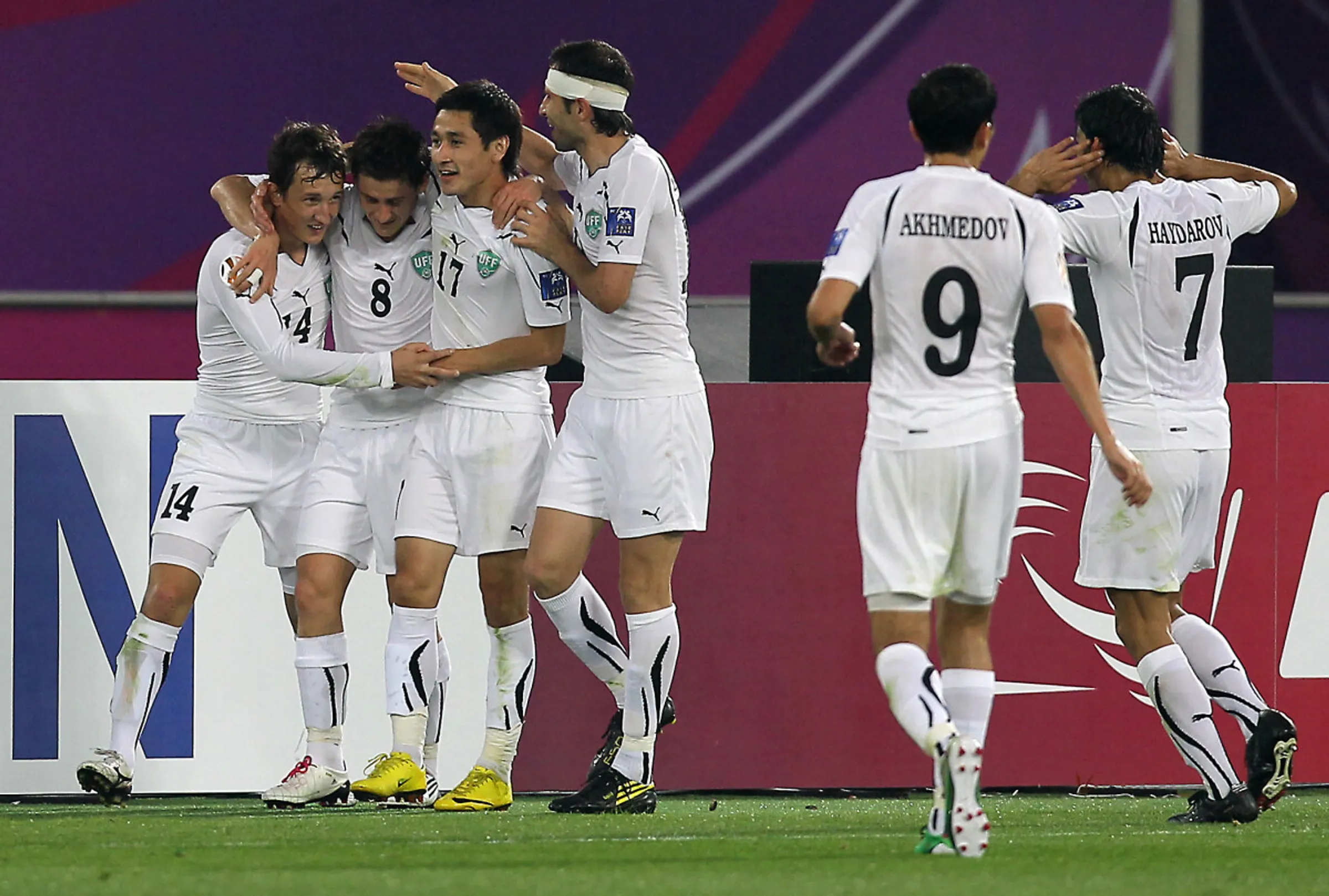
Coach Vadim Abramov’s men went on to top Group A unbeaten as Djeparov got on the scoresheet again in a 2-1 win against Kuwait which was followed by a 2-2 draw with China PR who crashed out at the group stage, allowing Qatar to take second place having bounced back from the opening day defeat to beat China PR 2-0 and Kuwait 3-0.
Joy for Jordan, Shock for Saudi
Hopes were high for 2007 runners-up Saudi Arabia despite being drawn against arch rivals Japan in Group B, but what materialised in Doha was nothing short of disastrous for one of Asia’s most successful national teams.
Hopes were high for 2007 runners-up Saudi Arabia despite being drawn against arch rivals Japan in Group B, but what materialised in Doha was nothing short of disastrous for one of Asia’s most successful national teams.
Substitute Taiseer Al Jassim’s second-half goal in the stunning 2-1 Matchday One defeat to Syria offered a glimpse of hope, but little did the Saudi fans know as it turned out to be their only goal of the campaign.
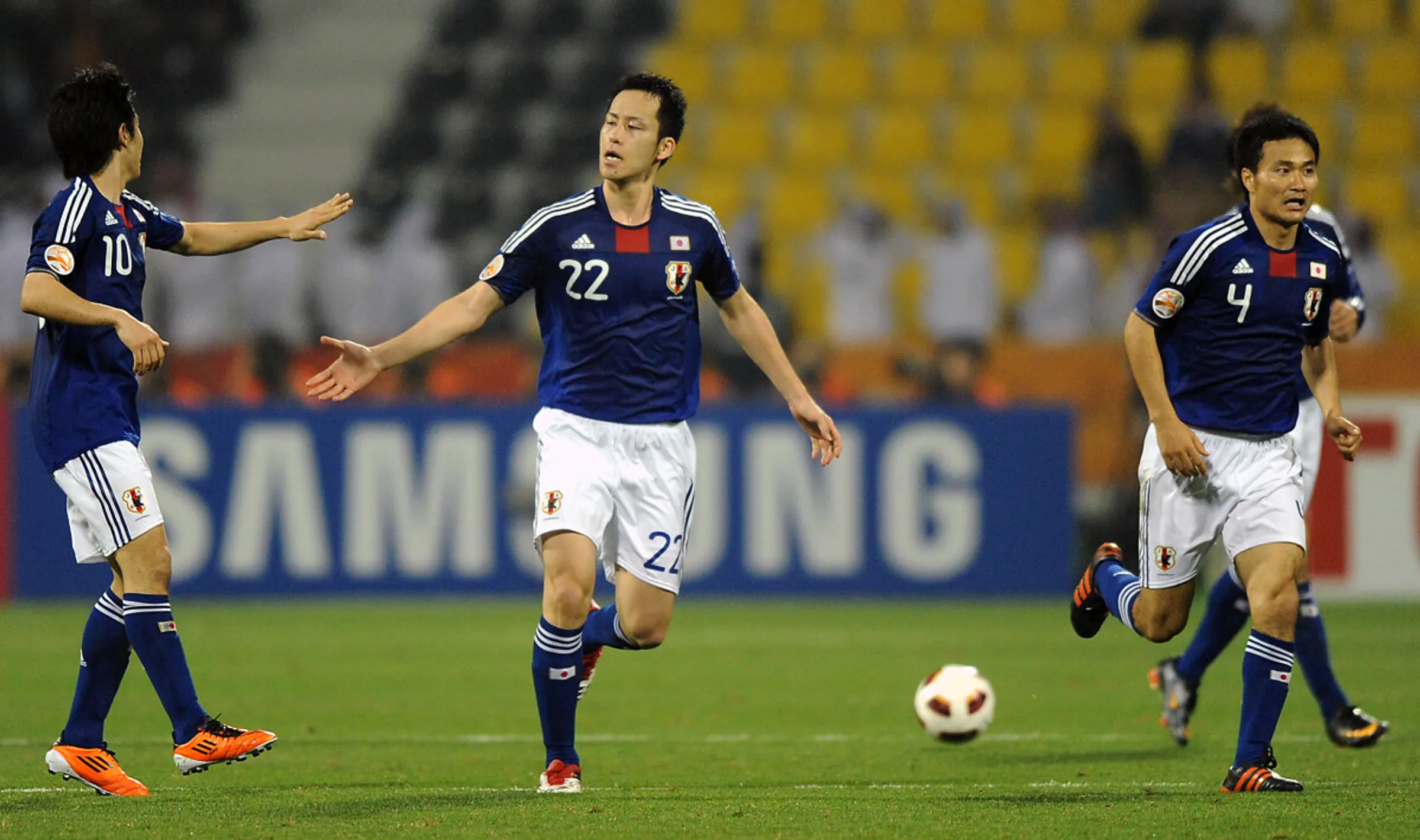
Jordan had opened their own Group B campaign in style, leading Japan until added time when Maya Yoshida headed home a valuable equaliser. The Jordanians took heart from their performance and translated it into a famous 1-0 victory over Saudi Arabia in the second match. Beat Syria on Matchday Three and they advance to the quarter-finals, which they did in style with a 2-1 win.
Meanwhile, Saudi Arabia were left reeling as their campaign ended in a 5-0 thumping by Japan; a result that remains to date their worst-ever in the AFC Asian Cup.

Koo show for Korea Republic
After a fairly positive introduction to Asian football that saw them reach the quarter-finals in the 2007 AFC Asian Cup, Australia set out to do even better in Qatar and a 4-0 demolition of India in their first match showed intent with Tim Cahill bagging a brace.
After a fairly positive introduction to Asian football that saw them reach the quarter-finals in the 2007 AFC Asian Cup, Australia set out to do even better in Qatar and a 4-0 demolition of India in their first match showed intent with Tim Cahill bagging a brace.
A hard-fought 1-1 draw in their most difficult group stage test against Korea Republic ensured that progress to the knockout stages was confirmed with a 1-0 win against Bahrain with Mile Jedinak, who had never scored an international goal before the tournament, scoring in the Socceroos’ second and third matches.
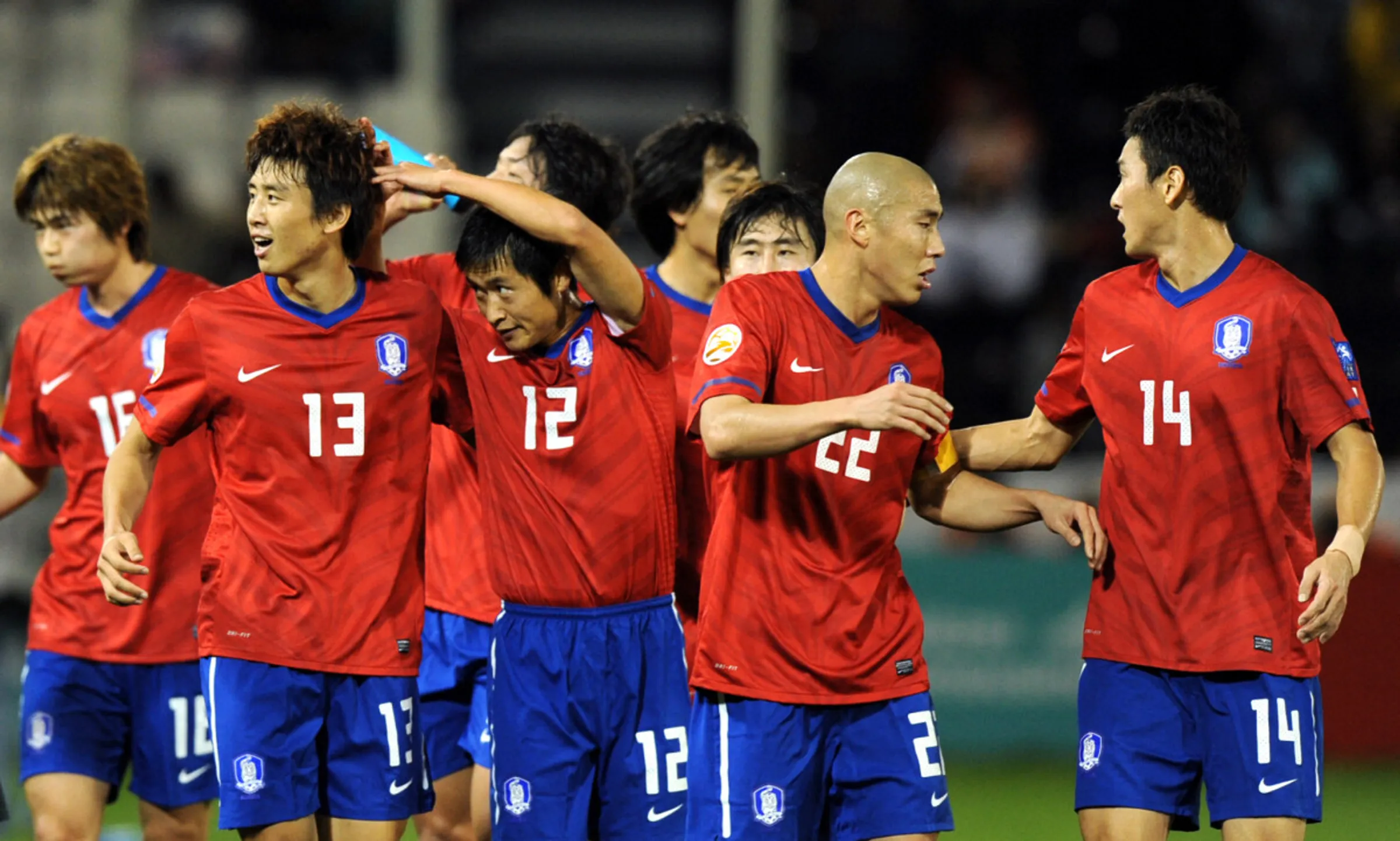
But if there was one standout player in the group stage, it would have had to be Korea Republic’s Koo Ja-cheol. The forward showed a natural poacher’s instinct to end the group stage with four goals, becoming the only player in the tournament to score in each of his side’s three group stage games. The then 21-year-old added one more in the knockout stages to seal the top scorer award.
Warning sign for the champions
Arriving to Qatar with the reigning champions tag, Iraq could not have asked for a more difficult start, opening their 2011 campaign against neighbours and arch rivals IR Iran. Skipper Younis Mahmoud picked up right where he left off, scoring his side’s first goal of 2011 after having scored their winner in the 2007 final, but his heroics were not enough as Team Melli responded with two goals to throw Iraq an early setback.
Arriving to Qatar with the reigning champions tag, Iraq could not have asked for a more difficult start, opening their 2011 campaign against neighbours and arch rivals IR Iran. Skipper Younis Mahmoud picked up right where he left off, scoring his side’s first goal of 2011 after having scored their winner in the 2007 final, but his heroics were not enough as Team Melli responded with two goals to throw Iraq an early setback.
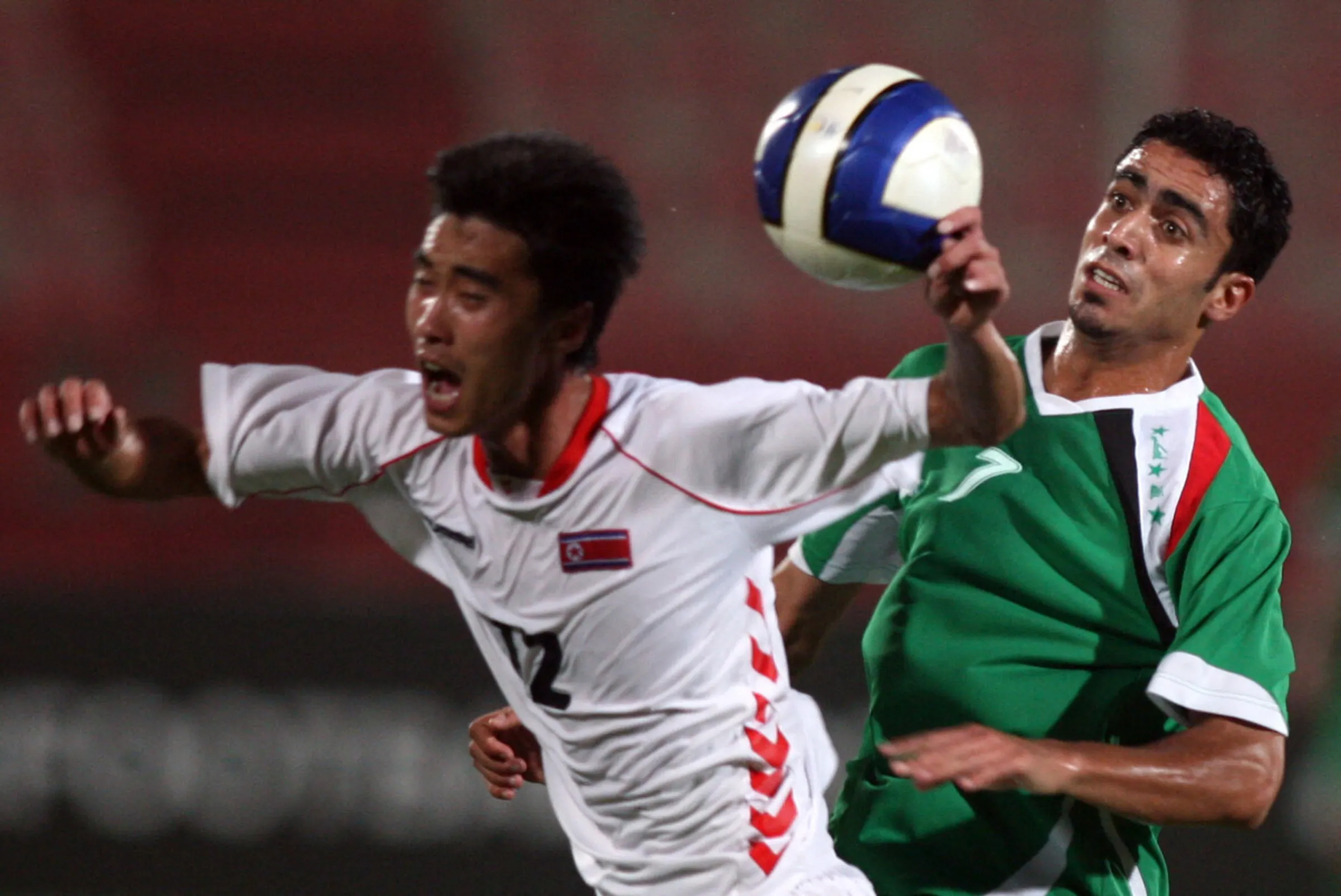
Two narrow 1-0 wins over DPR Korea and the UAE secured Iraq’s passage to the quarter-finals, while coach Afshin Ghotbi’s IR Iran were more dominant against the UAE, winning 3-0 after having got a 1-0 win over DPR Korea.
UAE defender Walid Abbas entered the AFC Asian Cup history books for all the wrong reasons, scoring two own goals which coincidentally both came in added time in defeats against Iraq and IR Iran.
Free-Scoring Socceroos the Exception to the Knockouts Rule
The knockout stage of the 2011 AFC Asian Cup was characterised by hard-fought and narrowly edged games. Of the eight matches up to and including the final and third-place play-off, only one game ended with a margin of more than one goal, while extra time was present in three matches and penalty shootouts decided one semi-final.
The knockout stage of the 2011 AFC Asian Cup was characterised by hard-fought and narrowly edged games. Of the eight matches up to and including the final and third-place play-off, only one game ended with a margin of more than one goal, while extra time was present in three matches and penalty shootouts decided one semi-final.
The exception to the narrow wins rule came in Australia’s emphatic 6-0 thrashing of Uzbekistan in the semi-finals. The Socceroos had ended Iraq’s title defence in the quarter-finals with Harry Kewel’s extra time goal, while Uzbekistan advanced to their first-ever semi-finals at the expense of Jordan. Their encouter set the record for the highest winning margin in the knockout stage of any AFC Asian Cup edition. Impressively for coach Holger Osieck’s Australia, their six goals were scored by six different players.
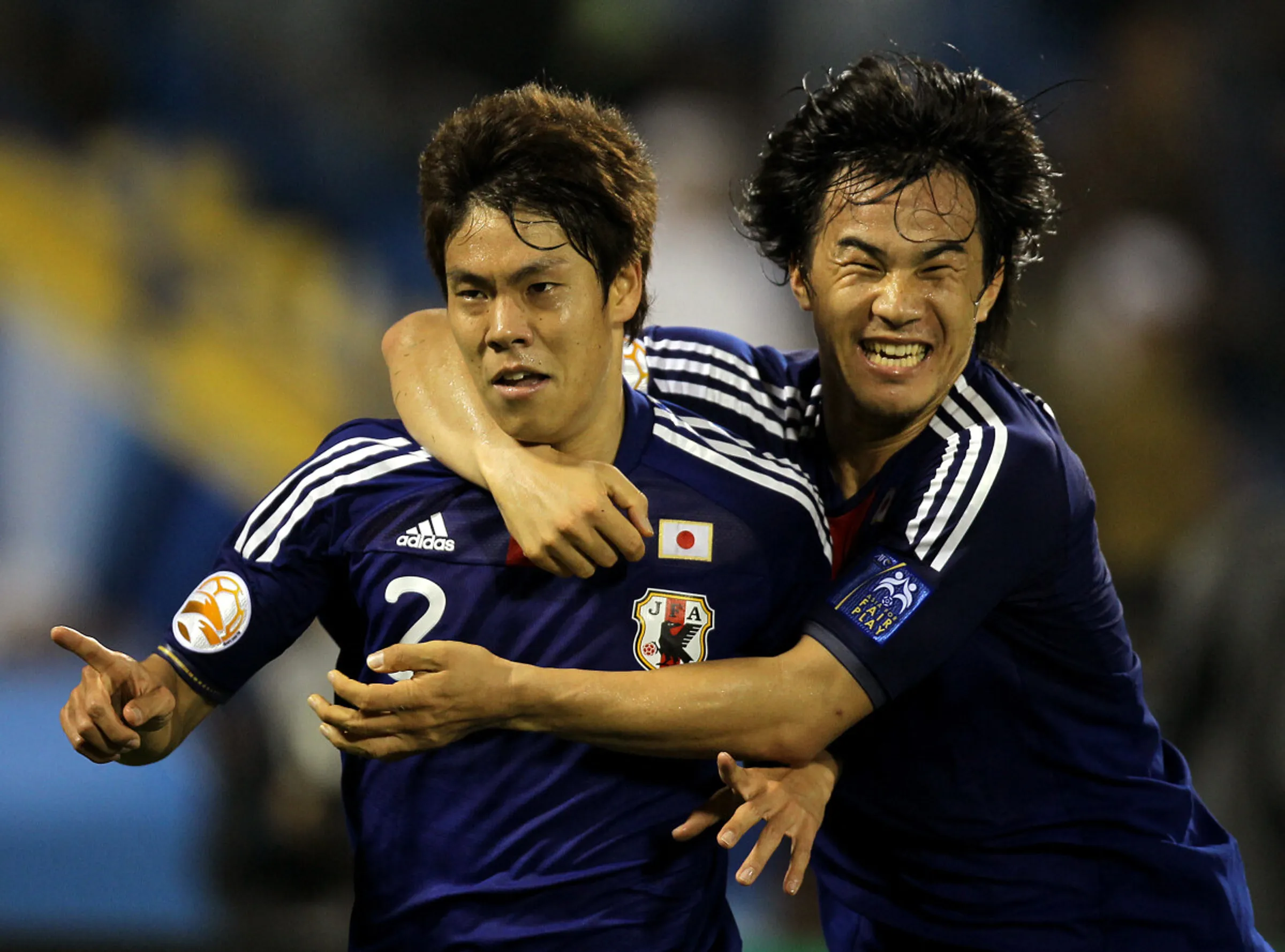
Hosts Qatar were eliminated by Japan in the quarter-finals. The Samurai Blue needed a late winner from Masahiko Inoha to settle the game 3-2, and Qatar’s Fabio Cesar second goal earned him an entry into trivia books as it was his second free-kick goal of the campaign, a feat repeated eight years later by his compatriot Bassam Al Rawi in the 2019 edition.
A highly entertaining derby of the east in the semi-finals saw rivals Japan and Korea Republic play out a 2-2 draw before goalkeeper Eiji Kawashima starred in penalty shootouts, denying Koo and Lee Yong-rae before Yasuyuki Konno buried the winning spot kick to send Japan into their fourth final.
Lee Leads Japan to Glory
Australia announced their presence as a new powerhouse of Asian football with an impressive run to the final, but they would have to beat the continent’s joint most successful national team if they are to lift the trophy at the second time of asking.
Australia announced their presence as a new powerhouse of Asian football with an impressive run to the final, but they would have to beat the continent’s joint most successful national team if they are to lift the trophy at the second time of asking.
In front of nearly 40,000 fans at Khalifa International Stadium, Kewell had several chances to put the Socceroos in the lead and Cahill even thought he had converted home Luke Wilkshire’s cross, but the ball had not crossed the line and the score remained level after 90 minutes.
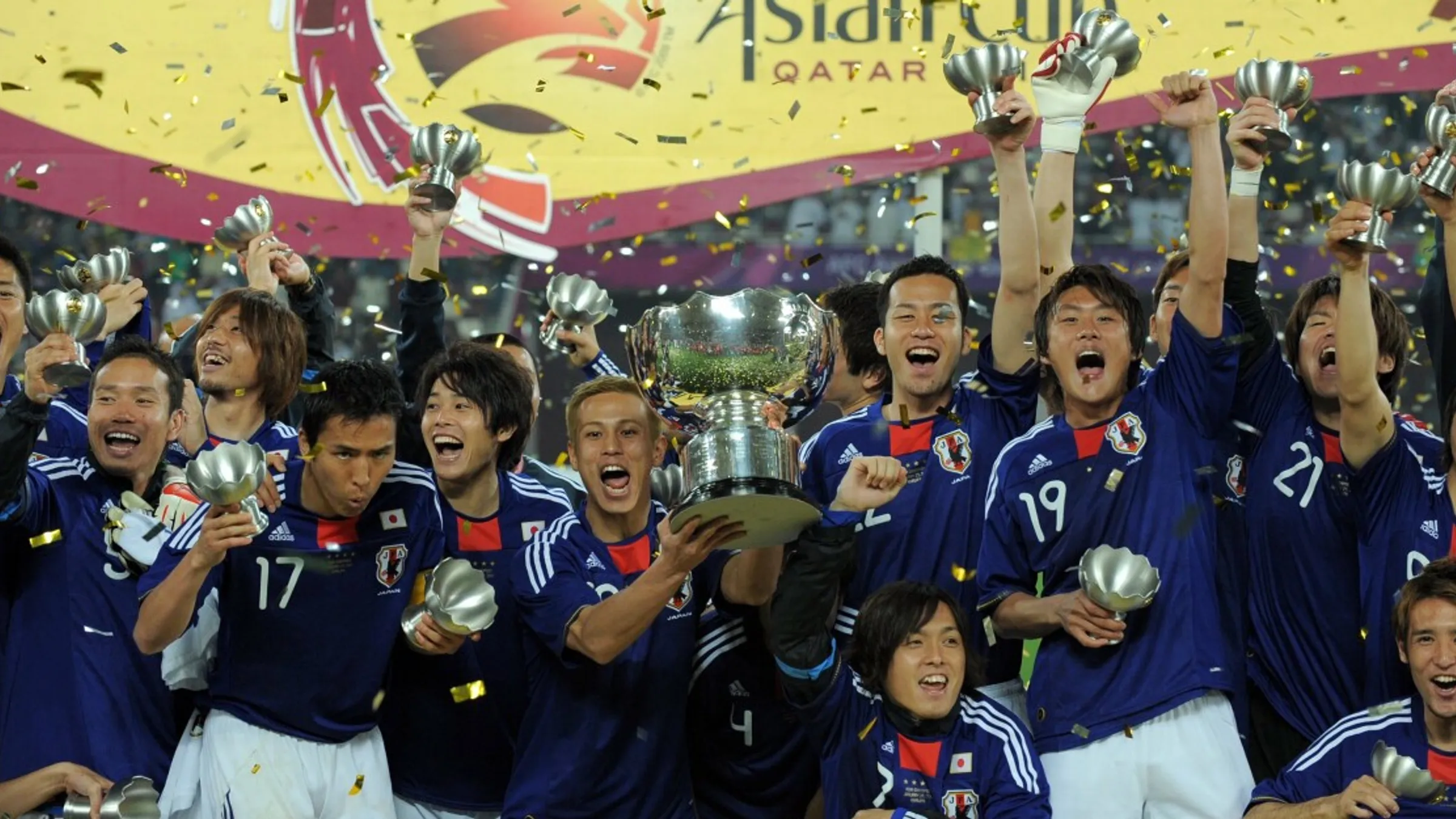
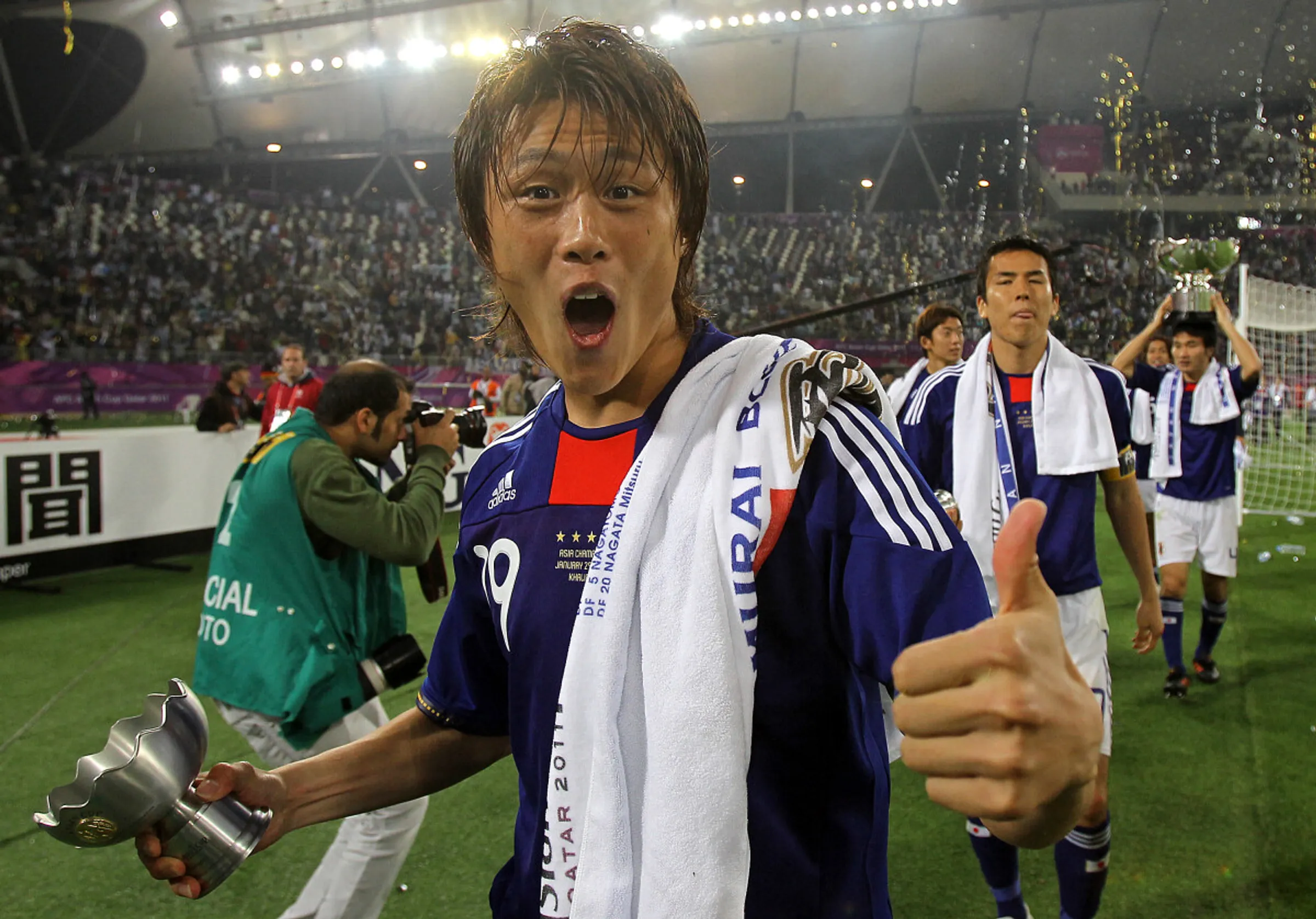
In true Italian fashion, coach Alberto Zaccheroni’s Japan absorbed the pressure and hit on the counter. It took 109 minutes, but the goal finally arrived courtesy of an exquisite Yuto Nagatomo cross that was met by Tadanari Lee’s half-volley which left goalkeeper Mark Schwarzer rooted to the spot.
A three-week long celebration of Asian football ended with Japan crowned champions for the fourth time in their history, a record that remains unmatched a decade later, while Australia’s glory time would arrive four years later on home soil.
Related News
- Domestic Leagues
Al Hilal defeat Al Faisaly to clinch Saudi Super Cup
- AFC Futsal Asian Cup
AFC Futsal Asian Cup Kuwait 2022™ Qualifiers draw reveals path to Finals for teams
- Domestic Leagues
Central and South Asian Wrap: Hyderabad reach summit, Persepolis see off Tractor
- Asian Icons
Mehdi Taremi named among Finalists for FIFA Puskas Award
- Transfers
Wolves sign Japan international Hayao Kawabe

Item 1 of 5