
Thu, 28 Oct, 2021
Takashi Fukunishi rarely found his name on the score sheet; as a defensive midfielder, the former Jubilo Iwata man spent the majority of his career providing the link between defence and the rest of the midfield.
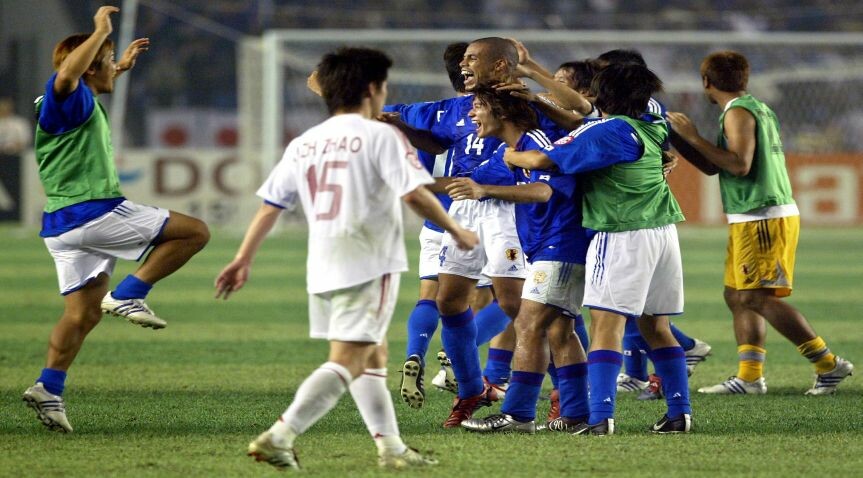
But in the final of the 2004 AFC Asian Cup, it was Fukunishi who sent Japan on their way to a record-equalling third title, netting in the 22nd minute as the Zico-coached side secured a 3-1 win over hosts China.
His close-range header kick-started a thrilling clash at packed-to-capacity Workers’ Stadium in Beijing that Japan eventually edged, and in the process ended China’s hopes of a first-ever AFC Asian Cup title.
“I was mainly focused on defence, making sure we didn’t give away the first goal,” says Fukunishi more than a decade after that night in Beijing.
“And then, we had a chance and I managed to score the first goal, which was a great advantage for us. That gave us some room to play calmly after our earlier matches, when we always had to catch up.”
Throughout the 2004 tournament, Japan – then the defending champions having won the title four years earlier in Lebanon – had been forced to battle back on several occasions to advance.
Having come through the group stages in Chongqing ahead of Iran, Oman and Thailand, Zico and his team were forced to show their fighting qualities over the next two rounds.
Against both Jordan and Bahrain, in the quarterfinals and semifinals respectively, the champions looked to be on their way out of the tournament, only to somehow advance.
Success against the Jordanians came via a penalty shootout while an extra-time winner from Keiji Tamada took 10-man Japan past Bahrain after Yuji Nakazawa had earlier scored an injury time header to take the game beyond 90 minutes.
That took Japan into their third final in four tournaments and a meeting with a China side desperate to win their first-ever AFC Asian Cup title in front of their own fans.
“As a defensive midfielder, I had few chances like that normally,” said Fukunishi of the opening goal, which came after Nakazawa headed Shunsuke Nakamura’s free kick from the left back across goal and into his team mate’s path.
“So the set play was a chance for me and I took it. That was because I was playing calm at that moment and when China were playing aggressively, we were able to counter attack and that led to us taking the next step. So I had an impression that it was China who were feeling under pressure.
“I thought if we had finished the game 1-0, I could have been a hero. But China revived after they equalised. We united again to play against their spirit. There was tension in our team, but in a good way.”
Li Ming levelled for China but goals in the second half from Koji Nakata and Tamada secured the win for Japan and ensured the title they won in Lebanon four years earlier remained in their possession.
“My team mates and I shared the moment and the joy together,” he says of the post-match celebrations. “There were 11 players on the pitch but of course there are players on the bench as well as staff. We achieved the victory together. We were delighted and at the same time, we were relieved from the pressure that we had to win the tournament.
“I’m glad that we carried out our responsibility and won the tournament in 2004.
“By winning the Asian Cup, we were looking forward to playing in the FIFA Confederations Cup as a representative of Asia. In order to build up a team, winning a tournament like the Asian Cup was a big event. It is necessary for the team to win the Asian Cup to improve the team.”
Victory over China in the final was the culmination of a trying three weeks for the Japanese, and it was achieving success under such difficult circumstances that gives Fukunishi the most pride when he looks back at the team’s achievement.
“What I remember most throughout the tournament was, well there were a lot of tough situations, such as the heat and the poor pitches. But what was important for us was to go through it as a united team.
“And we managed to achieve victory through a tough penalty shootout as well. That victory was achieved as a team. The victory against Bahrain came when we had one player less and conceded early. All these victories came in adverse circumstances. And all these wins put together ultimately brought us success at the Asian Cup.”