

Thu, 28 Oct, 2021
Sydney: Australia will go into the AFC Women’s Asian Cup Jordan 2018 not only as one of the form teams on the continent, but also in world football after a superb 2017 saw the Matildas rise to a best-ever number four in the FIFA Women’s Rankings.
The highlight of Australia’s 2017 came at the Tournament of Nations in July and August when Alen Stajcic’s team secured successive victories over the USA, Japan and Brazil to be crowned inaugural champions.
Australia appeared in the very first AFC Women’s Asian Cup in 1975 when they finished third in Hong Kong, but have achieved their best performances since joining the Asian Football Confederation in 2006.
https://www.the-afc.com/en/more/photo/sam_kerr_australia_-_afp.html

Thu, 28 Oct, 2021

Bangkok: Only Japan can match Thailand’s 15 appearances at the AFC Women’s Asian Cup with the Southeast Asians having been a part of all but three of the tournaments.
In the early years of the continental competition, Thailand were among the strongest sides, finishing as runners-up in three of the first four editions before being crowned champions in 1983 after defeating India 3-0 on home soil in Bangkok.
However, since the successful early years of the competition, Thailand have largely continued to be represented but have struggled to get beyond the group stage.
Thu, 28 Oct, 2021
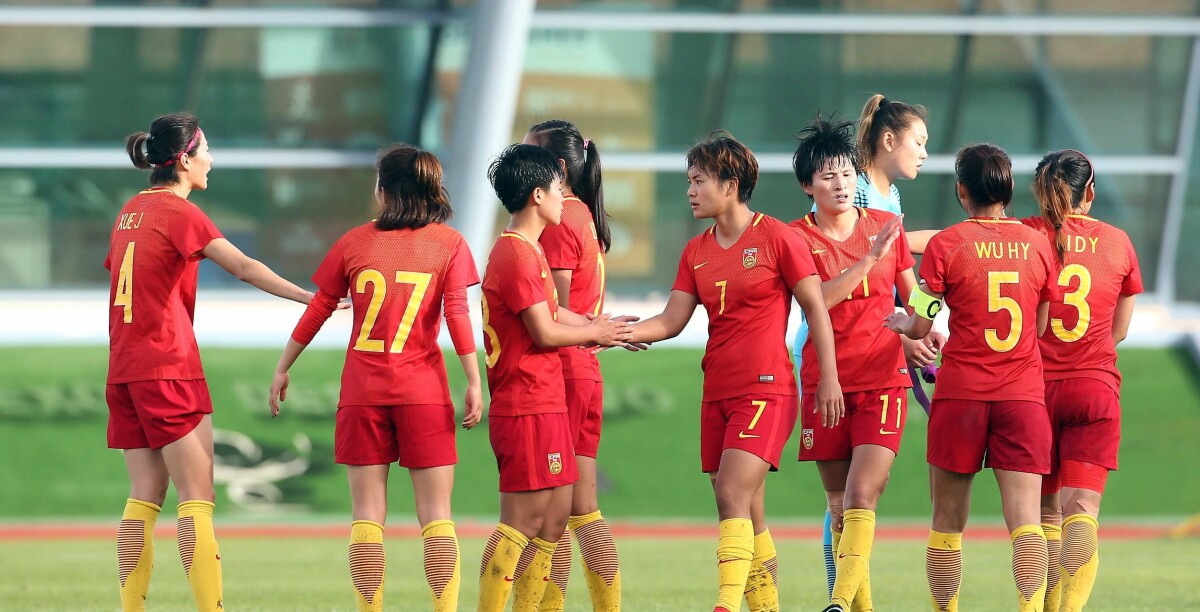
Beijing: China are the most successful side in the history of the AFC Women’s Asian Cup with a record eight championships to their name, although their last victory came back in 2006.
The East Asians’ dominance was at its peak between 1986 and 1999 when they won all seven continental titles in an era that included legends of the women’s game such as Sun Wen, Pu Wei and Gao Hong.
China’s first success, on their competition debut, came after a 2-0 victory over Japan in the final and they would go on to make their mark on the global game throughout the 1990s.
Thu, 28 Oct, 2021

Manila: The AFC Women's Asian Cup Jordan 2018 promises to be a cracker with the Continent's top eight teams battling for supremacy, with which will come a brand new trophy.
Join the-AFC.com as we count down to Friday's kick-off with an in-depth look at the eight teams, starting with the Philippines.
Back in the AFC Women’s Asian Cup for the first time since 2003, the Philippines will be looking to advance beyond the group stage, a feat never achieved before, and seal a spot at the 2019 FIFA Women’s World Cup.
The Southeast Asians booked their place at the tournament after finishing second in their qualifying group behind Jordan, who were already guaranteed a place as hosts.
Thu, 28 Oct, 2021

Hanoi: Vietnam are appearing in their eighth successive AFC Women’s Asian Cup and will be looking to go one better than the sixth place they achieved in 2014.
Hosting the tournament for the second time, Vietnam began with a 3-1 victory over Jordan after Nguyen Thi Muon’s opener was followed with a brace by Le Thu Thanh Huong.
Defeats to Japan and Australia ensued but their opening day victory meant the Southeast Asians had done enough to finish third in their group and book a fifth-place play-off game with Thailand for a berth at the 2015 FIFA Women’s World Cup in Canada.
Thu, 28 Oct, 2021
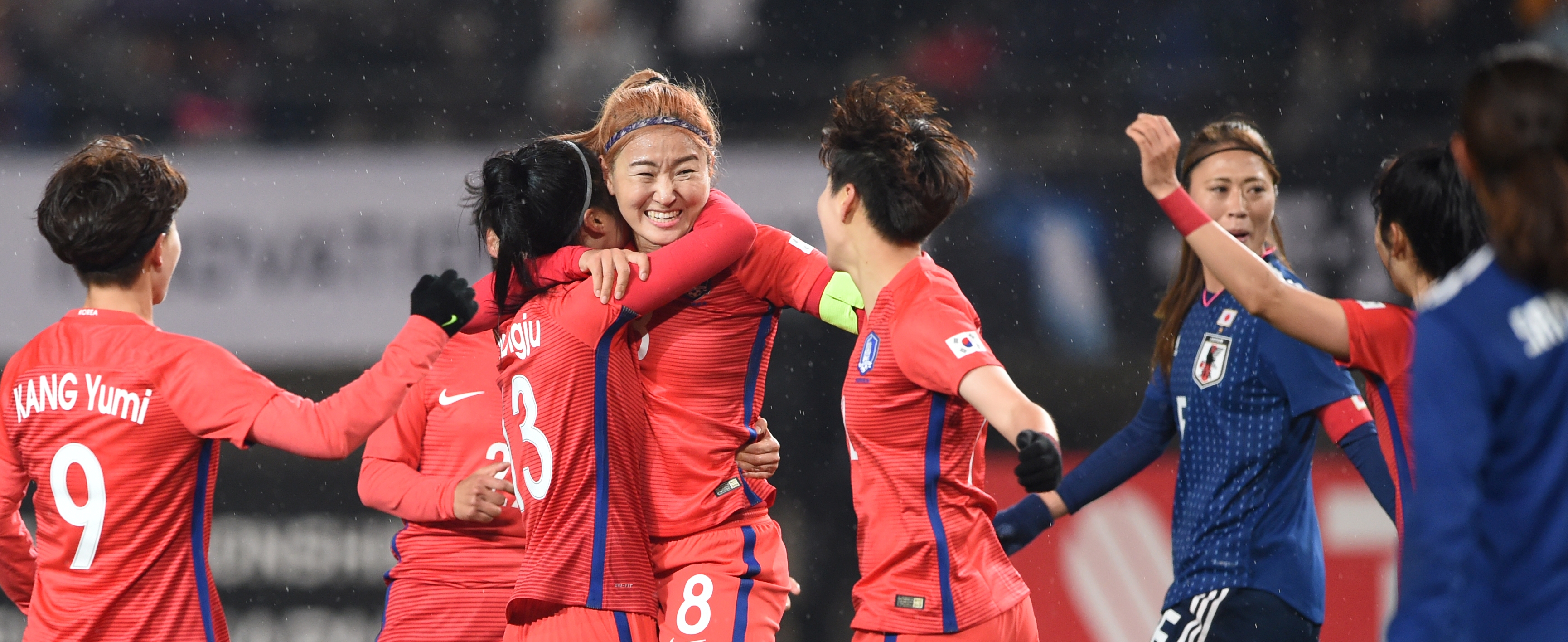
Seoul: Regular participants in the AFC Women’s Asian Cup, Korea Republic have reached the semi-finals four times over the years, but have yet to appear in the final.
Set to take part in their 12th successive continental competition, the East Asians booked their place after edging past neighbours DPR Korea in the qualification campaign in Pyongyang.
After running out 10-0 winners over India in their opening game, Jang Sel-gi scored what would eventually prove to be a crucial equaliser to earn a 1-1 draw with hosts DPR Korea.
Korea Republic then saw off Hong Kong 6-0 and Uzbekistan 4-0 to finish on top of the group by virtue of goal difference to confirm their passage to Jordan.
Thu, 28 Oct, 2021

Tokyo: After Japan’s dynamic success at the FIFA Women’s World Cup 2011, there seemed something almost predictable about the team’s march to the Finals of the 2012 Women's Olympic Football Tournament and 2015 World Cup.
The well-oiled Nadeshiko machine of those three campaigns was full of familiar names. But gone now are the likes of Aya Miyama, Shinobu Ono, Yuki Nagasato and, of course, the iconic Homare Sawa who retired after Canada 2015.
For many observers, it will be a partly new-look Japan side that steps onto the field in the AFC Women's Asian Cup 2018 in Jordan later this week seeking to shore up qualification to the 2019 Women’s World Cup in France.