AFC Cup
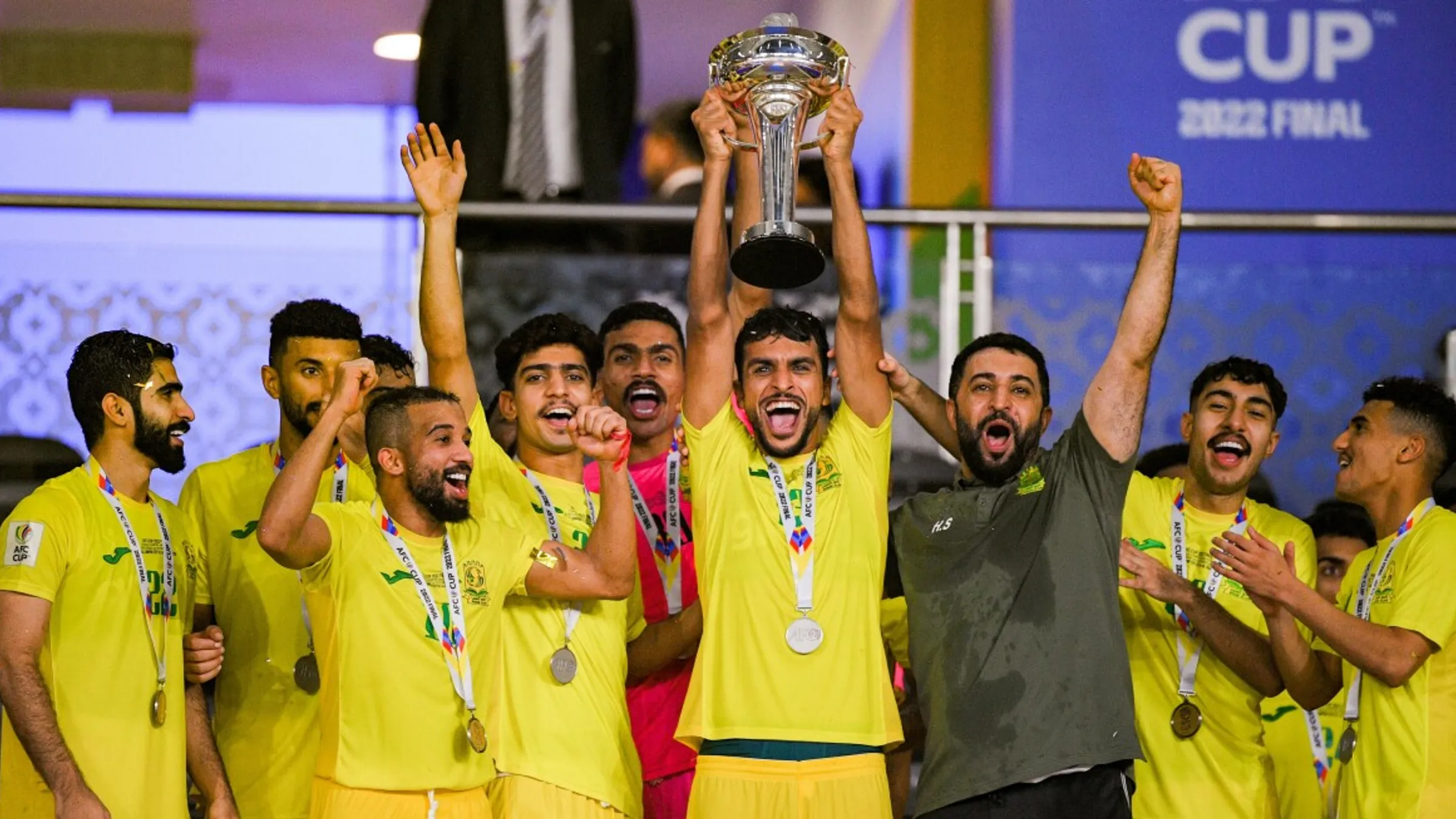
Al Seeb Club became the first Omani side to lift the title when they beat Kuala Lumpur City FC 3-0 in last season’s final at Bukit Jalil National Stadium in Kuala Lumpur.
This time round, 36 clubs from across the continent will compete in the final edition of the tournament. As the big kick-off on September 18 approaches, the-AFC.com takes a trip down memory lane to look at the history of the AFC Cup.
Al Jaish create history, Al Faisaly go back-to-back
A new era in Asian club football began in the year 2004 with the establishment of the AFC Cup as the second-tier continental club competition to the AFC Champions League™.
The inaugural edition belonged to Syrian and Singaporean clubs as Al Wahda and Al Jaish faced Geylang International and Home United respectively in the semi-finals.
It was ultimately an all-Syrian final as Al Jaish emerged the first-ever champions after beating their Damascus rivals on away goals after a 3-3 draw over two legs in the Syrian capital.
The silverware would next be heading to Jordan as Al Faisaly powered their way to back-to-back titles in 2005 and 2006. The former year saw them beat Nejmeh SC 4-2 on aggregate in the final to win the tournament unbeaten, whereas the latter season was much more challenging.
After losing to Al Nejmeh in the group stage, Al Faisaly came up against Hong Kong’s Sun Hei in the quarter-finals where they edged through after a penalty shootout triumph. They then edged Amman rivals Al Wehdat 2-1 over two legs in the semi-finals and, after a 3-0 first-leg win over Muharraq Club in the first leg of the final, they prevailed 5-4 on aggregate to retain their title.
Al Faisaly would navigate their way to the final for a third successive year in 2007, only to this time narrowly fall short against fellow Amman side Shabab Al Ordon.
Nasaf break West Asian dominance
The West Asian dominance would continue in the ensuing years with the undoubted highlight being Brazilian forward Rico’s record 19 goals in a single edition to help Muharraq win their maiden AFC Cup in 2008, when the Brazilian scored hat-tricks in both legs of the final.
Kuwait came to the fore in 2009 when a stoppage-time Ismail Sulaiman goal handed Kuwait SC a 2-1 win over Syria’s Al Karamah in the final before another Syrian side, Al Ittihad, lifted the 2010 title following a penalty shootout win over Qadsia SC in front of more than 58,000 spectators – then a record – in Kuwait City.
In 2011, FC Nasaf took the continent by storm with their performances in the AFC Cup, finishing a perfect group stage after scoring a phenomenal 30 goals in six matches. Former champions Al Faisaly were knocked out in the Round of 16, before a tricky quarter-final tie against Thailand’s Chonburi FC saw them advance on penalties.
Al Wehdat were next to fall in the semi-final stage before another former winner, Kuwait SC, were beaten 2-1 in the final in Qarshi courtesy of Andrejs Pereplotkins’ memorable goal as Nasaf finally ended West Asian dominance.
Kuwait SC reign supreme
Following the defeat in the 2011 final, Kuwait SC would go on to dominate the competition over the next two years by claiming consecutive titles in 2012 and 2013 as they became the first club to win the AFC Cup on three occasions.
The likes of Rogerinho and Issam Jemaa were the driving force as they beat Erbil SC 4-0 away in the 2012 final before following that up with a 2-0 win against domestic rivals Qadsia the next year.
The two beaten finalists would meet in the 2014 decider with Qadsia finally being crowned champions after losing their two previous finals, when they emerged victorious after a 4-2 penalty shootout victory in Dubai.
The Southern Tigers roar
The 2015 final was the first in the history of the competition that did not feature a team from West Asia.
Johor Darul Ta’zim led the way with the likes of Safiq Rahim, Safee Sali and Luciano Figueroa dazzling as the Malaysian giants advanced all the way to the final.
Tajik club Istiklol were the other side making waves as they enjoyed a fabulous debut campaign that culminated with a showdown against JDT in the final in Dushanbe.
But despite home advantage, Leandro Velazquez’s strike midway through the first half proved to be the only goal as JDT became the first Southeast Asian club to be crowned champions of the AFC Cup.
Air Force Club’s hat-trick of titles
In 2016, India’s Bengaluru FC created headlines with their run to the final, becoming the first side from South Asia to appear in the showpiece event.
After finishing second behind holders JDT in the group stage, the two teams met again in the last four where Sunil Chhetri’s second-half brace powered Bengaluru to the final as they set up a date with Iraq’s Air Force Club.
And it was the Iraqi debutants who ended Bengaluru dreams as Hammadi Ahmad – the tournament’s top scorer and MVP – netted in the 70th minute to hand his side a 1-0 win in Doha.
The following year marked the start of a new era in the AFC Cup as the brand-new Zonal system was introduced.
South Zone champions Bengaluru overcame their East Zone counterparts 4.25 SC from DPR Korea in their Inter-Zone semi-final while Central beat ASEAN in the other as Istiklol eased to victory over Ceres Negros of the Philippines.
Dmitri Barkov then scored in both legs of the Inter-Zone final as Istiklol edged Bengaluru to reach their second AFC Cup final, while Air Force Club defeated Syria’s Al Wahda in the West Asia Zone final to also return to the final.
And it was a repeat of 2015 for Istiklol as this time Emad Mohsin’s lone strike edged Air Force Club past them as the Tajik side once more came up short in front of their home fans in the final.
Indonesia’s Persija Jakarta shattered records in 2018, twice drawing in crowds of more than 60,000 at Gelora Bung Karno Stadium. However, their run would end in the ASEAN Zonal semi-finals in front of a tournament-high 62,198 supporters when Singapore’s Home United won 3-1 to advance 6-3 on aggregate.
Ultimately, it was defending champions Air Force Club and Turkmenistan’s Altyn Asyr who made the final, with the Iraqi side claiming an unprecedented third title in a row following a 2-0 win – courtesy of Ahmad and Ibrahim Bayesh – in front of just under 25,000 spectators in Basra.
West remains best
Air Force Club were not involved in the 2019 edition but West Asia remained on top as Al Ahed SC became the first side from Lebanon to be crowned champions.
And they did so on the back of a near-impaccable defence which conceded just three times in the group stage before keeping five successive shutouts in the knockout rounds, in which they scored just three times.
Up against 4.25 SC in the final in Kuala Lumpur, Ghanaian Issah Yakubu netted the only goal of the game to seal the title while, unsurprisingly, goalkeeper Mehdi Khalil picked up the MVP award.
It was a COVID-curtailed season in 2020 but, despite that, a new record holder emerged. Bienvenido Maranon’s two goals in Ceres’ 4-0 group stage win over Bali United propelled him past Jordan’s Mahmoud Shelbaieh to become the AFC Cup’s all-time top scorer with 35 goals.
The tournament was ultimately cancelled and the brace was to be the prolific Philippines striker’s final goals in the competition.
Nasaf returned in 2021, powering past ATK Mohun Bagan 6-0 in the Inter-Zone semi-final and edging Hong Kong’s Lee Man 3-2 after extra-time in the Inter-Zone final to return to the final 10 years after their first appearance.
But on the other side of the draw, Muharraq eliminated former winners Al Ahed and Kuwait SC in the knockout rounds to also return to the final, where an early goal from Mahmoud Al Mardi set them on their way to a 3-0 win as they added to the title won back in 2008.
And for the 16th time in 18 completed editions of the tournament, the trophy stayed in West Asia in 2022, despite the best efforts of debutants Kuala Lumpur City, who became the second Malaysian side to reach the final after winning two penalty shootouts along the way.
However, ambitious Omani club Al Seeb proved a step too far when, after storming to a 4-0 win over Bahrain’s Al Riffa in the West Asia Zone final, goals from Ali Al Busaidi, Abdul Al Muqbail and Muhsen Al Ghassani sealed a 3-0 win in the final in Kuala Lumpur.
A new dawn awaits
There’s no shortage of excitement ahead of the 2023-24 edition as the continental competition returns to the home-and-away format, while the winners will also qualify for the playoff stage of the 2024-25 AFC Champions League Elite.
This season will also be the first time that Australian clubs will participate in the AFC Cup as 2022-23 A-League champions Central Coast Mariners and 2022 Australia Cup winners Macarthur FC are set to represent the Asian footballing powerhouse.
With title holders Al Seeb not present, Al Ahed, Al Ittihad and Kuwait SC are the only former winners involved in the group stage of a competition which is sure to deliver the goods once more.
Related News
- AFC U23 Asian Cup
#AFCU23 Qatar 2024 Qualifiers: MD2 Results & Reports
- International Friendlies
Japan, Malaysia impress; Australia denied
- Transfers
Saudi Pro League: Summer transfer window wrap-up
- International Friendlies
Indonesia, Tajikistan triumph, defeat for Saudi Arabia
- Transfers
Qatar's Al Duhail sign Coutinho on loan

Item 1 of 5