
FIFA Women's World Cup
Since the inaugural tournament in 1991, Asian sides have played a major part in the festival of football – with Japan’s victory in 2011 and subsequent runners-up spot four years later and China PR’s run to the 1999 final the most notable highlights.
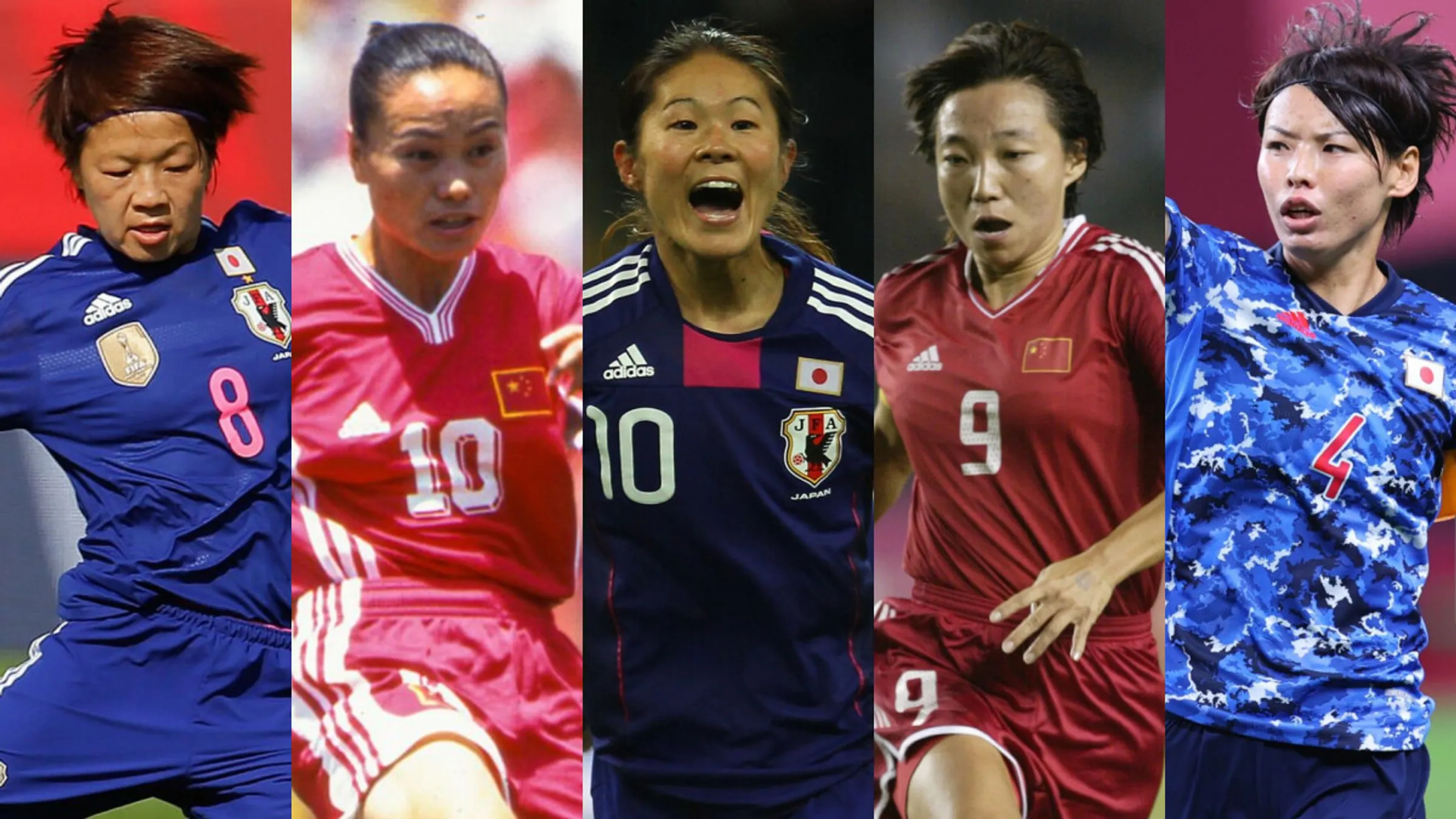
And within those team successes have been some standout individual performances in which a number of players have achieved legendary status. We shine the spotlight on five of Asia’s World Cup heroes.
Homare Sawa - Japan
From making her tournament debut as a 16-year-old in 1995 to captaining her country to a historic triumph in 2011 and then earning her 200th international cap on her way to guiding the nation to another final in her sixth appearance in 2015, Japan legend Homare Sawa’s illustrious career was closely intertwined with the FIFA Women’s World Cup.
One of the youngest to ever play in the World Cup and one of the greats of the women’s game, Sawa’s biggest contribution came in her fifth appearance when Japan became world champions under her captaincy. Sawa led by example during the tournament, scoring a hat-trick in a 4-0 win over Mexico in the group stage before netting again the semi-final victory over Sweden in Germany.
The midfielder was once again the Nadeshiko’s saviour in the final against the United States as she scored with a backheel flick in the 117th minute to take the game to penalties which Japan won 3-1 to lift their first-ever World Cup. Sawa ended the tournament as the top scorer and won the Golden Ball for best player while also firmly establishing herself as a World Cup great.
Sun Wen - China PR
Sun Wen was China PR’s captain fantastic at the FIFA Women’s World Cup and led the Steel Roses in 16 matches across three tournaments from 1995 to 2003. An 18-year-old Sun bagged her first World Cup goal in the inaugural edition on home turf in 1991 before adding two more four years later as China reached the semi-finals for the first time, only to bow out after a narrow 1-0 defeat to Germany.
After winning the silver medal at the 1996 Olympics in Atlanta, Sun and China returned to the United States for the 1999 World Cup. The striker’s hat-trick against Ghana and double against Australia ensured the Steel Roses' progress to the knockout stages before she registered another double in 5-0 win over defending champions Norway in the semi-final.
Though China would settle for the runners-up medal after losing the final to the United States on penalties, Sun finished as the joint top scorer with seven goals and also won the Golden Ball. The veteran of four World Cups and the central figure during China’s golden era, Sun was named the FIFA Women’s Player of the Century alongside the United States' Michelle Akers in 2000.
Aya Miyama - Japan
A three-time AFC Women’s Player of the Year, including in both years Japan made the FIFA Women’s World Cup final, Aya Miyama played a pivotal role in the helping the Nadeshiko become the best in the world. The midfielder boasted excellent set-piece prowess, ability to unlock opposition defences with a wide range of passing and could find the back of the net on her own, making her an all-time Nadeshiko great.
Miyama came to the fore at the World Cup in 2007 when two brilliantly executed free-kicks helped Japan earn a 2-2 draw against England in their group stage opener. Four years later, she was Japan’s livewire from the midfield as Norio Sasaki’s players emerged as the world champions. Miyama was once again on target in the 2011 opener as she struck the winner in a 2-1 defeat of New Zealand.
In the final in Frankfurt, Miyama netted the crucial equaliser against the US with nine minutes remaining to take the game into extra time before delivering a corner towards the near post for Sawa to equalise and force the penalties – the first of which she slotted home. The midfielder went on to captain Japan as they finished runners-up at the 2012 Olympics and the 2015 World Cup.
Liu Ailing - China PR
Along with Sun Wen, Liu Ailing was one of the superstars of the Chinese women’s national team that were among the world's best in the 1990s. Liu’s story in the FIFA Women’s World Cup goes all the way back to the first-ever game of the tournament in Guangzhou as the then 24-year-old midfielder scored a double to help hosts China defeat Norway 4-0 in front of 65,000 supporters.
She scored another double in the group stage win over New Zealand before China were knocked out in the quarter-finals. Liu, who was by then playing for Tasaki Perule in Japan, was once again on target in the 1995 World Cup in Sweden – a goal that sealed a 4-2 win over Australia in the group stage – as the Steel Roses made it to the semi-finals this time around.
Liu was a star of the iconic 1999 side – her first-time finish that gave China a 2-1 win over Sweden in the opener went down as one of the best goals in World Cup history. After creating Sun’s opener in the 5-0 win over Norway in the semi-finals, Liu scored two stunners herself – the first a half-volley with her right foot and the other a volley with her left – as China routed the holders before narrowly losing out to the United States.
Saki Kumagai - Japan
A 20-year-old Saki Kumagai carried the hopes of a whole nation on her shoulders as she stepped up to take her spot-kick in the final of the 2011 FIFA Women’s World Cup. As she fired home Japan’s fourth penalty past United States goalkeeper Hope Solo, it turned the Nadeshiko into world champions and Kumagai into a legend of Japanese football.
During that tournament, Kumagai formed a formidable central defensive partnership with Azusa Iwashimizu as she showed maturity beyond her years on the biggest stage. A versatile player who can play both in the defence and midfield, Kumagai then cemented her legendary status in the women’s game four years later by again being a key figure as Japan made it to back-to-back finals.
Kumagai’s third appearance in the World Cup came at France 2019, when a new-look Japan were unfortunate to lose to a late Netherlands penalty in a 2-1 defeat. The winner of five UEFA Women’s Champions Leagues now returns for her fourth appearance at the tournament as the only remaining member from the class of 2011.
Honourable Mentions
While Sam Kerr is the modern-day star of Australian football, it was Lisa De Vanna who stood out in previous editions of the tournament. Named in the FIFA Women’s World Cup All-Star teams in 2007 and 2011, the forward scored six goals across three World Cups, including four in 2007.
Another player to score in three different World Cups is Japan’s Yuki Nagasato, who came on as a substitute in the victorious 2011 final and scored in the rematch against the United States in 2015. She was also on target in the 2007 edition – a 91st-minute winner against Argentina which gave the Nadeshiko their only win of the tournament.
Gao Hong entered the 1995 World Cup as China’s back-up goalkeeper, but after being given a chance in the final group game against Denmark, she made the spot her own. She went on to save two penalties in the shootout win over Sweden in the quarter-finals before being the last line of defence as China finished runners-up four years later.
