

FIFA World Cup
Having reviewed the 1990 competition last time round, we turn our focus to the 1994 FIFA World Cup in the United States which was the last one with just two representatives from Asia and where the displays by both Saudi Arabia and Korea Republic only justified the inclusion of more Asian nations in the later editions.
A maiden campaign to remember for Saudi Arabia
With two AFC Asian Cup™ titles to their name already and a runner-up finish in 1992, Saudi Arabia were overdue an appearance at the FIFA World Cup and the dream became a reality in USA 1994 following a stellar qualifiers campaign that culminated in a famous 4-3 victory over the Islamic Republic of Iran on the final matchday in Doha.
Drawn in Group F alongside Belgium, Morocco and the Netherlands, Jorge Solari’s Saudi Arabia faced an uphill battle but proved they were no pushovers.
Against a star-studded Netherlands side that featured the likes of Ronald Koeman, Frank Rijkaard and Dennis Bergkamp, Saudi Arabia outplayed their European opponents in the first half, taking the lead thanks to a stunning Faud Anwar header that marked their first-ever FIFA World Cup goal.
Solari’s men held strong and managed to stay in the lead until shortly after half-time, with Wim Jonk lashing home the equaliser from distance before Gaston Taument headed in the winner after goalkeeper Mohammed Al Deayea had made a number of superb saves to keep the Netherlands out.
Next up came Morocco and a game that saw Saudi Arabia’s first-ever FIFA World Cup win at only the second time of asking. Sami Al Jaber opened the scoring from the spot with the first of his three goals for his country across four FIFA World Cups before Morocco’s Mohamed Chaouch levelled midway through the first half. But the historic three points were secured when Anwar fired in from fully 30 yards just before the interval to claim a 2-1 win.
In the final group stage game against Belgium, Saudi Arabia produced their first clean sheet and one of the greatest goals in FIFA World Cup history.
The Green Falcons weathered an early storm, and with Belgium pressing high, Saeed Al Owairan danced his way through a maze of Belgian players from inside his own half before rounding goalkeeper Michel Preud’homme and smashing the ball into the roof of the net to make Saudi Arabia the first Asian nation to qualify for the knockout rounds since DPR Korea in 1966.
The Green Falcons weathered an early storm, and with Belgium pressing high, Saeed Al Owairan danced his way through a maze of Belgian players from inside his own half before rounding goalkeeper Michel Preud’homme and smashing the ball into the roof of the net to make Saudi Arabia the first Asian nation to qualify for the knockout rounds since DPR Korea in 1966.
A Sweden side that would go on to finish third proved a mountain too high for the Saudis who left with their heads held high in the Round of 16 following a 3-1 defeat.
Martin Dahlin opened the scoring early on and a second-half brace by Kennet Andersson sealed the win either side of yet another magical goal to savour courtesy of substitute Fahad Al Ghesheyan, who cut inside and left the Swedish defender in his wake before striking high into the net beyond the goalkeeper’s reach.
Martin Dahlin opened the scoring early on and a second-half brace by Kennet Andersson sealed the win either side of yet another magical goal to savour courtesy of substitute Fahad Al Ghesheyan, who cut inside and left the Swedish defender in his wake before striking high into the net beyond the goalkeeper’s reach.
Nearly three decades later, USA 1994 remains Saudi Arabia’s biggest achievement on the international front – their only Round of 16 appearance and a memory that continues to inspire their future footballing generations.
Taeguk Warriors deliver finest display to date
While Korea Republic had been somewhat unfortunate to exit the 1990 FIFA World Cup in Italy on the back of three successive defeats, there had been some promising displays in a campaign that had seen the emergence of Hong Myung-bo and Hwang Sun-hong, and the pair were part of a squad that impressed in USA 1994.
In their third consecutive FIFA World Cup, the Taeguk Warriors were drawn in a tough group with defending champions Germany, 1992 Olympic gold medallists Spain and Bolivia. Up first was a challenge against a Spanish side led by Andoni Zubizarreta and brimming with talent including Fernando Hierro, Pep Guardiola and Luis Enrique.
With a large contingent of Korean fans among the 56,000 gathered at the Cotton Bowl in Dallas, Kim Ho’s players took the game to La Roja, who had their stand-in captain Miguel Angel Nadal sent off just 25 minutes in to increase Korea’s chances of an upset. However, despite Korean pressure, it was Spain who went 2-0 up after the interval as Juilo Salinas and Jon Andoni Goikoetxea scored within 10 minutes of the restart.
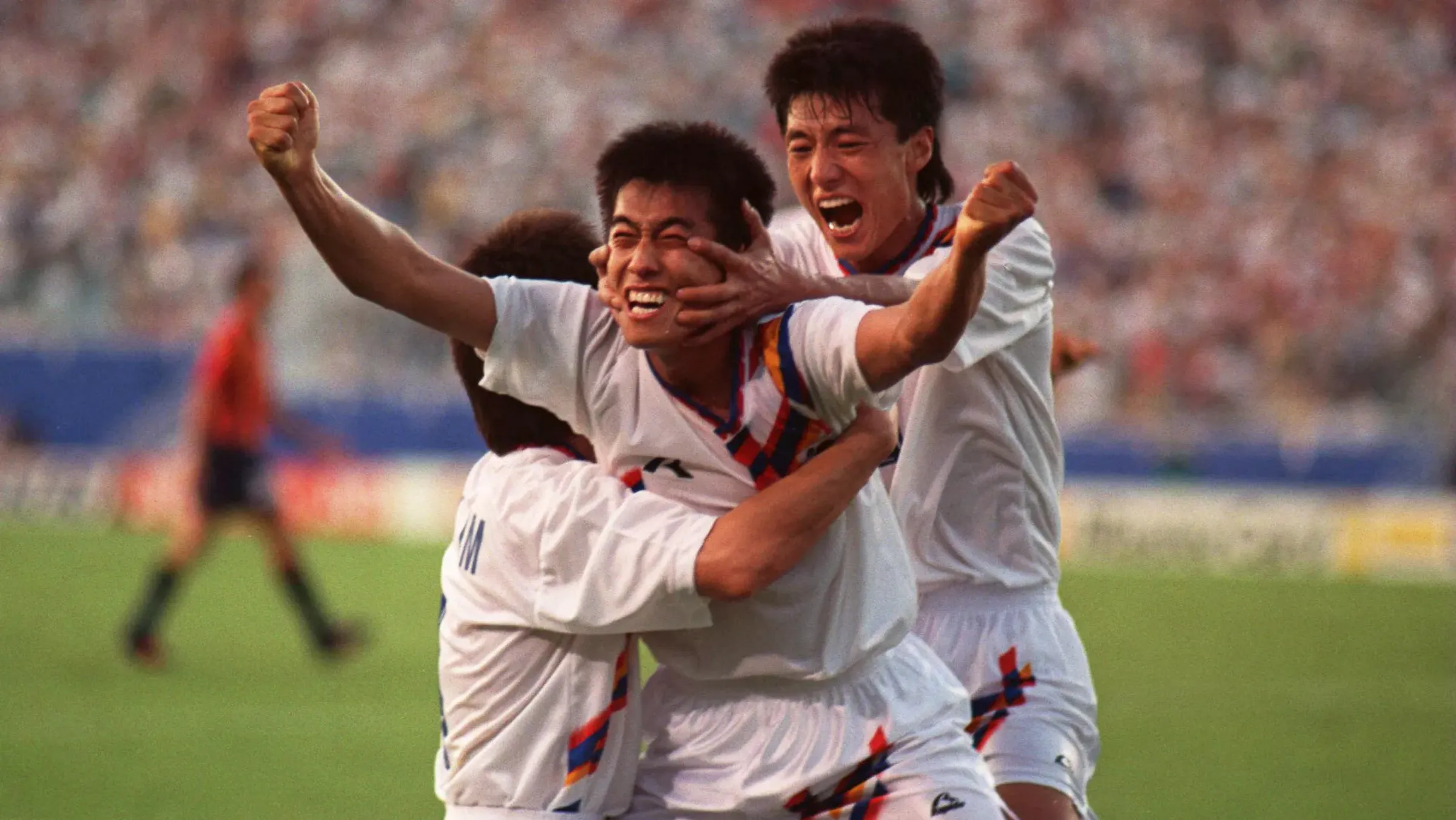
But the Taeguk Warriors sought a way back and 25-year-old Hong began the comeback when his deflected free-kick found its way into the back of the net. And the Spaniards were left stunned five minutes later as Seo Jung-won got behind the opposition defence and finished past Santiago Canizares to earn a well-deserved draw for the East Asians.
Korea went into their second outing against Bolivia hoping to pick up a win that would almost certainly guarantee a place in the knockout rounds but, despite playing out a goalless draw in which they had a chance to win it late on, the two points from two games ensured their best points tally to date at a FIFA World Cup.
And it meant they remained in with a chance of reaching the Round of 16 ahead of their Matchday Three encounter against a Germany side boasting some of the greatest players on the planet.
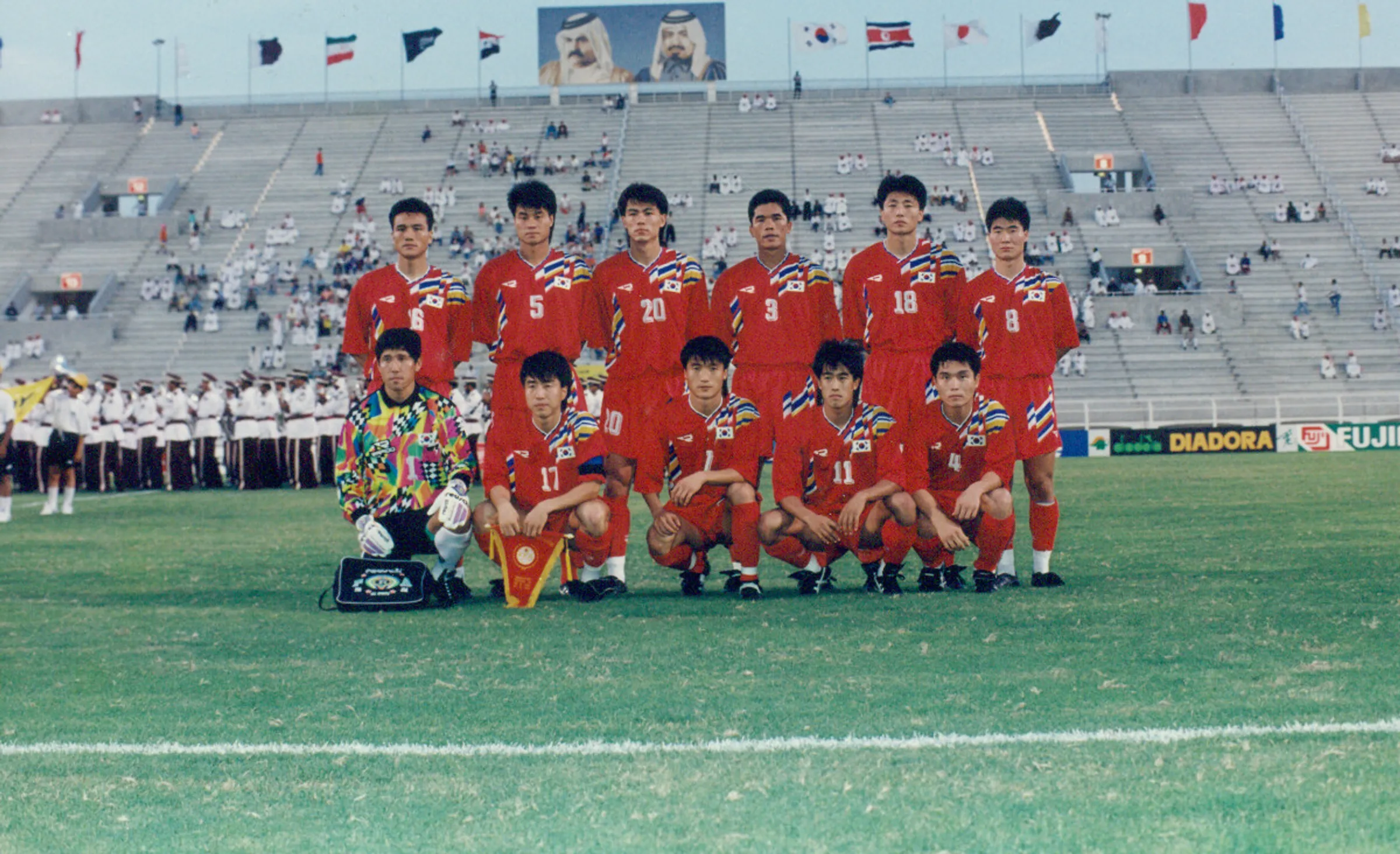
Among them was Jurgen Klinsmann, who dealt a huge blow to Kim’s side, bagging a brace with Karl-Heinz Riedle also scoring as Germany raced to a 3-0 lead at half-time. But the Koreans’ never-say-die attitude was on display once more as they went on the offensive after the break.
Hwang reduced the deficit in the 52nd minute and then, just past the hour mark, Korea found the back of the net again – this time Hong firing from distance an effort that slipped through the gloves of German shot-stopper Bodo Illgner to send their thousands of supporters into raptures as the hope of a comeback was well and truly on.
Hwang reduced the deficit in the 52nd minute and then, just past the hour mark, Korea found the back of the net again – this time Hong firing from distance an effort that slipped through the gloves of German shot-stopper Bodo Illgner to send their thousands of supporters into raptures as the hope of a comeback was well and truly on.
Though they fell just short, they had run the defending world champions close with a performance that showed Korean football was on the rise.
Photos: FIFA, AFP
