
FIFA World Cup
Excitement has been building as the clock ticks down and, for the first time ever, a record six Asian teams will compete at the global showpiece as Australia, the Islamic Republic of Iran, Japan, Korea Republic, Qatar and Saudi Arabia take to the field in the Gulf nation.
Ahead of the big kick-off, the-AFC.com takes a look at some of the other statistics involving the Asian Football Confederation’s representatives.
Return to Asia
Twenty years after Korea Republic and Japan created history by co-hosting the FIFA World Cup to become the first Asian nations to stage the tournament, the global showpiece returns to the continent for the second time.
Back then, the co-hosts excelled in front of their own fans, with Korea producing the best performance ever by an Asian country in reaching the semi-finals and Japan advancing to the Round of 16 for the first time.
The sole debutant
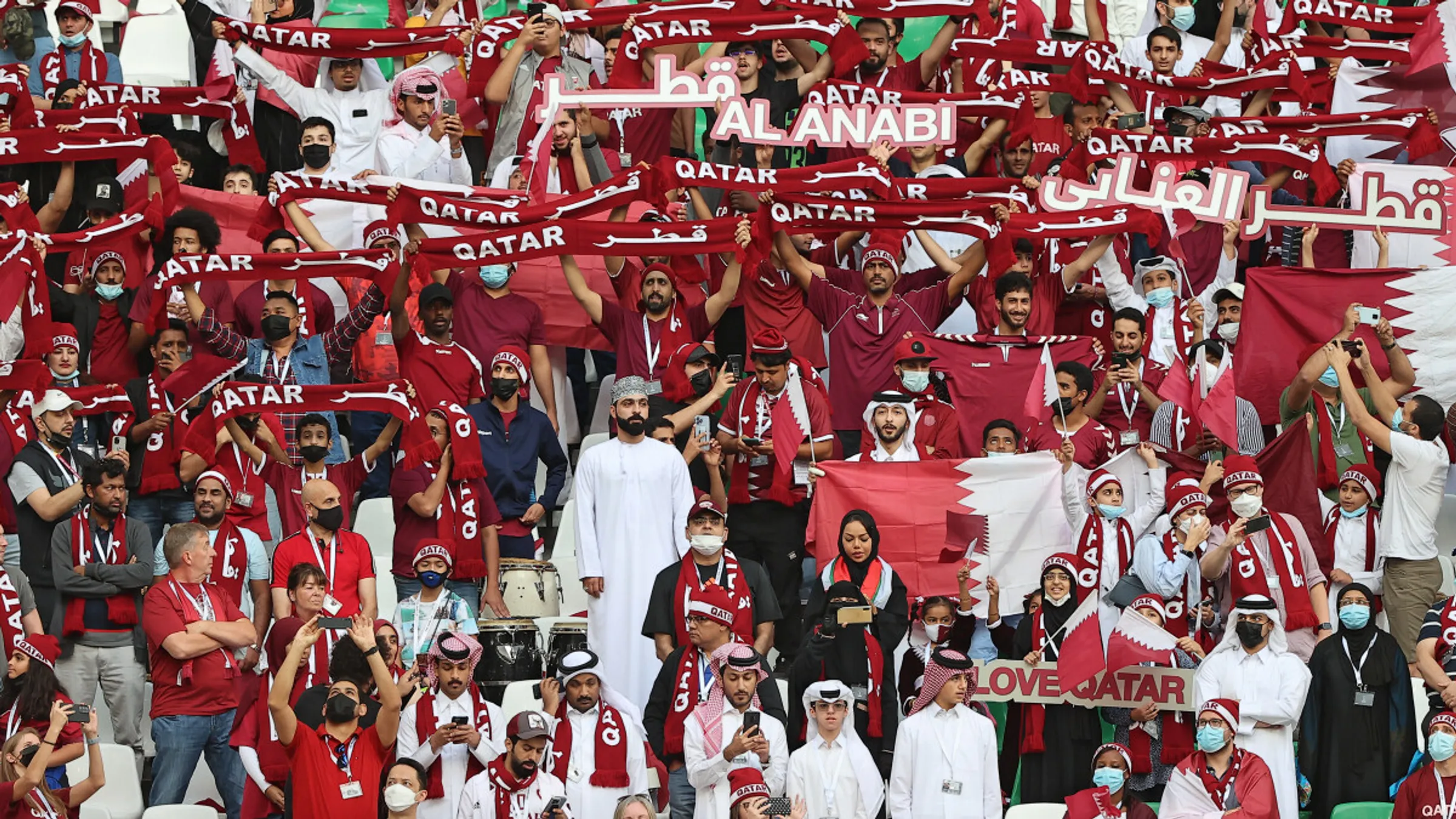
Of the 32 teams at the 2022 FIFA World Cup, Qatar are the only debutants, and they will become the 12th current AFC member to take part in the festival of football.
The Qataris will also become the fourth Gulf nation to appear at the tournament, following in the footsteps of Saudi Arabia, Kuwait and the United Arab Emirates, with the latter two qualifying in 1982 and 1990 respectively.
Impressive streak
No Asian team has been part of more FIFA World Cups than Korea Republic, who are participating for the 11th time since debuting in 1954, with their run of consecutive appearances now at an incredible 10 in a row.
Only Brazil (22), Germany (18), Italy (14), Argentina (13) and Spain (12) have put together longer streaks in the history of the competition. Japan, meanwhile, are returning for the seventh time in a row and Australia fifth.
Experienced campaigner
After returning to the Iran hot seat earlier in the year, Carlos Queiroz will lead Team Melli into a third successive FIFA World Cup having been in charge of the side for the 2014 campaign in Brazil and the 2018 edition in Russia.
Queiroz and France boss Didier Deschamps are the only head coaches to lead their sides into a third World Cup in a row, although the Portuguese tactician goes one better than his French counterpart after he also helmed Portugal in 2010 in South Africa.
Aiming for the knockouts
The AFC’s six representatives will be targeting the knockout rounds, a feat achieved by five Asian nations previously with DPR Korea (1966), Saudi Arabia (1994), Japan (2002, 2010 & 2018), Korea (2002 & 2010) and Australia (2006) the sides who have done so.
In a good omen for Qatar, meanwhile, the host nation has qualified for the knockout rounds (or made it out of the first group stage) in 20 of the 21 previous FIFA World Cups, with South Africa in 2010 being the sole exception.
Note: Australia advanced from the Oceania Football Confederation qualifiers for the 2006 edition, prior to joining the AFC.
Can Japan go back-to-back?
No Asian nation has managed to reach the knockout rounds in consecutive editions, but that is what Japan will be aiming to do in Qatar having advanced to the Round of 16 four years ago in Russia before going two up against Belgium only to lose 3-2 in stoppage time.
The Samurai Blue’s three appearances in the knockout rounds are more than any other side from the continent, but they are yet to make it beyond the last 16, where Turkey (2002), Paraguay (2010) and the Belgians (2018) have ended the dream.
Son targets three in a row
Having netted on his debut campaign against Algeria in Brazil in 2014 and then against both Mexico and Germany four years ago in Russia, Son Heung-min will be looking to score in his third successive FIFA World Cup.
The feat has been achieved before, with Park Ji-sung (2002-2010), Tim Cahill (2006-2014) and Keisuke Honda (2010-2018) all going back-to-back-to-back, while Saudi Arabia’s Sami Al Jaber has also scored in three editions (1994, 1998 & 2006).
Returning coaches

Three head coaches of the Asian teams have previously led other nations at the tournament, with the aforementioned Queiroz leading his native Portugal into the 2010 edition, Korea Republic’s Paulo Bento doing likewise in 2014 and Saudi Arabia’s Herve Renard in charge of Morocco in 2018.
Elsewhere, Australia’s Graham Arnold was part of the Socceroos' backroom staff in 2006 and 2010 and Japan’s Hajime Moriyasu was assistant to Akira Nishino at the 2018 edition, meaning Qatar’s Felix Sanchez Bas is the only tactician set to appear at his first FIFA World Cup.
Spot on
Australia’s last three FIFA World Cup goals have all come from the penalty spot and were all scored by the now-retired Mile Jedinak, who netted against France and Denmark in 2018 and against the Netherlands in 2014.
The last goal a Socceroos player scored from open play was one of the best World Cup goals in recent memory: Tim Cahill’s stunning volley to draw Australia level with the Netherlands in Porto Alegre in a game the Dutch ultimately won 3-2 after Jedinak gave the Australians a 2-1 lead early in the second half.
The race for two goals
All nine of Iran’s goals across their five appearances at the tournament have been scored by different players, meaning no Iranian player has netted more than a solitary FIFA World Cup goal to date.
While the red-hot Mehdi Taremi may be the most likely candidate for goals in Qatar, he has yet to open his World Cup account. Karim Ansarifard, who scored in the draw with Portugal four years ago and is in the squad this time round, is the only player with a goal to his name.
