AFC Cup
The past two decades saw some classic finals contested since the start of the competition in 2004 and the-AFC.com takes a look at five of those.

2004: Al Jaish (SYR) v Al Wahda (SYR)
Two years after the rebranding of its older sister, the AFC Champions League, the AFC Cup was born in 2004 with much excitement across the 11 Member Associations represented in the inaugural edition as well as within the general Asian football fans community.
Two years after the rebranding of its older sister, the AFC Champions League, the AFC Cup was born in 2004 with much excitement across the 11 Member Associations represented in the inaugural edition as well as within the general Asian football fans community.
At the end it was two teams from the same city, Al Jaish and Al Wahda - both based in the Syrian capital Damascus - who made it to the final showpiece after topping their respective groups. Al Jaish defeated East Bengal and Home United en route to the final while Al Wahda eliminated Nejmeh SC and Geylang United.

With both legs taking place at the National Abbassyin Stadium, Al Jaish needed just three minutes to open their account in the first (away) leg through Zyad Chaabo. Feras Esmaeel then ensured they went into the break with a two-goal advantage, and despite a second-half rally from Al Wahda that saw them score twice, Amer Al Abtah’s penalty just before the hour-mark secured a crucial 3-2 away victory for Al Jaish.
On a cold and rainy November Friday night, Al Jaish edged closer to the title as they battled out for a goalless draw at the break.
On a cold and rainy November Friday night, Al Jaish edged closer to the title as they battled out for a goalless draw at the break.
The victory was all but confirmed with 18 minutes to play in the second half when Nabil Al Shahmeh pounced on a spilled goalkeeper save to sweep home the winning goal on the night and register Al Jaish’s name as the first-ever AFC Cup champions.

2008: Muharraq Club (BHR) v Safa SC (LIB)
Bahraini powerhouse Muharraq Club had come within a whisker of being crowned AFC Cup champions in 2006, but fell at the last hurdle, losing to reigning champions Al Faisaly 5-4 on aggregate in the final. Two years later, they were back competing for the trophy against Safa SC, the first-ever Lebanese team to reach the AFC Cup final.
Muharraq cruised past Kedah Darul Aman and edged out Al Nahda to reach the final while Safa beat Perak FC and Dempo to join them.

Brazilian forward Rico was already cruising at the top of the competition’s scoring charts with 13 goals going into the final, and he put on a performance for the ages in the first leg of the final in Manama, bagging a hat-trick to add to Mahmoud Abdulrahman’s brace as the Bahraini side stormed to a 5-1 triumph.
Facing an uphill battle at home, Safa went all out attack, allowing for the game to become a thrilling display of attacking football from both sides in Beirut.
The impossible comeback looked on after Ali Al Saadi finished from close range to give them the lead inside the opening 15 minutes.
Muharraq talisman Rico had other thoughts, however, adding his 17th, 18th and 19th goals of the tournament in the span of 20 minutes before Safa responded with their own quick triple salvo, scoring three within the next 14 minutes to make it 4-4 on the night.
Mahmoud Abdulrahman made it back-to-back braces to seal the trophy for Muharraq with an incredible 10-5 aggregate margin at the end.
2011: FC Nasaf (UZB) v Kuwait SC (KUW)
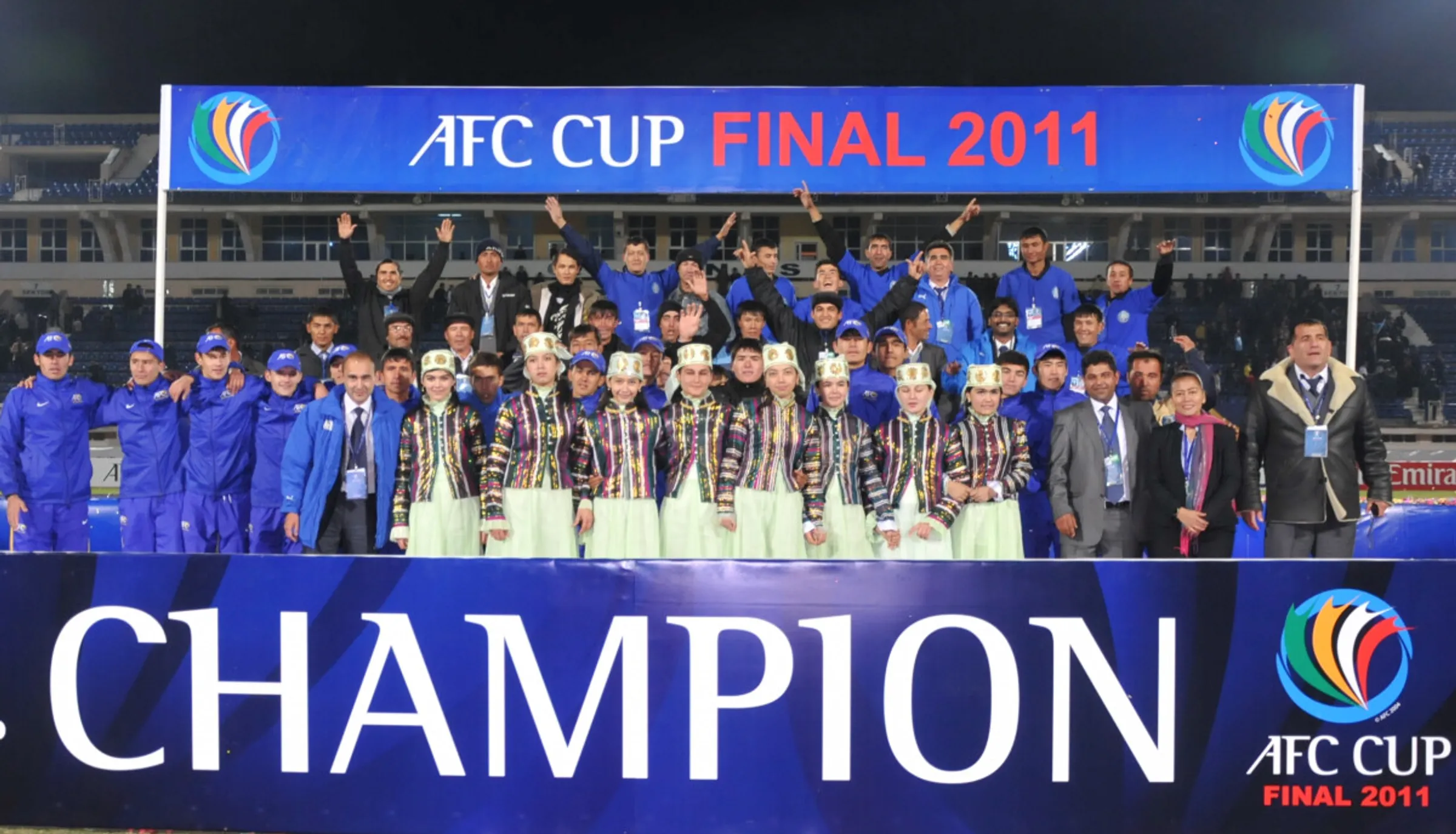
No team from outside West Asia had reached the AFC Cup final in the first seven editions, but Uzbekistan’s FC Nasaf were determined to change that in 2011. The Qarshi-based side had made their AFC Cup debut the previous year and reached the Round of 16 before losing to Syria’s Al Karamah.
They returned with a bang the following year, ending their group stage with the full 18 points and with an AFC Cup record 30 goals to their name, including 9-0 and 7-1 defeats of Dempo and Al Tilal respectively. Jordanian pair Al Faisaly and Al Wehdat were beaten by the Uzbeks in the knockout stage, either side of a penalty-shootout victory over Chonburi of Thailand.

Awaiting on the other side were 2009 champions Kuwait SC, who had beaten the likes of Qadsia SC, Muanthong United and Arbil.
By 2011, the final had become a single-leg affair, with Nasaf playing host to that edition. An evenly matched contest remained goalless until the hour-mark when Ilkhom Shomurodov found himself in the right place to tap home on the rebound for Nasaf’s opener.
By 2011, the final had become a single-leg affair, with Nasaf playing host to that edition. An evenly matched contest remained goalless until the hour-mark when Ilkhom Shomurodov found himself in the right place to tap home on the rebound for Nasaf’s opener.
The win was confirmed mere two minutes later with a delicious Andrejs Perepļotkins backheel to bring home the first AFC Cup title to Nasaf, Uzbekistan and Central Asia.
2013: Kuwait SC (KUW) v Qadsia SC (KUW)
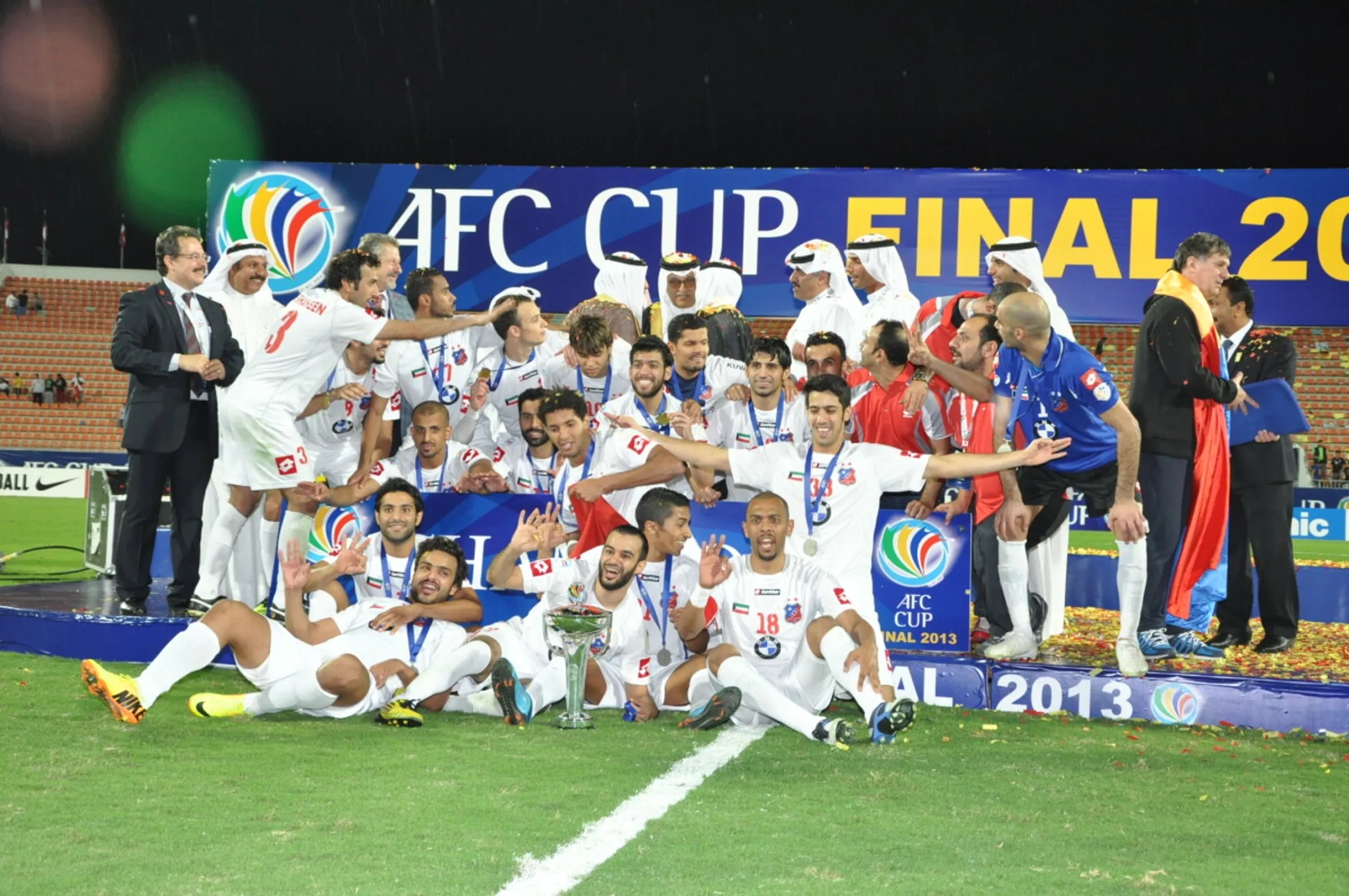
Kuwait SC bounced back emphatically from the disappointment of losing to Nasaf in the 2011 final, going on to lift their second AFC Cup title the following year, beating Arbil 4-0 in the final and going all the way again in 2013.
The rivalry between Kuwait SC and Qadsia was at its peak in the first decade of the millennium, with the seven Kuwaiti Premier League titles between 2005 and 2012 being shared between them, four for Qadsia and three for Kuwait SC.
With that history and competition, the two sides took to the pitch at the Friendship and Peace Stadium in Kazma with a full crowd adding to the excitement.
Seven minutes into the second half, Brazilian playmaker Rogerinho scored one of the all-time great AFC Cup final goals, his seventh of the campaign, after driving forward from the halfway line and blasting a shot from 30 yards out that left goalkeeper Nawaf Al Khaldi helpless to rescue. He then setup Tunisian forward Issam Jemaa for his 13th goal of the AFC Cup 2013, a goal that made Kuwait SC the first-ever three-time winners of the competition.
2018: Air Force Club (IRQ) v Altyn Asyr (TKM)
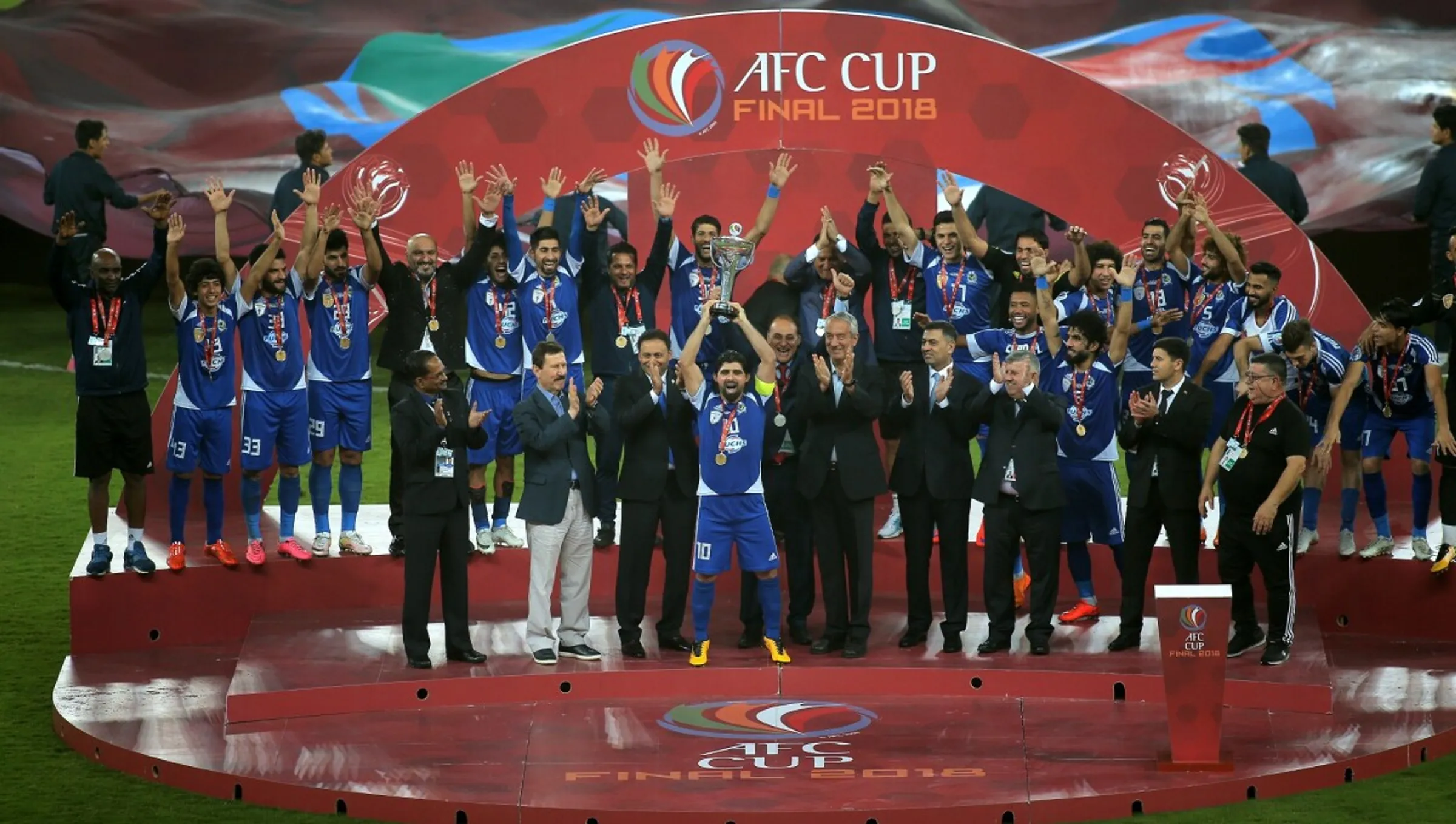
When Kuwait SC won their third AFC Cup title, only Jordan’s Al Faisaly had two to their name, making them favourites to equal the Kuwaitis’ record. Fast forward just five years later, and Iraq’s Air Force Club were not only on track to match that feat, but were one match away from doing it in three consecutive years.
When Kuwait SC won their third AFC Cup title, only Jordan’s Al Faisaly had two to their name, making them favourites to equal the Kuwaitis’ record. Fast forward just five years later, and Iraq’s Air Force Club were not only on track to match that feat, but were one match away from doing it in three consecutive years.

The Baghdad-based side had defeated JSW Bengaluru of India in the 2016 final, and repeated the feat with the same scoreline against Istiklol of Tajikistan in 2017, but having won the title in Doha and Hisor respectively, their chance to complete the historic hat-trick was presented to them at home, where they were finally able to host games in Basra International Stadium.
Turkmenistan’s Altyn Asyr had appeared in the 2016 and 2017 editions, exiting at the group stage on both occasions, but in 2018 they successfully topped their group before defeating Bengaluru 5-2 on aggregate and 4.25 of DPR Korea on away goals to set up a date with the defending champions in the final.
A defensive mistake 22 minutes in allowed Hammadi Ahmed to score in an AFC Cup final for the second time after bagging the winner two years earlier. 18-year-old Ibrahim Bayesh headed home Sameh Saeed’s corner kick in the 57th minute to seal the victory and complete a trio of AFC Cup trophies for the Iraqi club.
