



AFC Asian Qualifiers
Ever since Australia became a part of the Asian Football Confederation in 2006, the two nations have been virtually inseparable, meeting in every FIFA World Cup™ qualification cycle and two blockbuster AFC Asian Cup™ clashes, including the 2011 final in Doha.
They don’t share a border, or a language, and they had only met a handful of times prior to the 1990s but the Socceroos and Samurai Blue have since developed one of the continent’s most compelling footballing rivalries, with almost every meeting between them coming at a crucial time, and invariably taking on blockbuster status.
Their next fixture comfortably fulfills those criteria.
Japan will secure their place at Qatar 2022 should they win in Sydney, while the Socceroos know anything less than three points will likely see their hopes of direct qualification extinguished even before next Tuesday’s trip to Saudi Arabia.
As we countdown to the latest instalment of one of Asia’s banner international fixtures, join the-AFC.com as we look back on five classic Australia-Japan clashes from the past two decades.
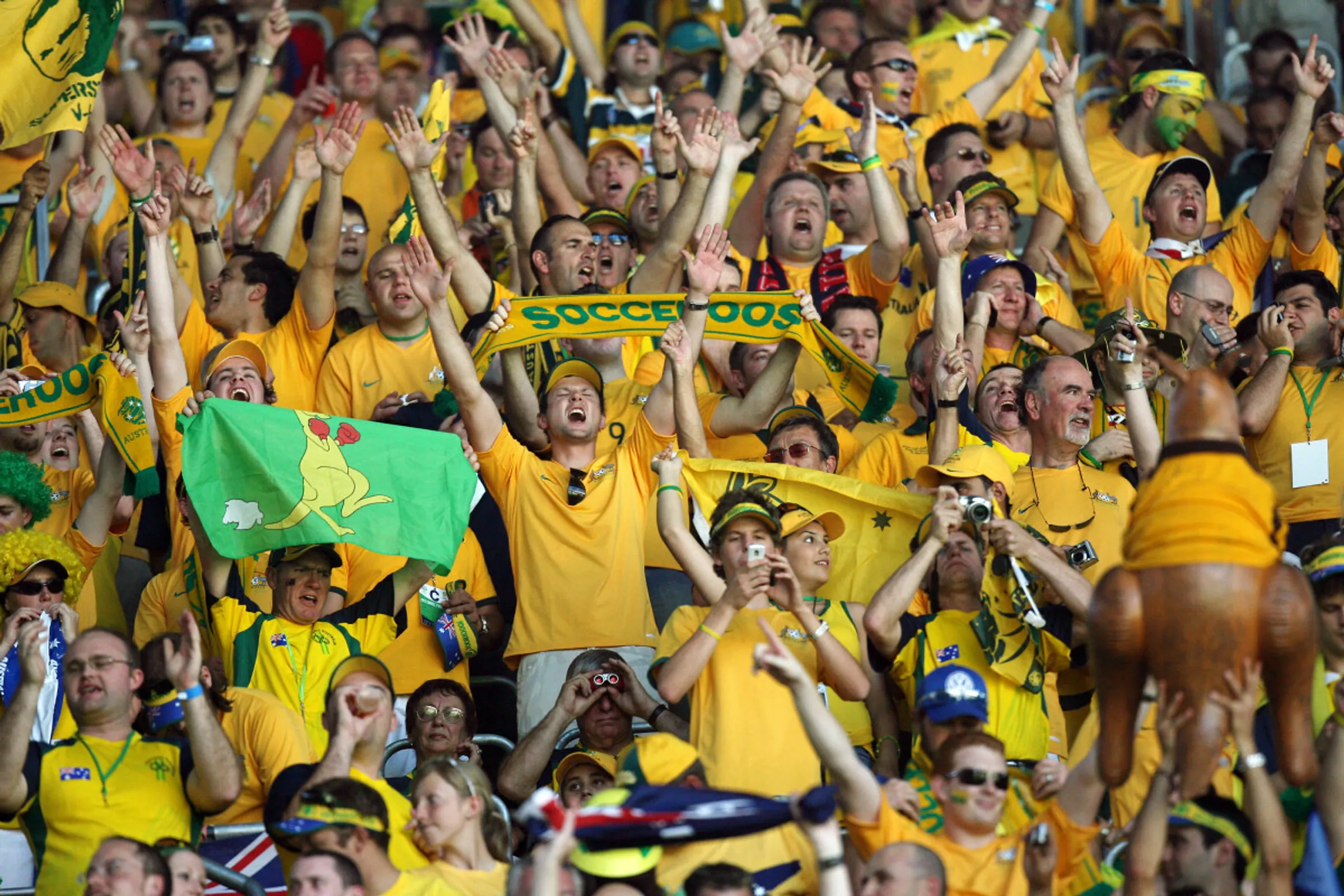
2006 FIFA World Cup: Hiddink’s heroes make history in Kaiserslautern
AUSTRALIA 3 (Cahill 84’, 89’, Aloisi 90+2’)
JAPAN 1 (Nakamura 26’)
Australia became a fully-fledged member of the AFC in January 2006, but they had qualified for that year’s FIFA World Cup in Germany via the Oceania Football Confederation, meaning they would be drawn to face Japan in the opening match of the group stage.
Under the tutelage of Guus Hiddink, Australia were appearing on the game’s biggest stage for the first time since 1974, but their long-awaited return started in disastrous fashion when Shunsuke Nakamura’s speculative ball into the penalty area floating beyond an arguably impeded Mark Schwarzer, and into the vacant net in the 26th minute.
With their lead still in place into the dying minutes, the Zico-led Japan looked set to claim all three points, but Tim Cahill was about to turn the match on its head and write his name into Australian football history.
A substitute with only nine of his eventual 50 international goals to his name, Cahill scored his country’s first ever FIFA World Cup goal when he scrambled home an 84th minute equaliser, then sparked delirious celebrations by curling home a sensational second five minutes later.
Fellow substitute John Aloisi outpaced a tired Japanese defence before stroking home Australia's third in injury time, not only securing a remarkable Socceroos win, but lighting the fuse for an enduring rivalry.
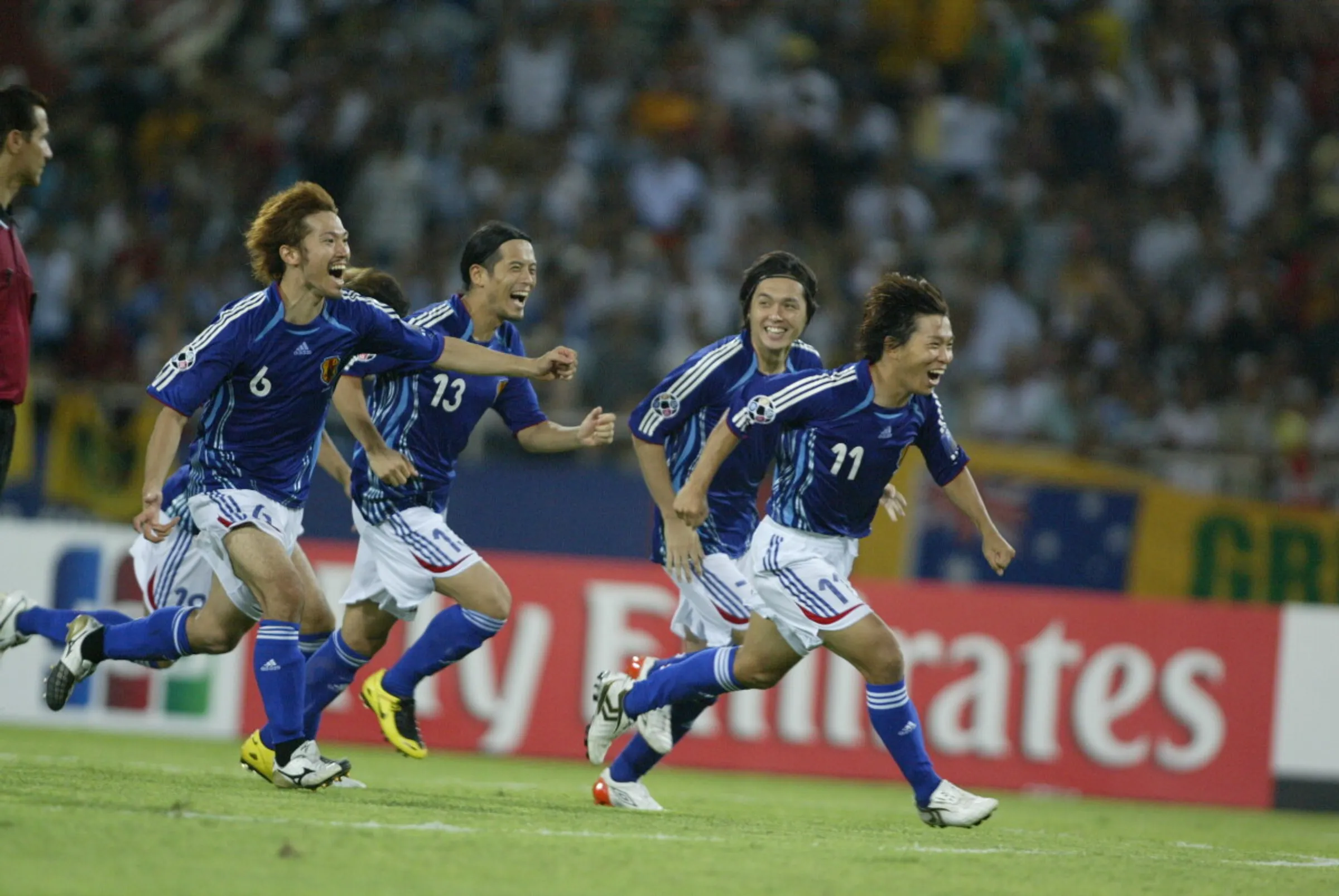
2007 AFC Asian Cup: Japan take revenge in Hanoi
JAPAN 1 (4) (Takahara 71’)
AUSTRALIA 1 (3) (Aloisi 69’)
Fresh from their charge to the Round of 16 at Germany 2006, Australia arrived at their first AFC Asian Cup among the tournament favourites, but Japan took revenge on their World Cup nemesis in a dramatic quarter-final in Hanoi.
While Japan had breezed into the knockout stage with comprehensive wins over United Arab Emirates and Vietnam, Australia began with a draw against Oman and suffered a shock defeat to Iraq before getting their campaign back on track with a 4-0 win against Thailand.
Despite their differing paths to the last eight, it was Australia who looked like advancing when Aloisi scrambled home a 69th minute opener from an acute angle, but Graham Arnold’s side suffered from a horror stretch in the immediate aftermath
Nahiro Takahura spun on a dime to level the score just two minutes later, before Vince Grella was shown a straight red card in the 75th minute, with penalties ultimately required to separate the sides.
This time it would be Japan’s turn to celebrate, with Lucas Neill and Harry Kewell both failing to convert from 12 yards before Yuji Nakazawa stroked home the winning spot-kick for the men in blue, who prevailed 4-3 in the shootout.
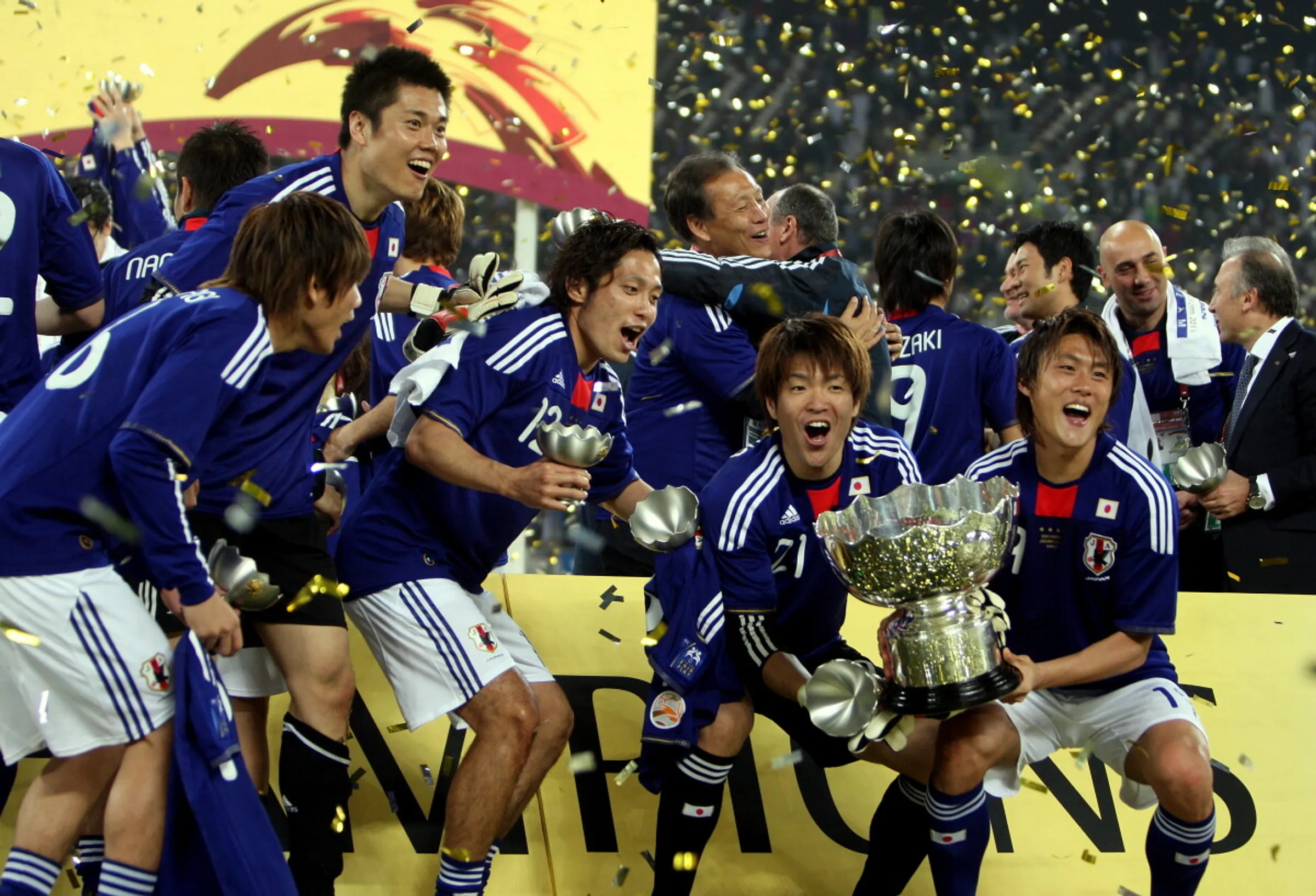
2011 AFC Asian Cup Final: Lee’s late volley seals Asian Cup glory
JAPAN 1 (Lee 109’)
AUSTRALIA 0
Australia got the better of Japan on the road to the 2010 FIFA World Cup in South Africa, while Japan were more successful at the tournament itself, and there was little doubt that both sides were at the very top of the Asian game going into the 2011 AFC Asian Cup in Qatar.
With the formidable attacking duo of Harry Kewell and Tim Cahill firing, Holger Osieck’s Socceroos roared into the final with a 6-0 semi-final win over Uzbekistan, while Japan booked their place after a 120-minute epic against Korea Republic, setting the stage for a final worthy of deciding the best team in Asia.
As in their semi-final four days earlier, Australia came flying out of the blocks, but this time they failed to take advantage, with numerous chances going begging, while Alberto Zaccheroni’s Japan gradually grew into the contest.
With the match still scoreless after 90 minutes, Zaccheroni called on Tadanari Lee as a substitute and it was the Sanfrecce Hiroshima man who delivered the game’s decisive blow, capitalising on a momentary lapse from David Carney by steering a picturesque volley beyond Mark Schwarzer and into the net in the 109th minute.
Japan were Asian champions for the fourth time in less than 20 years, while Australia would have to wait until 2015 to get their hands on the famous trophy.
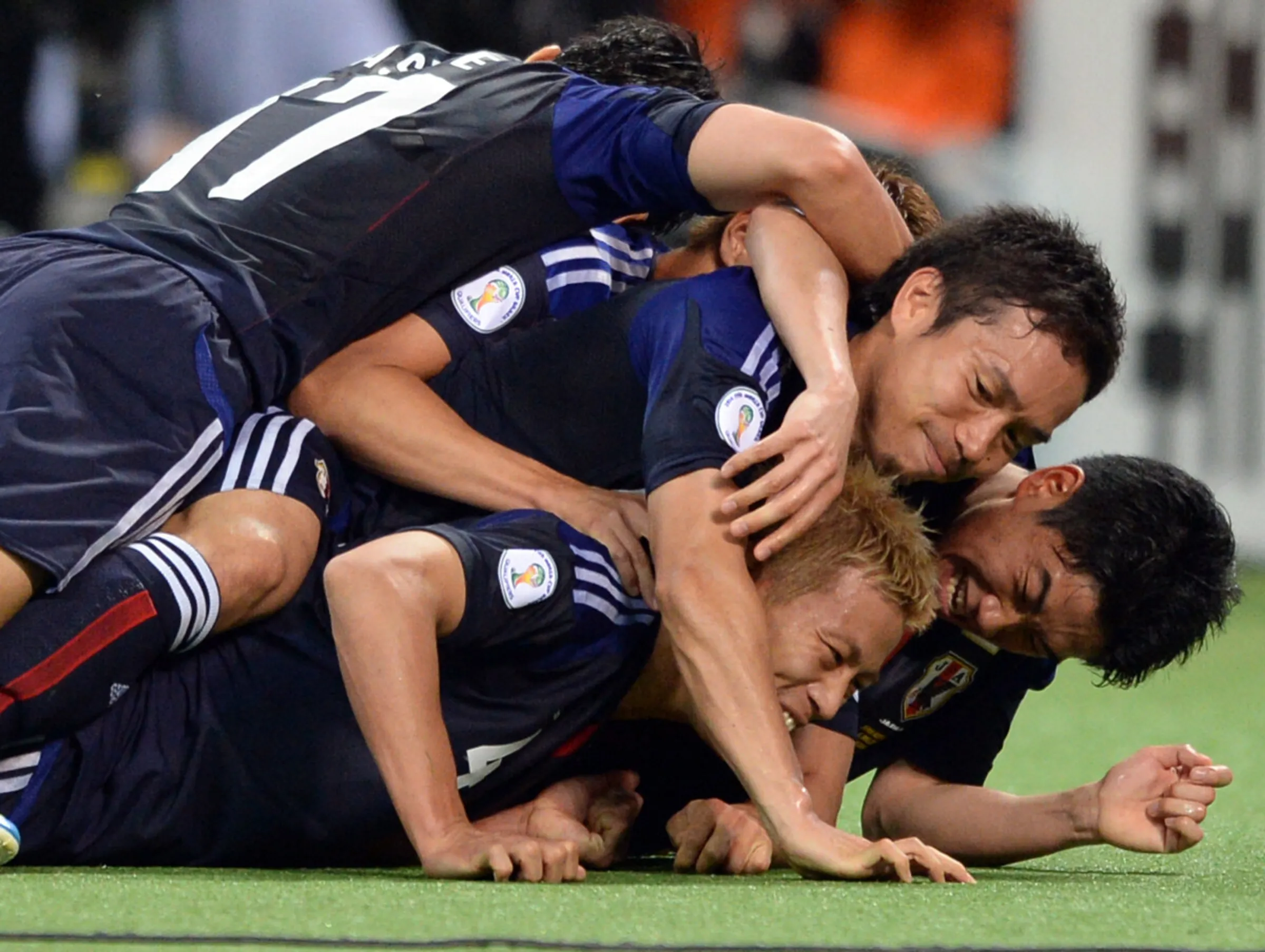
Road to Brazil 2014: Socceroos denied by last gasp Honda penalty in Saitama
JAPAN 1 (Honda 90+1’ pen)
AUSTRALIA 1 (Oar 81’)
Having shared the spoils in a 1-1 draw in Brisbane a year earlier, Japan and Australia met for the return fixture in June 2013 both still alive in the race to qualify for the 2014 FIFA World Cup, but with vastly different challenges ahead.
While the hosts needed only a single point to secure their place in Brazil, Australia had won just once in five Final Round qualifiers, meaning defeat against Japan had the potential to derail their entire campaign.
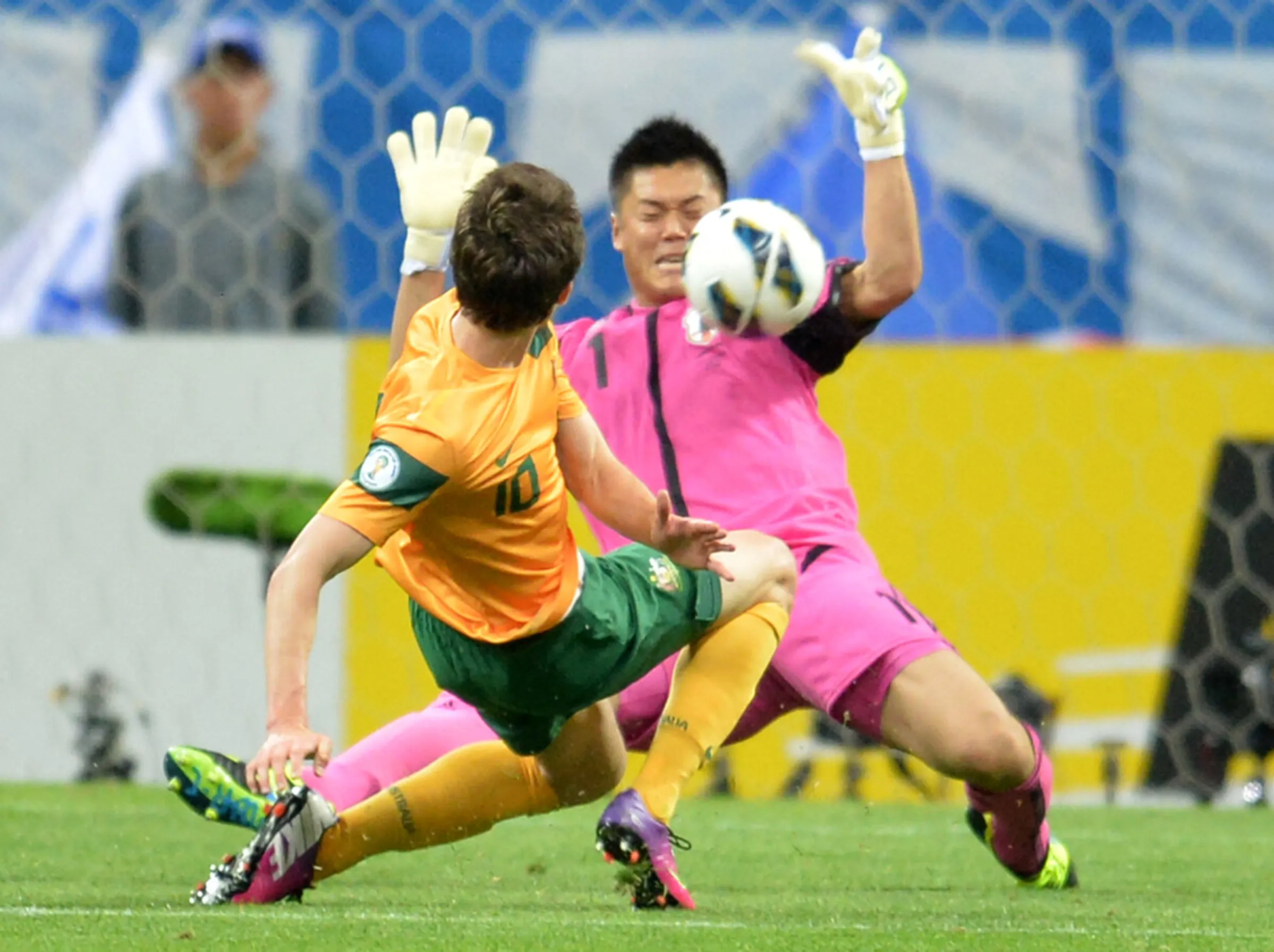
Zaccheroni and Osieck remained in charge of their respective teams, but this time it was Japan who created the bulk of the chances, and they looked the team most likely to score virtually until the moment Australia took a shock lead with less than 10 minutes remaining,
Unheralded winger Tommy Oar was the man who silenced the 62,000 fans in attendance, floating in a cross that deceived everyone, including goalkeeper Eiji Kawashima, before nestling in the back of the net.
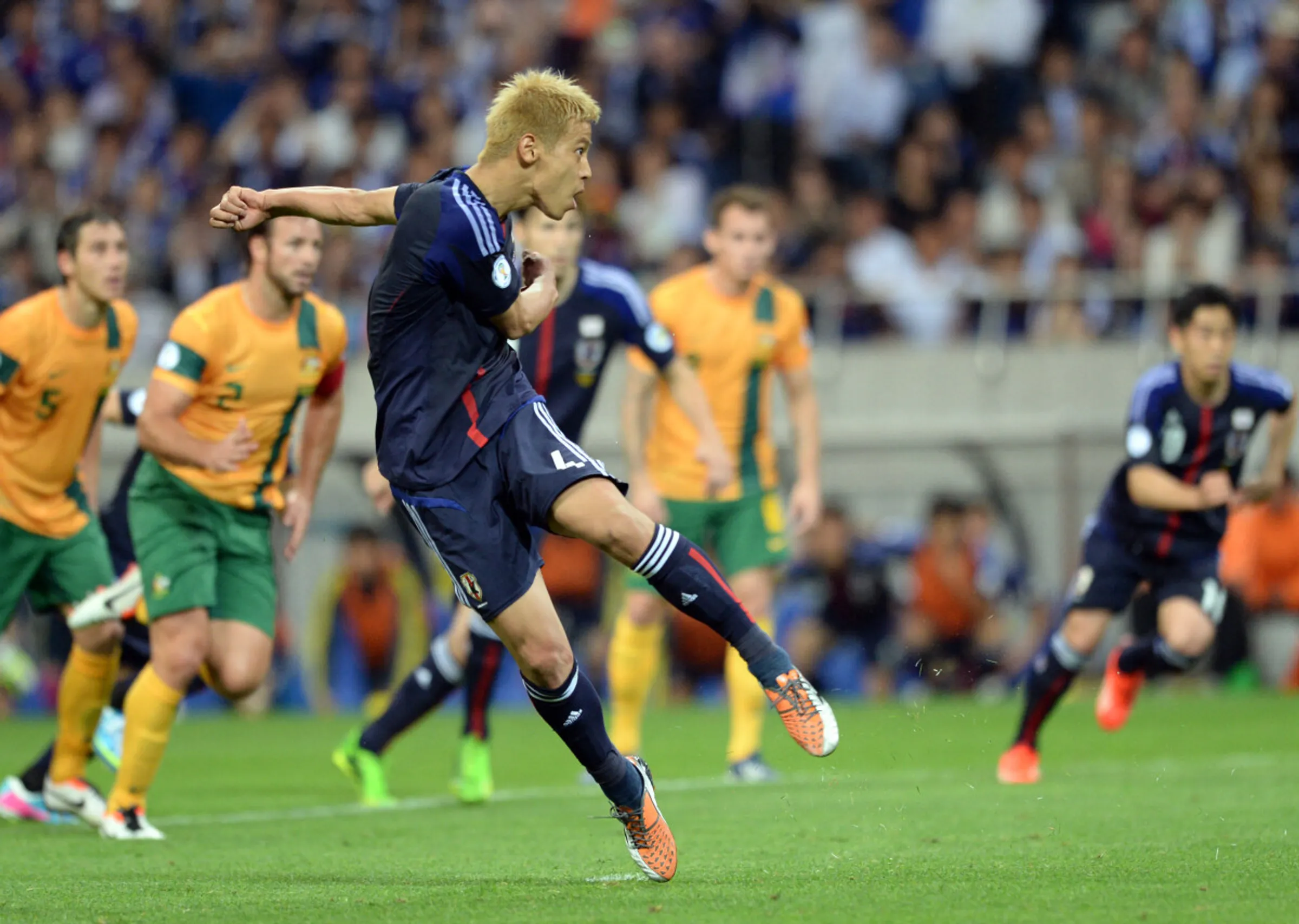
But just as Australia got ready to celebrate a momentous win, Matt McKay handled the ball in the Japanese penalty area, with star man Keisuke Honda stepping up to hammer home the spot-kick which sent the Samurai Blue to their fifth successive World Cup.
There was a happy postscript, however, for Australia, who defeated Jordan and Iraq in the following weeks to ensure they would join Japan at the global Finals.
Road to Qatar 2022: Behich heartbreaker becomes sliding doors moment
JAPAN 2 (Tanaka 8’, Behich 86’ og)
AUSTRALIA 1 (Hrustić 70’)
Recent form has tended to count for little in matches between Japan and Australia, and the most recent clash between the two nations was perhaps the greatest example of that phenomenon.
Australia touched down in East Asia in October 2021 with a record 11 consecutive AFC Asian Qualifiers wins under their belts, and sitting a commanding six points clear of Japan on the group table after Hajime Moriyasu’s side had lost to both Oman and Saudi Arabia.
Now in his second stint as Socceroos boss, Graham Arnold expressed his desire to widen that gap to nine, but Japan struck early through Ao Tanaka, before Ajdin Hrustić levelled the tie with a thumping free-kick 20 minutes from time.
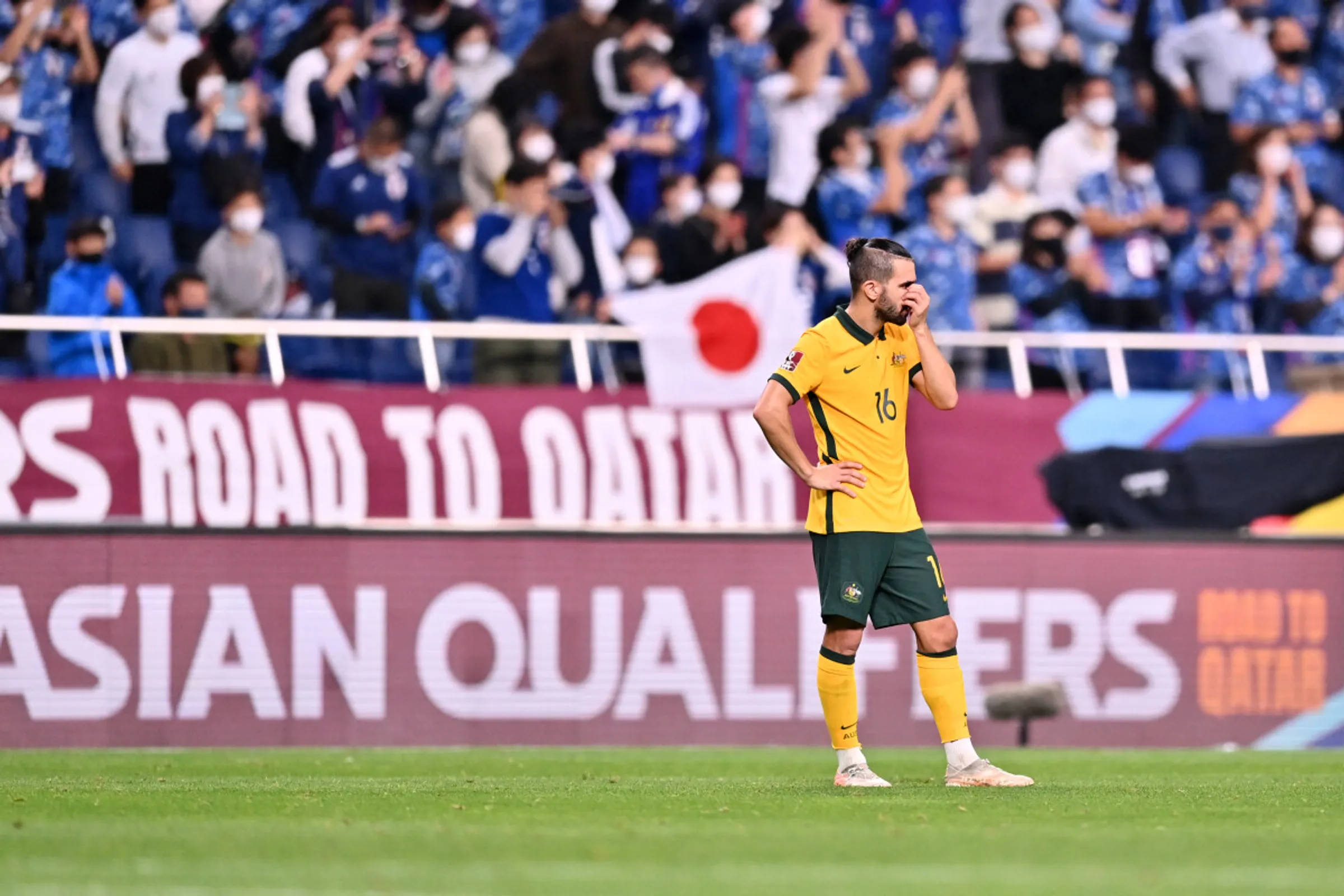
A draw would have suited Australia, but Japan found the goal they so desperately desired with a looping Takuma Asano strike hit Mat Ryan’s glove as well as the upright before being awkwardly bundled over the line by Socceroos left-back Aziz Behich with four minutes remaining
Instead of being nine points clear of Japan, Australia were now ahead by just three, and still searching for their first win against their rivals since 2009.
It proved to be a significant turning point for both sides.
Japan have won every match since, while Australia has only managed one victory, with draws against Saudi Arabia, China PR and Oman leaving them with no room for error ahead of Thursday’s all-important match in Sydney.
If the past two decades are any sort of guide, it may well be a classic.
Photo: AFP
Related News
- AFC Asian Qualifiers
Japan's Moriyasu focused on securing Qatar 2022 ticket
- AFC Asian Qualifiers
Arnold: Socceroos’ newcomers can change their lives in crucial AFC Asian Qualifiers
- AFC Asian Qualifiers
Renard: I want us to top the AFC Asian Qualifiers, and the job is not over yet
- AFC Asian Qualifiers
AFC Asian Qualifiers – Road to Qatar™ in Numbers
- FIFA World Cup
Procedures for the Final Draw for the FIFA World Cup Qatar 2022™ released

Item 1 of 5